HOME      •      SEARCH      •      EMAIL    •     ABOUT


Family Asteraceae
Bikas
Mikania cordata (Burm.f.) B.L. Rob.
HEARTLEAF HEMPVINE

Mi gan cao

Scientific names Common names
Eupatorium cordatum Burm.f. Bikas (Tag.)
Eupatorium cordatum var. cordatum Detitid (Ig.)
Eupatorium trinitarium var. volubilis (Poepp.) M. Gomez Tamburakan (Tagb.)
Eupatorium volubile Norona Uoko (Bon.)
Eupatorium volubile (Poepp.) Vahl Bikas (Tag.)
Knautia sagitata Blanco Climbing hemp weed (Engl.)
Mikania cordata (Burm.f.) B.L. Rob. Heartleaf hempvine (Engl.)
Mikania cordata f. cordata Mile-a-minute (Engl.)
Mikania cordata var. cordata  
Mikania sagitata Blanco  
Mikania volubilis (Vahl.) Willd.  
Mikania volubilis Poepp.  
Mikania cordata (Burm.f.) B.L.Rob. is an accepted name. The Plant List

Other vernacular names
CHINESE: Mi gan cao, Jia ze lan.
FRENCH: Liane marzoge, Liane Pauline, Liane raisin
INDONESIA: Brojo lego (Javanese), blukar (Sumatra), hila hitu lama (Ambon).
KWARA'AE: Kwalo ngingilo.
MALAYSIA: Akar lupang, ceroma, selaput tunggul.
SAMOAN : Fue saina, Fue sega.
THAILAND : Khikaiyan
OTHERS: Eskwater.

Botany
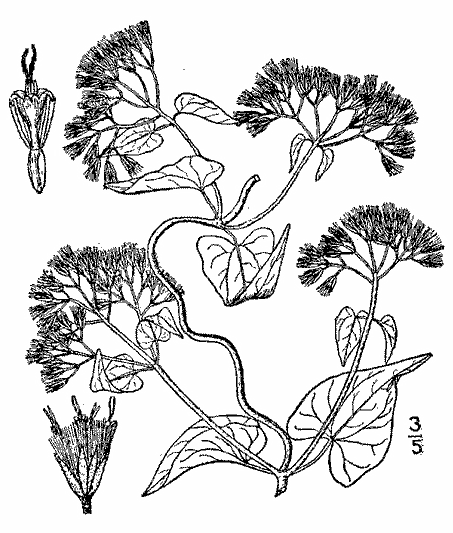
Bikas is a smooth vine. Leaves are long-petioled, deltoid-ovoid or ovate heart-shaped, 4 to 10 centimeters long, with pointed tip, rounded, heart-shaped, or truncate base, and toothed margins. Heads are 4-flowered, cylindric, 6 to 9 millimeters long, borne in compound inflorescences. Achenes are smooth, glandular, linear-oblong, and 2.5 to 3 millimeters long. Pappus is composed of one series, whitish or salmon colored.

Distribution
- In thickets at low and medium altitudes, ascending to 1,600 meters, in most islands and provinces, from northern Luzon to Palawan and Mindanao.
- Probably a native of tropical America.
- Now pantropic in distribution.

Constituents
- Yields stigmasterol, beta-sitosterol, sesquiterpene dilactones, mikanolide, dihydromikanolide, scandenolide.
- Phytochemical screening yielded flavonoids, steroids, alklaloid, tannin, gum and saponin.
- Phytochemical screening of ethanol extract of leaves yielded reducing sugars, flavonoids, saponins, alkaloids, tannins, phlobotannins, steroids, cardiac glycosides, amino acids. (see study below) (18)
- GC-MS analysis of aqueous extract of leaves yielded bioactive compounds such as caffeic acids; bis-(trimethylsilyl) ester; O-(trimethylsilyl)-malic acid; 2,3,4,5-tetrakis-O-(trimethylsilyl)-arabinose; 1,2,3,5-tetrakis-O-(trimethylsilyl)-arabinofuranose; octakis(trimethylsilyl) melibiose; and octakis (trimethylsilyl)-maltose. (see study below) (27)
-
Properties
- Root considered anti-inflammatory, hepatoprotective and adaptogenic.
- Traditionally used as anti-bacterial, anti-ulcer, anti-inflammatory, anthelmintic, and analgesic.
- Studies have suggested anti-inflammatory, anticarcinogenic, antibacterial, antipyretic, anthelmintic, antiemetic, CNS depressant, anti-ulcer, analgesic, anticoagulant, adaptogenic, antidiarrheal properties.

Parts used
Leaves, leaf juice.

Uses

Edibility
- In some places, leaves used as soup vegetable.
Folkloric
- In southern Nigeria, decoction used for coughs; leaf juice used as remedy for sore eyes.
- In
East Africa, the Tongas used the plant as remedy for snake and scorpion bites.
- Infusion of plant given for affections of the stomach and intestines.
- Leaves used by the Malays by rubbing it onto the body for itches.
- In
Java, leaves used for poulticing circumcision wounds and other wounds.
- In
India, leaves used for itchiness and as wound plaster.
- In
Bangladesh, decoction used for treatment of gastric ulcer, dengue fever, cuts and wounds.
- In southern
Africa, leaves applied to wounds.
Others
- Cover crop: Used as cover crop to prevent erosion.
- Fodder: Used as cattle fodder.


Studies
Anticarcinogenic Biological Response:
Study showed the intracellular contents of active intermediates of various xenobiotics including chemical carcinogens would be reduced by specific enhancement of drug-detoxifying enzymes in the liver of rats treated with the plant extract. (1)
Essential Oil / Leaves: Essential oil of the leaves of Mikania cordata yielded four majors constituents: a-pinene (20%), germacrene D (19.8%),beta-pinene (8.7%) and alpha-thujene (7.1%). (2)
Anti-Inflammatory: Study of the methanolic fraction of M. cordata root extract showed significant anti-inflammatory effects in exudative, proliferative and chronic phases of inflammation and also showed an antipyretic activity. (3)
CNS Changes: Study showed root extract induces profound behavioral changes, especially the disappearance of aggressive behavior. It also showed strong narcotic effects and analgesic effects.
Anti-Ulcer / Diclofenac Induced / Leaves: Study of alkaloidal fraction from M. cordata on diclofenac-induced gastric ulcer showed the bioactive principles of M. cordata have anti-ulcerogenic effects. Results validate the use of the plant in Bangladesh for treatment of gastric ulcer. (4)
Anti-Inflammatory / Antipyretic: A methanolic extract of roots showed an inhibitory effect on carrageenan and other mediator-induced edema. The extract also exhibited inhibitory effects on sodium urate-induced experimental gout. Results showed significant anti-inflammatory effects in exudative, proliferative and chronic phases of inflammation, and also showed an antipyretic effect. (7)
Antibacterial: An ethanol extract of leaves showed moderate concentration-dependent antibacterial properties. Maximum inhibition was seen against Shigella flexneri and Staphylococcus aureus. It showed no apparent in vitro toxicity in the brine-shrimp lethality bioassay. (8)
Essential Oil / Flowers: Study of essential oil from flowers yielded forty-two compounds. The main constituents were beta-cubebene (12.95%), allo-aromadendrene (11.67%), beta-caryophyllene, 1H-inden-1-one, 5-(1, 1-dimethylethyl)-2, 3, beta-himaohalene, trans-alpha-bergamotene, limonene, and beta-ocimene. (9)
Phytochemicals / Potential Medicinal Constituents: Study of aqueous extracts yielded thirty compounds, while an ethanolic extract yielded thirty-four. The aqueous compounds included 2,3-pentanedione, glycerin, acetic acid, 2,3-butanediol, and caryophyllene oxide -- compounds that are considered pharmaceutically relevant. The ethanolic compound yielded a small amount of sequelene. (10)
Neuropharmacological / CNS Depressant Effect: Study of a methanolic fraction of root extract on experimental animals exhibited potent CNS-depressant action: alteration in general behavior pattern, reduction in spontaneous motility, hypothermia, potentiation of pentobarbitone-sleeping time, analgesia, reduction in exploratory behaviour and suppression of aggressive behavior. It also showed antagonism to amphetamine toxicity. (11)
Antibacterial / Leaf Extract Ointment Formulation: Study evaluated the toxicological and antimicrobial properties of eskwater leaf extract. Results showed three doses of ointment formulation produced inhibition on growth of MRSA (Methicillin Resistant Staphylococcus aureus), with potency comparable to Vancomycin at concentration of 0.32 mg. There was no inhibition in fungal growth.
(12)
Anthelmintic / Antiemetic: A methanolic extract showed anthelmintic activity in a Pheretima posthuma model. The extract also showed antiemetic activity. (13 )
Herbal Ointment for Superficial Injuries: An herbal ointment from a methanolic extract evaluated on superficial injuries showed significant activity against Staphylococcus aureus and Bacillus sp. compared to mupirocin. Antioxidant activity of the extract showed scavenging activity attributed to the presence of flavonoids and tannins. (14)
• Anti-Cancer Effect / Human Breast Adenocarcinoma Cells: Study evaluated the potential of M. cordata as an anti-cancer agent against MCF-7 breast cancer cells. Fraction 6 induced non-specific cytotoxicity via apoptosis and oxidative pathways. Fractions 7, 10, and 11 exhibited selective cytotoxicity against MCF-7 breast cancer cells through mechanisms other than apoptosis and oxidation. (16)
• Antinociceptive / Cytotoxic / Antibacterial / Leaves: Study evaluated extract of dried leaves for antinociceptive, cytotoxic, and antibacterial activities in animal models. Results showed significant writhing inhibition in acetic acid-induced writhing in mice, moderate cytotoxic activity against brine shrimp Artemia salina, and antibacterial activity against test microorganisms. (17)
• Cytotoxicity / Mineral Composition / Leaves: An ethanol extract of leaves did not show any noticeable toxicity in brine shrimp lethality bioassay. Study of mineral composition yielded (±SD): calcium 303.00 ± 3.60, potassium 116.67 ± 1.53, magnesium 54.67 ± 1.15, phosphorus 0.09 ± 0.005, sulfur 0.58 ± 0.02, iron 85.67 ± 1.53, manganese 5.67 ± 0.60, and zinc 36.00 ± 1.73. (see constituents above) (18)
• Anti-Diarrheal / Leaves: In vitro study evaluated the antidiarrheal activity of ethanolic extracts of leaves of Mikania cordata and Litsea monopetala in a mice model of castor oil-induced diarrhea. The extracts showed potent antidiarrheal activity with a statistically significant p value of p<0.01 and p<0.05, respectively. (19)
• Ulceroprotective / Roots: Study evaluated a methanolic fraction of Mikania cordata root extract for possible ulceroprotective activity in male Sprague-Dawley rats. While there was alteration in volume, acidity and peptic activity of gastric juice in pylorus-ligated rats, there was significant and dose-dependent promotion of gastric mucus secretion. Results suggest the antiulcer activity may be due to modulation of defensive factors through an improvement of gastric cytoprotection. (20)
• Antimicrobial Activity against MRSA / Leaf Ointment: Study evaluated the toxicological and antimicrobial properties of ointment formulation of eskwater leaf extract through acute dermal toxicity and antimicrobial activity caused by Methicillin-resistant S. aureus (MRSA) and Trichophyton mentagrophytes. While there was no inhibition of fungal growth, it showed partially active action against MRSA ATCC 43300 (13.66 ± 0.5778)/ . Extract showed no toxicity based on OECD 404 guideline. (22)
• Radical Scavenging Activity: In a study of crude methanolic extracts of six medicinal plants of Bangladesh, Mikania cordata showed mild antioxidant activity (IC50 > 300 g/ml)/ (23)
• Antinociceptive / Anti-Inflammatory / Antipyretic: Study evaluated essential oil and chloroform (CE) and ethyl acetate (EAE) extracts for anti-nociceptive, anti-inflammatory, and antipyretic activities. EO, CE and EAE showed potent peripheral antinociceptive activity with 47.33%, 29.33% and 16.65% writhing inhibition, respectively. They also showed promising central antinociceptive activity. The EO showed highest anti-inflammatory activity with 72.80% edema inhibition of carrageenan induced edema. In antipyretic assay, the EO and CE showed strong effect in yeast-induced pyrexia in rats. (24)
• Antimicrobial / Aerial Parts: The methanolic extract and fractions of aerial parts of M. cordata were evaluated against gram positive and gram negative bacteria and pathogenic fungi. Only the dichloromethane fractions showed remarkable activity against all tested bacteria and highest activity against E. coli with ZOI 14 ± 0.75 mm. Highest antifungal activity was against C. albicans (12±1.75mm ZOI). (25)
Anti-Stress Activity / Roots: Study evaluated a methanol root extract of M. cordata for possible adaptogenic or anti-stress activity against various stress-induced effects in albino mice. Pretreatment increased survival time of swimming mice, improved swimming performance in adrenalectomized mice, prevented stress-infuced adrenal function changes and showed increased tolerance against hypoxic stress. Milk-induced leucocytosis and stress-induced gastric ulceration were also inhibited with pretreatment. Dose-dependent results suggest the anti-stress response may be due to modulation of central neurohumoral and enzymatic changes caused by stressful situations. (26)
Blood Coagulation Activities / Leaves: Study investigated the effect of M. cordata leaves on blood coagulation activities. In vitro activity was evaluated by prothrombin time (PT), activated partial thromboplastin time (APTT), and thrombin time (TT). Results showed prolongation of APTT and TT in a concentration dependent manner (p<0.01). PT showed procoagulant activity at concentration of 3.13 mg/mL and anticoagulant activity at 12.5 and 25.0 mg/mL. Results suggest M. cordata has potential for use as anticoagulant product. (see constituents above) (27)
Anticancer / Ehrlich Ascites Carcinoma / Leaves: Study evaluated a methanolic extract of leaves against pathogenic bacteria and Ehrlich ascites carcinoma (EAC)-induced cancer in mice. The ME exhibited prominent antibacterial activity against test strains. The extract also exhibited remarkable anticancer activity on EAC in a dose dependent manner, with the 400 mg/kbw dose showing highest EAC cell death with apoptotic features viz. chromatin condensation, nuclear fragmentatation, and accumulation of apoptotic bodies. (28)
Antiulcerogenic / Ethanol-Induced / Leaves: Study evaluated the cytoprotective effect of M. cordata leaves against ethanol-induced gastric lesions in rat. Absolute ethanol extract produced extensive hemorrhagic lesions of the gastric mucosa. Pretreatment with extract reduced the formation of gastric lesions with marked reduction of submucosal edema. (29)

Availability
Wild-crafted.

Updated July 2020 / April 2017 / July 2014

Content © Godofredo Stuart / StuartXchange
IMAGE SOURCE: Photo / Leaves and flowers of Heartleaf hempvine / Mikania scandens (L.) Willd / Vietnam Plants & American Plants / Phuong Tran / flickr / click on image to go to source page
IMAGE SOURCE: Mikania scandens (L.) Willd. - climbing hempvine / Britton, N.L., and A. Brown. 1913. An illustrated flora of the northern United States, Canada and the British Possessions. 3 vols. Charles Scribner's Sons, New York. Vol. 3: 363. Courtesy of Kentucky Native Plant Society. / USDA
Additional Sources and Suggested Readings
(1)
Anticarcinogenic biological response of Mikania cordata: reflections in hepatic biotransformation systems / Anupam Bishayee and Malay Chatterjee /
Cancer Letters, Vol 81, Issue 2, 30 June 1994, Pages 193-200 /doi:10.1016/0304-3835(94)90202-X
(2)
Chemical constituents of the essential oil of Mikania cordata (Burm.f.) B.L. Robinson from Abidjan (Ivory Coast) / Bedi, G, Tonzibo, Z F, N'Guessan et al / Journal of Essential Oil Research: JEOR, May/Jun 2003
(3)
Pharmacological studies of the antiinflammatory profile of Mikania cordata (Burm) B. L. robinson root extract in rodents / S Bhattacharya, S Pai et al / Phytotherapy Research, Vol 6, Issue 5, pages 255–260, September/October 1992 / DOI: 10.1002/ptr.2650060507
(4)
The anti-ulcerogenic effect of an alkaloidal fraction from Mikania cordata on diclofenac sodium-induced gastrointestinal lesions in rats / ASHIK MOSADDIK M, FAISAL ALAM K. M. / Journal of pharmacy and pharmacology, 2000, vol. 52, no9, pp. 1157-1162
(5)
Mikania cordata / common name details from PIER
(6)
Mikania cordata (Burm.f.) B.L. Robinson / Vernacular names / GLOBinMED
(7)
Pharmacological studies of the antiinflammatory profile of Mikania cordata (Burm) B. L. robinson root extract in rodents / S. Bhattacharya, S. Pal and A. K. Nag Chaudhuri* / Phytotherapy Research, Volume 6, Issue 5, pages 255–260, September / October 1992 / DOI: 10.1002/ptr.2650060507
(8)
Antibacterial and Cytotoxic Activity of Ethanol Extract of Mikania Cordata (Burm.F.) B.L. Robinson Leaves / Md. Sekendar Ali, Md. Saiful Islam, Md. Masudur Rahman, Md. Rabiul Islam, Mohammed Aktar Sayeed and Md. Rafikul Islam / Journal of Basic and Clinical Pharmacy
(9)
Study of chemical constituents of essential oil from flowers of Mikania micrantha H.B.K / Shao H, Nan P, Peng S, Zhang C. / Zhong Yao Cai. 2001 May;24(5):341-2.
(10)
The Analysis of Aquoues and Ethanolic Extracts of Malaysian Mikania Cordata Leaves towards the Potential for Medicinal Substances / Ab Patar, A and Badrul Hisham Yahaya / European Journal of Scientific Research
ISSN 1450-216X Vol.73 No.4 (2012), pp. 434-440
(11)
Neuropharmacological Studies on Mikania cordata Root Extract / Siddhartha Bhattacharya, Siddhartha Pal, A. K. Nag Chaudhuri / Planta Med, 1988; 54(6): pp 483-487 / DOI: 10.1055/s-2006-962524
(12)
Toxicological and Antimicrobial Evaluations of Formulated Ointment from Eskwater (Mikania cordata Asteraceae) Leaf Extract against Trichophyton mentagrophytes and Methicillin-Resistant Staphylococcus aureus / Judee N. Nogodula, Lady Ron M. Ducut, Jelah Mae F. Edorot, Aizovelle T. Egagamao / University of the Immaculate Conception Research Journals, 2012; Vol 18, No 2
(13)
IN VITRO & IN VIVO EVALUATIONS OF MIKANIA CORDATA (BUMR.F.) B.L. ROBINSON EXTRACT / Latifa Bulbul*, Asma Ferdowshi, Mohammad Sazzad Rahman, Somen Mojumder Sushanta, Shahnaj Tanni, Md. Jahir Uddin / Indo American Journal of Pharmaceutical Research, Vol 3, Feb 2013
(14)
Safety and Efficacy of Herbal Ointment formulated with Methanolic extract of Mikaniacordata as Treatment for Acute Superficial Injury / BarnabasE.Herbert,Loraine M.Bagares, RaimeR.Galang, Katherine Garcines, Sherwin S. Go, May A. Jalamana / Journal of Pharmacognosy and Phytochemistry / e-ISSN: 2321-6182 p-ISSN: 2347-2332
(15)
Mikania cordata / Synonyms / The Plant List
(16)
Anti-Cancer Effect and Mechanisms of Action of Mikania cordata Plant Extract on MCF-7 Human Breast Adenocarcinoma Cells./ T.G.C. Uy, A.M. Licuanan, G.E.D. Angeles, M.L.C.C. Bote, E.A.B. Macauyag, C.C. Hernandez, S.D. Jacinto and R.M. Guzman-Genuino, 2015. International Journal of Cancer Research, 11: 80-92. / DOI: 10.3923/ijcr.2015.80.92
(17)
Evaluation of phytochemical and pharmacological properties of Mikania cordata (Asteraceae) leaves / Abdullah Al Nayeem, Amina Khatun, Md. Shafiur Rahman and Mahmudur Rahman* / Journal of Pharmacognosy and Phytotherapy Vol. 3(8), pp. 118-123, September 2011 / http://www.academicjournals.org/JPP
(18)
In vitro phytochemical, cytoxicity and mineral composition analyses of Micania Cordata (Bumr.f.) B.L. robinson leaves / Nobel Barua*, Nurul Absar, Sudip Paul, Anik Barua, Md. Yeashin Gazi, Moumoni Saha, Mohammad Shariful Islam, Jannatul Marium Belaly / International Journal of Biosciences, IJB, Vol. 5, No. 8, p. 154-160, 2014
(19)
In vivo antidiarrheal study of ethanolic extracts of Mikania cordata and Litsea monopetala leaves / Fatema Nasrin, Md. Lukman Hakim / Bangladesh Journal of Pharmacology, 2015; 10(3) / DOI: 10.3329/bjp.v10i3.23402
(20)
Protective effects of Mikania cordata root extract against physical and chemical factors-induced gastric erosions in experimental animals. / Bishayee A , Chatterjee M / Planta medica 60:2 1994 Apr pg 110-3
(21)
Effect of Mikania cordata on Non-Specific Immune Response and Survival of Labeo Rohita Against Aphanomyces Invadans / V. Kumar, S. Roy and D. Barman / The Journal of Animal & Plant Sciences, 26(6): 2016, Page: 1833-1842
(22)
Toxicological and Antimicrobial Evaluations of Formulated Ointment from Eskwater (Mikania cordata Asteraceae) Leaf Extract against Trichophyton mentagrophytes and Methicillin-Resistant Staphylococcus aureus / Judee N. Nogodula / UIC Research Journal, Vol. 18 no. 2 (2012)
(23)

FREE RADICAL SCAVENGING ACTIVITY OF SIX MEDICINAL PLANTS OF BANGLADESH: A POTENTIAL SOURCE OF NATURAL ANTIOXIDANT / Shakhawat Hossain, Jahidul Islam, Firoj Ahmed, Md. Amjad Hossain, Mohammad Abdul Kaium Siddiki and S. M. Moazzem Hossen / J App Pharm, January 2015; 7(1): pp 96-104
(24)
Evaluation of anti-nociceptive, anti-inflammatory and antipyretic potential of Mikania cordata (Burm. f.) Robinson in experimental animal model / Shah Alam Siddiqui, Mohammad Abul Farah et al / Saudi Journal of Biological Sciences, Sept 2018; 25(6): pp 1049-1055 / https://doi.org/10.1016/j.sjbs.2018.01.009
(25)
Antimicrobial and toxicity studies of different fractions of the aerial parts of the Mikania cordata / Nargis Sultana Chowdhury, Md. Barul Alam, Md Ekramul Haque et al / Biology / Corpus ID: 28036780
(26)
Anti-Stress Potential of Mikania cordata Root Extract in Mice / Anupam Bishayee & Malay Chatterjee / International Journal of Pharmacognosy, 1994; 32(2): pp 125-134 / https://doi.org/10.3109/13880209409082983
(27)
PRELIMINARY STUDY ONBLOOD COAGULATION ACTIVITIES OF MALAYSIAN Mikania cordata LEAVES
/ WAN NORSHAZWANI BINTI WAN SHAFFEEUNIVERSITI SAINS MALAYSIA2015 / Wan Norshazwani Binti Wan Shaffee / Dissertation, 2015 / Universiti Sains Malaysia
(28)
Mikania cordata leaves extract promotes activity against pathogenic bacteria and anticancer activity in EAC cell-bearing swiss albino mice / Md. Mashiar Rahman, Md. Masnoon Kabir, Md. Abdullah AL Noman, Md. Rakibul Islam, Biplab Kumar Dash, Shahina Akhter, Mohammad Jashim Uddin, Atiqur Rahman / Journal of Applied Pharmaceutical Science, Feb 2020; 10(02): pp 112-122 /
DOI: 10.7324/JAPS.2020.102017
(29)
ANTIULCEROGENIC ACTIVITY OF MIKANIA CORDATA LEAVES EXTRACT AGAINST ETHANOL-INDUCED GASTRIC ULCER IN RATE AS ANIMAL MODEL / Md. Ashraful Alam, Muhammad Rakib Al-Mamun, Md. Abu Zafour / International Journal of Innovative Pharmaceutical Sciences and Research, 2013; 1(1): pp 185-191 / ISSN (online) 2347-2154


                                                                          DOI
It is not uncommon for links on studies/sources to change. Copying and pasting the information on the search window or using the DOI (if available) will often redirect to the new link page. (Citing and Using a (DOI) Digital Object Identifier)

                                                           PHOTOS / ILLUSTRATIONS
α(5)
                                                            List of Understudied Philippine Medicinal Plants

HOME      •      SEARCH      •      EMAIL    •     ABOUT