Gen info Gen info
•
Lamiaceae, commonly known as the mint or dead nettle family, is a large and diverse family of flowering plants in the oder Lamiales, comprising approximately 236 genera and more than 7 ,000 species.
• Salvia hispanica, one of several related species commonly known as chia, is a species of flowering plant in the mint family, Lamiaceae. It is considered a pseudocereal, cultivated for its edible, hydrophilic chia seed.
•
Salvia hispanica is an oilseed known as chia. It was cultivated by the Aztecs since the pre-Columbian cultures. Whole and ground seed was used as food, but oil obtained from pressing was used as base for face and body paintings. The Aztecs received the chia seeds as annual tribute from people under their domain and was offered to gods in religious ceremonies. (5)
• Chia is derived from the Nahuati word chian, meaning oily.
(9)
• Chia is the ancient Mayan word for "strength."
• The common name chia is shared by two plants: Salvia hispanica and Salvia columbariae, also known as "golden chia." (9)
• Chia use was recorded 4500 years ago in Mesoamerica as both food and medicine. The Spanish domination caused a massive reduction of the Mexican population and the use of chia diminished and almost disappeared. The crop was rescued by farmers from Jalisco, Guerero and Puebla who preserved the tradition of its use. (21)
• In the last seven years (2010 to 2017), after five centuries in oblivion, the importance of chia increased immensely.
• Many plants cultivated as Salvia hispanica are in fact S.
officinalis subsp. lavandulifolia (syn. S. lavadulifolia). (9)
ª Other plants sharing the name Chia include Salvia columbariae, sometimes called "golden chia", Salvia polystachia, and Salvia tiliifolia. (9)
• Etymology:
Chia is derived from the Nahuati word chian, meaning "oily."
(9)
• Commerce: With its increasing adoption as a superfood, the global chia seed market was valued at USD 1.17 billion in 2025, and projected to grow from USD 1.33 billion in 2026 to USD 3.85 billion by 2034, a CAGR (compound annual growth rate) of 14.14% during the forecast period. (Fortune)
 Botany Botany
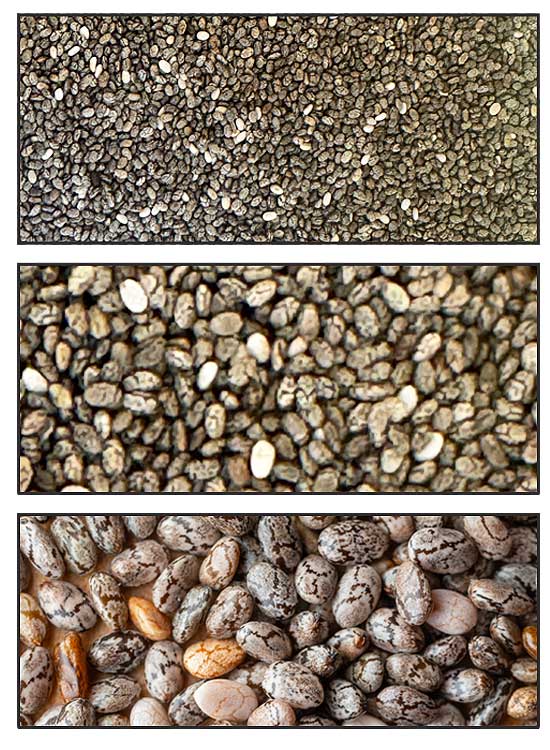
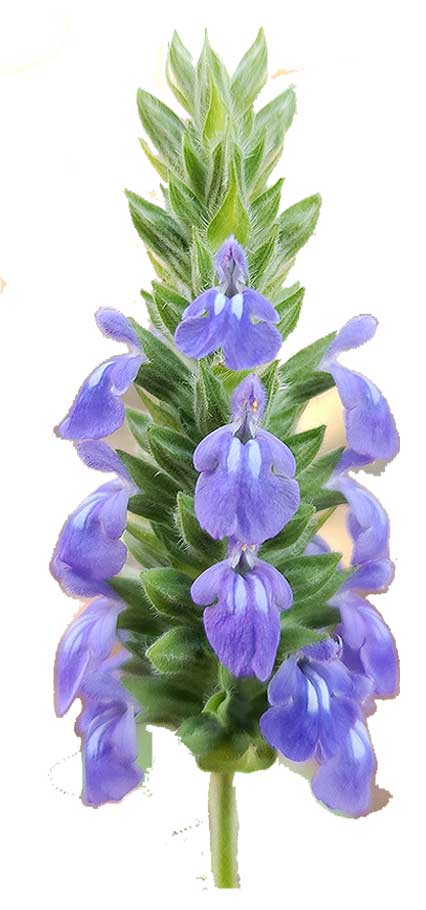
Salvia hispanica is an annual herbaceous plant growing up to 1.75 meters high. Leaves are opposite, 4 to 8 centimeters long and 3 to 5 centimeters wide. Flowers are purple or white, produced in numerous clusters in a spike at the end of the stem. Seeds are small and flattened, 2 to 2.5 millimeters in length, 1.2 to 1.5 millimeters wide, and 0.8 to 1 millimeter thick. Color is variable, dark brown to black, sometimes gray or white.
• Seeds are hydrophilic, absorbing up to 12 times their weight in liquid when soaked. While soaking, the seeds develop a mucilaginous coating that gives chia-based beverages the distinctive gelatinous texture. (28)
Distribution
-
Cultivated.
- Native to Guatemala, Mexico Central, Mexico Gulf, Mexico Northeast, Mexico Northwest, Mexico Southeast, Mexico Southwest. (27)
-
Grown commercially in Argentina, Bolivia, Ecuador, Guatemala, and Mexico.
- Australia is the biggest producer of chia seeds.
 Constituents Constituents
- Nutrient analysis of seeds (1 oz., approximately 28 g) yield: total calories 137 calories, carbohydrates 50 kcal, fat 72.1 kcal, protein 15.2 kcal, total carbohydrates 12.3 g, protein 4.4g, dietary fiber 10.6 h, total fat 8.6 g, saturated fat 0.9 g, monosaturated fat 0.6 g, polyunsaturated fat 6.5 g, total omega-3 fatty acids 4815 mg, total omega-6 fatty acids 1620 mg, calcium 177 mg, phosphorus 265 mg, potassium 44.8 mg, sodium 5.3 mg, zinc 1.0 mg, copper 0.1 mg, manganese 10.6 g, cholesterol 0 mg, water 1.5 g, ash 1.4 g. (1)
- Nutrient analysis of dried chia seeds (per 100g) showed: (Proximates) water 5.80g, energy 486 kcal, protein 16.54g, total lipid (fat) 42.12g, carbohydrate (by difference) 42.12g,
total dietary fiber 34.4g; (Minerals) calcium 631mg, iron 7.72mg, magnesium 335mg, phosphorus 860mg, potassium 407mg, sodium 16mg, zinc 4.58mg; (Vitamins) vitamin C 1.6mg, thiamin 0.620 mg, riboflavin 0.170 mg, niacin 8.830mg, vitamin B12 0, vitamin A 54 IU, vitamin E (alpha-tocopherol) 0.50mg; (Lipids) fatty acid, total saturated 3.330g, total monosaturated FA 2.309g, total polyunsaturated FA 23.665g, total trans FA 0.140g, cholesterol 0. (10)
- Seed contains 25% to 40% oil with 60% of it comprising (omega) ω-3 alpha-linolenic acid and 20% of (omega) ω-6 linoleic acid. Chia seed is composed of protein (15-25%), fats (30-33%), carbohydrates (26-41%) high dietary fiber (18-30%), ash (4-5%), minerals, vitamins, and dry matter (90-93). (17)
- Amino acid profile of chia (g/100g) yielded aspartic acid 1.69, threonine 0.71, serine 1.05, glutamic acid 3.50, glycine 0.95, alanine 1.05, valine 0.95, cysteine 0.41, methionine 0.59, isoleucine 0.80, leucine 1.37, tryptophane 0.44, tyrosine 0.56, phenylalanine 1.01, lysine 0.97, histidine 0.53, arginine 2.14, proline 0.77. (USDA) (21)
- Nutrient yield of 1 ounce (oz.) or 28 g (grams) of seeds: calories 138 kcal, protein 4.68g, fat 8.7g, alpha linolenic acid (ALA) 5 g, carbohydrate 11.9 g, fiber 9.7 g, calcium 179 mg, iron 2.1 mg, magnesium 95 mg, phosphorus 244 mg, zinc 1.3 mg, vitamin B3 (niacin) 2.5 mg.
(29)
Properties
- It is one of the highest whole food sources of dietary fiber and α-linolenic acid (ALA) per total fat.
- Seeds are
-
Seeds are high in omega-3 fatty acids.
- Gastrointestinal complaints—gas and bloating—after ingestion of chia seeds are attributed to its high fiber content (25%). (1)
- Because it can grow in arid environments, it is highly recommended as alternative crop for field crop industry. (11)
- Considered antioxidant, antiproliferative, cardioprotective, appetite suppressant.
- Studies have suggest cardioprotective, antihypertensive, antioxidant, glucose lowering, appetite suppressant, enzyme inhibitory, anti-acetylcholinesterase inhibitory, hepatoprotective, insulin sensitivity ameliorating, green coagulant properties.
Parts used
Seeds
 Uses Uses
Edibility
- Chia seeds were a staple of the ancient Aztec diet.
- Seeds may be eaten raw or prepared in a number of dishes. Raw, the seeds are an excellent source of dietary fiber and O3FA. Seeds may be roasted, ground into pinole for use in porridge or baked goods. (1)
- Seeds may be soaked in fruit juice (buko juice, for one) or water to make chia fresca in Mexico. (1)
- Seeds can be used to make a gel as substitute for oil. The gel can be added to any sauce, jelly, or baked goods. (1)
- Sprouts are edible, used in salad, sandwiches, and other dishes, just like bean sprouts.
Folkloric
- No folkloric medicinal use in the Philippines.
- In Mexico, mixture of whole or ground chia seeds and water are used to treat stomach ailments and diarrhea. The Michoacan in Mexico use the seeds to remove obstructions of the eye. (15)
Others
- Oil: Used as lacquer base for painting clay or gourd vessels; was a basic component of Aztec body paint. In modern times, oil used as lacquers and paints and as emollient in cosmetics. (15)
- Commercial uses: (1) Seed used in the production of animal feed (chickens, pigs, and rabbits). (2) Used in food formulation such as composite flour (15-20% chia with corn flour), ingredients for cookies, cereal bars, jellies, desserts, emulsions, and (3) Chia seed oil in health supplement formulations, carbohydrate-loading drinks. (17) Chia mucilage powder used in preparing health and energy drinks; also reconstituted as fresh gel. Fresh mucilage can be used as stabilizer in ice cream and other frozen desserts. Like guar gum and gelatin, chia can be used as thickener in various stages of food preparation. (23)
- Repellent: Essential oils in chia leaves have repellent properties against insects, making it suitable for organic cultivation. (9)
Studies
• α-Linolenic Acid / Improvement of Adiposity / Benefits on Lipid and Glucose Homeostasis: Study investigated the benefits of dietary intake of chia seed rich in α-linolenic acid and fiber on dyslipidemia and insulin resistance (IR) in Wistar rats fed with a sucrose-rich diet. Results showed dietary chia seed prevented the onset of dyslipidemia and IR in rats fed with SRD. Study provided new data regarding effect on chia seed upon lipid and glucose homeostasis in and experimental model of dislipidemia and IR. (2)
• Review on Effect on Cardiovascular Risk Factors in Humans: Study assessed the effect of chia seed consumption, milled or whole, in the prevention/control of cardiovascular risk factors in humans using 6 of 8 criteria of the Cochrane Handbook for Systematic Reviews of Interventions. Of sevens studies, only one was not randomized. One study showed a significant drop in systolic blood pressure and inflammatory markers. In four of the studies reviewed, there was a significant spike in ALA (alpha-linolenic acid) and EPA (eicosapentaenoic acid). In acute trials, postprandial blood sugar was significantly lowered. One study showed a significant drop in triglycerides, body mass and inflammatory markers, however, with chia see mixed with other foods. Two studies showed a high risk of bias. Review concludes most of the studies did not demonstrate statistically significant results in relation to cardiovascular disease risk factors. (3)
• Antioxidant / Protein Fractions: Study evaluated chia seed for protein content and antioxidant activity. Protein content ranged from 2.9% to 4.6% dry matter, albumins and globulins ranged from 54.6% to 62.6%. Various chia seeds showed differenced in SOD activity and exhibited high antiradical activity against ABTS. Results suggest chia seed is potentially suitable for use in gluten-free diet of celiac people and as antioxidant ingredient in health food. (4)
• Mucilage: Seed placed in water exudes a mucilaginous polysaccharide. The mucilage has interesting properties for food, care, and pharmaceutical industries. The mucilage is a potential source of hydrocolloids and can be incorporated as functional ingredient in different food formulations. (5)
• Effect of Storage on Oil Stability: Study reports chia oil is susceptible to oxidation and should be protected during storage. Illumination influences chia oil oxidative stability and should be stored in containers with light-barrier properties. Natural antioxidants can prevent chia oil oxidation. Effect of combination of PA and TOC was greater than that achieved with TBHQ. (6)
• Decreased Cardiovascular Risks in T2DM / Randomized Controlled Trial: Single-blind cross-over study showed long-term supplementation with Salba attenuated a major cardiovascular risk factor (SBP) and emerging factors (js-CRP and vWF) safely, while maintaining good glycemic and lipid control in people with well-controlled T2DM. (7) Study describes the use of chia for reducing postprandial glucose, insulin sensitivity, blood pressure, and oxidative stress, especially in diabetic individuals. The invention also describes the effects of chia on inflammatory factors (CRP), coagulation and fibrinolytic factors, iron status, and endothelial function. (24)
• Effect on Postprandial
Glycemia and Subjective Appetite: Study evaluated the ability of novel oil-rich grain Salvia hispanica to lower postprandial glycemia and reduce appetite when added to a carbohydrate meal. Results showed that ground and whole forms positively affected postprandial glycemia and mildly suppressed appetite. (8)
• Comparative Study on Postprandial Glycemia and Satiety: Randomized study compared the effect of two seeds (flax and salba-chia seeds) on fifteen healthy participants. Despite the similarities in nutritional composition, Salba-chia appears to have the ability to convert glucose into a slow-release carbohydrate and affect satiety to a greater extent than flax, possible due to higher fiber viscosity. (11)
• Safety / Opinion: A 2009 study reported on a scientific opinion on the safety of chia seed and ground whole chia as novel food ingredient for use in bread. Based on compositional data on chia seeds, its nutritional characteristics, and proposed use, the panel saw no nutritional disadvantage to the consumer for use of chia as novel food ingredient. While there was no evidence of adverse effects, there were still uncertainties with regard its potential allergenicity. Previous and current use of chia for food purposes in non-EU countries provided supportive evidence for a positive conclusion on safety of chia seeds and ground whole chia seeds under the proposed conditions of use. (12)
• Benefits for Weight Loss and Improvement of Obesity in T2 Diabetes: A double-blind, randomized, controlled trial of two parallel groups with 77 over-weight or obese patients with T2D supported the beneficial role of Salba-chia seeds in promoting weight loss and improvement of obesity related risk factors, while maintaining good glycemic control. Supplementation of Salba-chia may be a useful dietary addition to conventional therapy in the management of obesity in diabetes. (13)
• Antioxidant and Toxicity Study: Study evaluated the antioxidant and quantitative phytochemical content of methanolic extracts of seeds and aerial parts of the chia plant. The antioxidant capacity showed lower than that reported for coffee or green tea. Toxicity study of aerial parts and seeds assessed in brine shrimp (Artemia salina L.) nauplii showed a low lethal effect. There was no significant effect on body mass and satiety compared to the water control group. (14)
• Anti-Tryptic Activity / Seeds: Chia is an important source of proteins and crude extract and protein fractions have exhibited inhibitory activity for trypsin. Its consumption has benefits attributable to nutritional composition and phenolic contents. This study verified the anti-tryptic activity of chia commercial seeds and flour, and it is possible to isolate trypsin protein inhibitor from chia seeds. (16)
• Health Benefits of Chia Seed / Human Clinical Trials: Review (2012) reports on four clinical trials on the chia seeds. One of the trials showed no health benefits, the difference was attributed to treatment durations employed or biochemical components used in the studies. Various benefits include high dietary fiber and ALA content that can promote body weight loss, reduction of triglyceride and blood glucose levels, and reduced postprandial glycemia. (17)
• Effect on Cognitive Abilities / "Brain Superfood": Study evaluated the effects of Salvia hispanica L. on cognitive abilities by means of a chia intervention. Participants were divided into two groups, one consuming a daily dose of 5 grams of chia seeds for 21 days, the other group continuing with their usual diet. Cognitive abilities were measured by memory performance, verbal intelligence by sentence recognition testing, LEGO airplane assembly, along with a classical memory test consisting of memorizing 14 terms in one minute. Results showed the test group that participated in the intervention performed significantly better in retest than the comparison group. (18)
• Review and Meta-Analysis on Clinical Evidence on Dietary Supplementation with
Chia Seed: As a dietary supplement, popular for its high alpha-linolenic acid, vegetable protein and dietary fiber content, clinical information on effects has been lacking. This study, using a systematic search of databases, including randomized controlled trials, summarized the clinical evidence regarding the use of chia seed for a variety of health conditions. Pooling of results showed no significant differences except for the following findings of subgroup analysis at higher doses of chia seed i.e., lower postprandial blood glucose level, lower HDL, and lower diastolic blood pressure. The quality of all evidence assessed was low or very low. All trials employed only surrogate markers as outcomes. Authors suggest that future trials with improved methodological quality, well-described clinical events, and well-validated surrogate markers are needed to support the potential health benefits of chia seed consumption. (19)
•
Increased Bone Mineral Content and Improved Hepatic and Intestinal Morphology / Long-Term Dietary Intake: Study evaluated the effect of long-term intake of n-3 fatty acid-rich plant foods such as chia on male Sprague-Dawley rats. The bone mineral content of chia fed rats were significantly higher than controls. Liver and intestinal examinations showed improved morphology associated with lower lipid deposit in hepatocytes and increased intestinal muscle layers and crypt size in the chia group. (20)
• Phenolic Compounds / Seeds, Fiber Flour and Oil: Study evaluated commercial samples of chia seed, fiber flour and oil for phenolic compounds using ultrasound-assisted methodology. Phenolic compounds from crude and hydrolyzed extracts were mainly caffeic acid and danshensu and its derivatives, such as rosmarinic and salvianolic acids. TPC was higher in the hydrolyzed extracts. Phenolic compounds are important dietary sources of natural antioxidants for prevention of diseases caused by oxidative stress. (22)
• Anti-Inflammatory
/ Synergism with Flax Seeds / Seeds: Study evaluated the in vitro and in vivo anti-inflammatory activities of Salvia hispanica (chia seeds) and Linum usitatissium (flax seeds), individually or combined, in Swiss albino rats, using 1% histamine-induced paw edema test for in vivo testing, and protein denaturation and HRBC membrane stabilization methods for in vitro testing. Results showed the chia seeds and flax seeds possess anti-inflammatory activity in a dose-dependent manner and also showed synergistic activity. (25)
• Antioxidant
/ Enzyme Inhibition / Seed Oil: Study evaluated the antioxidant and anti-Alzheimer's disease properties of Chia (S. hispanica)
seed oil (CSO). The CSO exhibited higher antioxidant activity than vitamins E and C in the CUPRAC method. In DPPH radical scavenging method, CSO exhibited higher radical scavenging potential than BHT, a standard and synthetic antioxidant. In evaluation of anti-Alzheimer's properties, the CSO showed inhibition of acetylcholinesterase enzyme with IC50 17.60 µg/mL, close to IC50 of tacrine (8.82 µg/mL), the standard inhibitor of the enzyme. CSO also inhibited both α-glucosidase enzyme and human carbonic anhydrase II isoenzymes at lower rate than standard inhibitors. Total phenolic and flavonoid contents of CSO were 784.44 µg GAE/mL o8l and quercetin 150 µg/mL oil, respectively. Of the phenolic compounds, isosakuranetin (29.07 mg/L oil) was the most abundant polyphenollic compound. The CSO showed effective antioxidant activity, polyphenolic contents and potent enzyme inhibition properties. (28)
• Effect of Chia Seed Supplementation on Cardiometabolic Healtih in Overweight: Studies have shown the potential for chia seeds to improve cardiometabolic health. Review analyzed the effects of chia seeds on cardiometabolic indices in the overweight population. Meta-analysis srevealed chia supplementation does not significantly impact most lipid profile paramet3ers and glycemic markers. However, it showed potential benefits in reducing WC (waist circumference), blood pressure and C-reactive protein. Supplementation showed significant reduction in systolic blood pressure. While chia seeds can be a valuable addition to cardiometabolic health management, it should be part of a broader health strategy that includes a balanced diet, exercise, and lifestyle modifications for optimal results. (30)
• Effect of Chia Seed on Insulin Sensistivity, Hematological Indices, and Liver Functions in Obese with (Non-Alcoholic Fatty Liver Disease) NAFLD: Single-rndomized controlled clinical trial on 44 newly diagnosed obese patients with NAFLD evaluated the effects of chia seeds at dose of 40 g/;day plus CRD (calorie restricted diet) for 8 weeks. Results showed significant inter-group reductions in energy and carbohydrate intakes, in favor of chia. Chia plus CRD noticeably improved insulin sensitivity by reducing serum insulin and increasing homeostatic model assessment of insulin sensitivity. There were marked attenuations in NFS and AST to ALT ration, and marginal amelioration in serum amino-
transferase levels in the chia group. Study suggests chia seeds supplementation could reduce food intake, ameliorate insulin sensitivity, and NAFLD fibrosis score in obese patients with NAFLD. (31)
• Green Coagulants for Sustainable Textiile Wastewater Treatment:
Conventional chemical coagulants carry residual toxicity, sludge-management complexity, and cost barriers. Study evaluated and compared the coagulation-floculation (CF) performance of seed powders from Salvia hispanica and Moringa oleifera in treating two textile dyeing effluents. Both bio-coagulants achieved equivalent peak CP)D removal (96.36%) under optimised alkaline conditions. Neither coagulant demonstrated statistically superior mean performance across the full experimental range. Both showed environmentally sustainable, biodegradable alternative to synthetic chemical coagulants for primary textile wastewater treatment in Bangladesh. (32)
• Source of Proteins and Bioactive Peptides: Consumption of chia seeds has increased due to high content of omega-3 fatty acids and dietary fiber. Seeds also contain high protein concentration and essential amino acids, and a promising source of bioactive peptides. BIOPEP ddatabase analysis of the peptides' bioactive potential catalogued a total of 20 proteins, 12 of which were involved in the regular metabolic processes of the plant cells, 8 were related to production and storage of plant lipids (30% in chia seeds), especially omega-3 fatty acids (around 20%). Analyses of amino acid sequences showed peptides with bioactive potential, including dipeptidyl peptidase IV-inhibitors, ACE inhibitors, and antioxidant capacity. The results correlate with the main health benefits of whole chia seed in humans such as antioxidant, hypotensive, hypoglycemic, and hypocholesterolemic effects. (33)
• Effect of Supplementation on Biochemical and Hepatic Markers on Diet-Induced Obese Mice: Obesity is a significant health concern of 13% of the world population, which is often associated with insulin resistance and metabolic-associated fatty liver disease (MAFLD), which can cause chronic liver inflammation and adipose tissue. Obese hepatocytes can lead to increased lipid droplets and lipid peroxidation, which can progress to liver damage. Study evaluated the effect of chia leaves ethanolic extracts of two seed phenotypes on diet-induced obese mice. Results showed chia leaf extract affected insulin resistance, reduced number and size of lipid droplets and peroxidation. Results suggest chia leaf extract may help treat insulin resistance and liver damage associated with MAFLD. (34)
• Seed Mucilage in Food, Cosmetic and Pharmaceutical Products: Study evaluated the mucilage extracted from chia seed (MCHs). The MCHs showed excellent photostability, with degradation % of 6.6% after 120 min unver UV light. MTT assay showed excellent cytocompatibility on L929 fibroblast cell line. The biomaterial showed promising mucoadhesive activity. The observed properties of chia mucilage reinforces the multipotential feature of the polymer in food, cosmetic, and pharmaceutical industries. (35)
Availability
- Cultivated.
- Seeds, seed oil in the cybermarket.
|