Gen info
- Grona is a genus in the flowering plant family Fabaceae, containing of about 41 to 50 species of annual and perennial herbs and shrubs characterized by trifoliate leaves and indehiscent, often sticky fruits that resemble ticks, earning the common name "tick-clover." (3)
- Taxonomic journey: The genus was first described by João de Loureiro in 1790 based on specimens from Cochinchina (modern-day Vietnam). The genus was long subsumed within the larger Desmodium but was reinstated as distinct in 2018 following molecular phylogenetic analysis that revealed Desmodium's polyphyly and necessitated the separation of monophyletic groups. (3)
- The genus has a pantropical distribution, with species occurring across Africa, Asia, the Americas, and Oceania. Diversity is concentrated in Asia, where approximately 25 species are recorded, particularly in Southeast Asia and the Indian subcontinent.
- Etymology: The genus name Grona derives from the Greek word gronos, meaning "hollow" or "a cavern", probably alluding to the plant's hollow stems, pods, or growth habit. The specific epithet styracifolia is a Latinized compound word combining Styrax (the storax tree genus or the foliage resemblance to its leaves) and -folia, meaning "leaf".
Botany
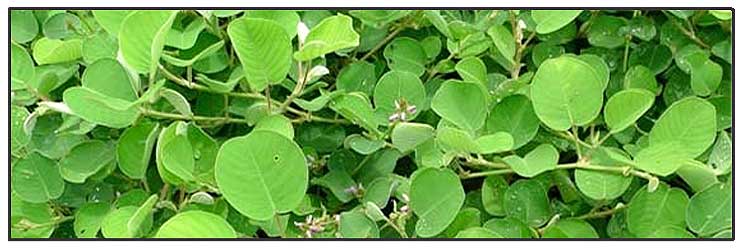
• Desmodium styracifolium is a much branched, erect shrub or prostrate to ascending subshrub, 60-200 cm tall, young stems hairy; leaves 1- or 3-foliolate, stipules narrowly triangular, 8-11 mm long, terminal leaflet broadly elliptical or broadly obovate to orbicular, (1-)2-4.5(-5.5) cm x (1-)2-4.5(-5) cm, larger than the lateral ones, thick chartaceous to subcoriaceous, upper surface glabrous, lower surface densely hairy, lateral veins 8-10, not extending to the margin; inflorescence terminal and axillary, short racemose, 1-3(-5) cm long, very densely flowered; flowers in pairs, calyx 4-lobed, densely hairy, corolla purple or violet and fragrant, androecium diadelphous; pod narrowly oblong, compressed, (12-)15-20 mm x 2.5-3 mm, plicate-retroflexed when young, later straight, (4-)5-6-jointed, article quadrate or transversely broadly oblong, densely covered with hairs; seed reniform, depressed obovate or transversely elliptical, 1.3-1.8 mm x 2-2.2 mm.
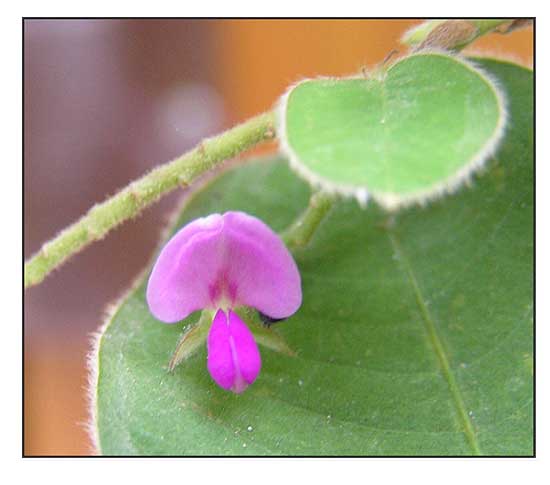 • Herbs, subshrub-like, erect, 30-100 cm tall, much branched. Young branches with dense, white or yellowish hairs. Leaves often 1(or 3)-foliolate; petiole 1-2 cm, densely sericeous; blade orbicular or nearly so to broadly obovate, 2-4.5 × 2-4.5 cm, abaxially densely adpressed white sericeous, adaxially glabrous, lateral veins 8-10, base rounded or cordate, apex rounded or emarginate. Racemes short, 1-3 cm; rachis densely sericeous, densely flowered, 2-flowered at each node. Pedicel 2-3 mm, drooping at fruiting. Calyx 4-lobed; lobes nearly equal. Corolla purple-red, ca. 4 mm; standard obovate or nearly orbicular, clawed; wings obovate, shortly clawed; keel longer than wings, extremely curved, long clawed. Ovary linear, hairy. Legume 1-2 cm × ca. 2.5 mm, pubescent and minutely hooked hairy, lower suture undulate, upper suture straight, 3-6-jointed, reticulate veined. (Flora of China) • Herbs, subshrub-like, erect, 30-100 cm tall, much branched. Young branches with dense, white or yellowish hairs. Leaves often 1(or 3)-foliolate; petiole 1-2 cm, densely sericeous; blade orbicular or nearly so to broadly obovate, 2-4.5 × 2-4.5 cm, abaxially densely adpressed white sericeous, adaxially glabrous, lateral veins 8-10, base rounded or cordate, apex rounded or emarginate. Racemes short, 1-3 cm; rachis densely sericeous, densely flowered, 2-flowered at each node. Pedicel 2-3 mm, drooping at fruiting. Calyx 4-lobed; lobes nearly equal. Corolla purple-red, ca. 4 mm; standard obovate or nearly orbicular, clawed; wings obovate, shortly clawed; keel longer than wings, extremely curved, long clawed. Ovary linear, hairy. Legume 1-2 cm × ca. 2.5 mm, pubescent and minutely hooked hairy, lower suture undulate, upper suture straight, 3-6-jointed, reticulate veined. (Flora of China)
Distribution
- Native to the Philippines. (1)
(2)
- In Luzon: Bulacan, Camarines, Laguna, NCR, R9izal; Mindanao, Davao del Sur,
Mindoro, Palawan, Panay; Basilan, Leyte. (2)
- Common roadside and grassland weed at low and medium elevation.
- Found in rather open habitats, in full sunlight as well as in shade, in grasslands and abandoned rice fields from sea level up to 600 m altitude.
- Also native to Assam, Bangladesh, Cambodia, Caroline Is., China South-Central, China Southeast, East Himalaya, Hainan, India, Jawa, Lesser Sunda Is., Malaya, Maluku, Myanmar, Sri Lanka, Sulawesi, Sumatera, Thailand, Vietnam. (1)
Constituents
- Phytochemical analysis have revealed a wide array of chemical compounds, including polyphenols, alkaloids, terpenoids, among others.
-
Polyphenols identified in D. styracifolium include apigenin, genistein, kaempferol, luteolin, quercetin, and schaftoside. (8)
-
Study of aerial parts identified a new compound, styracifoline (1), together with 3 known compounds: salicylic acid (2), quebrachitol (3), and 3-O-[α-L-rhamnopyranosyl-(1 -->2)-ß-D-galactopyranosyl-(1 -->2)-ß-D-gluco0pyranosyl]-soyasapogenol B (4). (see study below) (13)
Properties
- Studies have suggested nephroprotective, anti-inflammatory, anticonvulsant, antiurolithiasis, anticolitic, hepatoprotective, antidiabetic, antiplatelet properties.
Parts used
Whole plant parts.
Uses
Edibility
- No report on culinary use.
- While not reported as toxic, it is not considered suitable for standard consumption, with its woody and unpalatable taste.
- Although reportedly inedible, decoctions and other formulations are used as traditional medicine.
Folkloric
- No reported folkloric medicinal use in the Philippines.
- Whole plant is diuretic and febrifuge. Used for treatment of nephritic edema, urethral inflammation, jaundice, gonorrhea, and irritation from nettles. Plant together with central part of maize cobs used for treatment of colic. Decoction of plant used for treatment of gallstones, urinary tract stones, and hepatitis. (4)
- In China,
decoction of whole plant used to ease stranguria, disinhibit urine, and drain moisture to reduce jaundice. Used for treatment of urolithiasis, hematuria, dysuria, hepatitis, jaundice, bile stasis, rheumatism, fever, dysentery, wound healing, cough, malaria, hemoptysis, laryngitis, urticaria. For infantile hypotrophy, used together with pork food. For mastitis, poultice of whole plant topically applied.
- In Chinese traditional medicine, aerial parts are used for treatment of urinary disturbances, urolithiasis, edema and jaundice, with formulations containing its flavonoids approved for clinical use by China's National Medical Products /administration. (3)
- In traditional Vietnamese medicine, used as diures
- In Malaysia, used for treatment of colic, together with central part of maize cobs.
Others
- Agrofrestry: Reported as a good green manure, which covers the soil fast and produces numerous roots, nodules, and seeds. The plant has a symbiotic relationship with certain soil bacteria: the bacteria forms nodules on the roots and fix atmospheric nitrogen, which is used by the growing plant and other nearby growing plants. Fixes nitrogen to the soil and enhances soil fertility. Use in border planting and as ground cover. (4)
Studies
• Schaftoside / Dual Mechanism in COVID-19 Treatment: It has been reported that TCM has demonstrated efficacy in treating COCID-19 caused by SARS-CoV-2. Recent study showed schaftoside inhibits the 3CLpro and PLpro of SARS-CoV-2, while also enhancing immune response of host cells treated by COVID-19. The dual mechanism positions schaftoside as a promising candidate for the treatment of COVID-19. (5)
• Schaftoside / Genome Mechanism for COVID-19 Rx: In this study, the genome of TCM herb Grona styracifolia (GSO), which is rich in schaftoside, was sequenced and a high-quality assembly of GSO genome was obtained. Integrative analysis of the metabolome and transcriptome identified 13 CGTs and 8 HIDHs involved in the biosynthetic pathway of schaftoside. The study findings provides insights in to the genomic mechanisms underlying the abundant biosynthesis of schaftoside in GSO, highlighting the potential of GSO as a source of bioactive compounds for pharmaceutical development. (5)
• Nephroprotective in Oxalate-Induced Renal Injury: A urinary metabolic analysis in a mouse model of renal calcium oxalate (CaOx) crystal deposition sought to identify differentially altered metabolites in mice with oxalate-induced renal injury and evaluated the therapeutic mechanisms of G. styracifolia. Fifteen altered metabolites were identified in mice with crystal-induced renal injury. Nine overlapping target proteins of GS and altered metabolites were discovered. Among the proteins, expression of estrogen receptor 2 (ESR2) in renal tissues were down-regulated while androgen receptor (AR) expression was increased in the oxalate group. These changes were reversed by GS treatment. Study suggests GS exerts therapeutic effect by regulating multiple metabolic pathways and expression of ESR and AR in mice with oxalate-induced renal injury. (6)
• Anticonvulsant Effects / Schaftoside: Study evaluated the anticonvulsive effects of schaftoside (SS) a TCM, on pentylenetetrazol (PTZ)-induced epi9leptic seizures in zebrafish ant its underlying mechanisms. SS pretreatment demonstrated downregulation of c-fos expression during seizures. PTZ-induced upregulation of apoptotic cells was decreased with pretreatment with SS. Pretreatment also downregulated the inflammatory responses during seizure progression including upregulation of IL-6, IL-1ß, and NF-kB. Pretreatment also reduced PTZ-induced recruitment of immunocytes. Pretreatment also modulated oxidative stress evidenced by decreased levels of catalase (CAT) and increased glutathione peroxidase-1a (GPx1a) and manganese superoxide dismutase (Mn-SOD). Study suggests pretreatment ameliorates PTZ-induced seizures, suppresses apoptosis and downregulates the inflammatory response and oxidative stress, potentially protecting against further seizures. (7)
• Botanical and Ethnopharmacological Insights and Prospects in Pharmacology and Pharmaco-therapy: Study provided a comprehensive analysis and summary of the literature on the pharmacologic properties of components that can be extracted from D. styracifolium, and to explore the potential applications for the effective prevention and treatment of such conditions as urolithiasis, cholelithiasis type 2 diabetes, metabolic syndrome, pro-oxidant and inflammatory processes, among others. Special attention is focused on potential therapeutic applications of flavonoids from D. styracifolium for diseases associated with development of chronic inflammation and systemic response, and the ability of flavonoids to exert antioxidant and anti-inflammatory effects via modulation of transcription factors. (8)
• Anti-Colitic Potential / Antioxidative / Aerial Parts: Study evaluated the anticolitic effect of Desmodium styracifolium extract in ulcerative colitis (UC) mice and its possible antioxidative mechanisms. UC was induced with dextran sodium sulfate (DSS). Bioactive antioxidants in DS extract were flavonoids. The extract treated UC mice had a lower DAI (disease activity index) than untreated mice. Herbal treatment downregulated expressions of proinflammatory cytokine genes in the colonic tissues of mice. Results suggest a potent anti-inflammatory agent for reducing UC symptoms. (9)
• Cholelitholytic, Choleretic, Hepatoprotective Effects / Schaftoside These effects have been confirmed, primarily ascribed to activation of the hepatic Xα receptor and bile acid receptor, farnesoid X receptor, by the flavonoid schaftoside. (8)
• Antistone Activity / Carboxymethylation of Polysaccharide: Desmodium styracifolium is a traditional medicine used for treating kidney calculi in China. Study reports on the increasing of carboxyl (-COOH) content of D. styraciif9olium polysaccharide (DSPO) and further increasing its antistone activity. DSPO was carboxymethylated with chloroacetic acid at varying degrees. Oxalate-damaged HK-2 cells were repaired with the modified polysaccharides (CDSPs). The CDSPs showed stronger antioxidant activity in vitro and can improve the vitality of damaged HK-2 cells, repair cell morphology and cytoskeleton, increase cell healing ability, and reduce ROS and NO levels, increase mitochondrial membrane potential, limit autophagy to low levels, reduce eversion of phosphatidylserine in the cell membrane, weaken inhibition of oxalate on DNA synthesis, and restore cell cycle to normal state, promote cell proliferation, and reduce apoptosis/necrosis. Study suggests carboxymethylation modification of DSPO can improve antioxidant activity and enhance its ability to repair damaged HK-2 cells. The polysaccharide with increased -COOH content may have improved potential for treatment and prevention of kidney stones. (11)
• Hepatoprotective / Schaftoside / Amelioration of Acetaminophen-Induced Hepatotoxicity: Acetaminophen (APAP) overdose can lead to acute liver injury by inducing hepatic mitochondrial oxidative stress and inflammation. Farnesoid X receptor (FXR) serves as a therapeutic target whose activation has shown protection against APAP-induced hepatotoxicity. Study showed FXR activation buy Schaftoside (SS), a naturally occurring flavonoid from D. styracifolium, protected mice against APAP-induced hepatotoxicity via regulation of oxidative stress and inflammation. Results provide direct evidence that FXR activation by SS could attenuate APAP-induced hepatotoxicity via inhibition of nuclear factor kappa-B signaling and fine-tuning the generation of proinflammatory mediators; eicosanoids. Strategies to activate FXR signaling in hepatocytes may be a promising therapeutic approach to alleviate liver injury induced by APAP overdose. (12)
• Styracifloine / Antidiabetic and Antiplatelet Activities: Study of aerial parts identified a new compound, styracifoline (1), together with 3 known compounds. Molecular docking simulation of compound 1 revealed inhibitability toward tyrosine phosphatase 1B, α-glucosidase, oligo-1,6-glucosidase, and purinergic receptor. The computational retrieval encourages further in vitro and in vivo studies to verify the antidiabetic and antiplatelet activities of styracifoline. (see constituents above) (13)
• Inhibitory Effects of Ds-t Triterpenoid on Calcium Oxalate Renal Stones: Study evaluated the inhibitory effects of D. styracifolium-triterpenoid (Ds-t) on the formation of calcium oxalate stones induced experimentally by ethylelne-glycol (EG) and 1α(OH)D3(1αD3) in rats. Results suggest Ds-t inhibits the formation of Ca oxalate stones in rat kidneys by increasing the output of urine, decreasing the extraction of calcium and increasing urinary excretion of citreate. Ds-t may be useful in preventing the recurrence of Ca oxalate stones in the clinical setting. (16)
• Alleviation of Cholestatic Liver Disease by FXR Pathway: Cholestatic liver disease (CLD) is charaxterized by cholestasis. Farnesoid X receptor (FXR) is a nuclear receptor that maintains moeostasis in bile acid metabolism. Modulation of FXR to inhibit cholestasis is a key measure in the treatment of CLD. Study evaluated the effect and mechanism of Desmodium styracifolium extract (DME) in relieving CLD by invivo and invitro experiments. Molecular docking showed DME components, such as Lumichrome, Daidzein and Folic acid, all had good binding with FXR, and surface plasmon resonance (SPR) showed both Lumichrome and Daidzein had relatively high affinity with FXR. Results showed DME alleviated CLD through the FXR pathway, through mechanisms that miay be associated with gut microbiota. (17)
Availability
- Wild-crafted.
- Herbal products in the cybermarket.
|


.jpg)