Gen info
- Anamirta is a genus of wood vines in the family Menispermaceae.
- Anamirta cocculus is the only species in the montypic genus Anamirta.
-
Anamirta cocculus is a Southeast Asian and Indian climbing plant. It is the source of picrotoxin, a poisonous compound with stimulant properties.
- Etymology: Annamirta cocculus derives from a combination of Sanskrit and Latin origins: Anamirta from New Latin, with the Sanskrit root amrta, meaning "immortal". The specific epithet cocculus is New Latin, meaning "small berry". The name fishberry derives from use of the dried fruit for fishing, to stupefy and capture the fish, a method considered "unsportsmanlike".
Other common names - Indian berry and Levant nut refers to the dried fruit, and to the plant by synecdoche. (23)
 Botany Botany
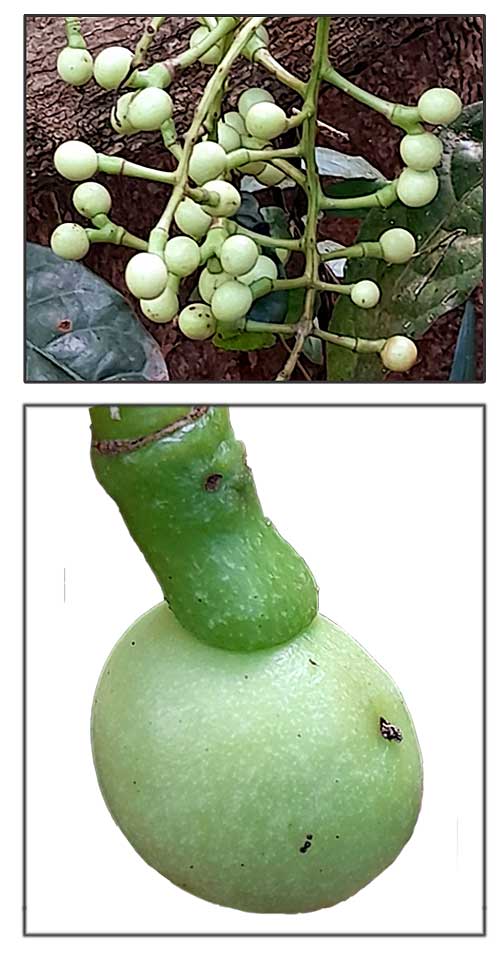
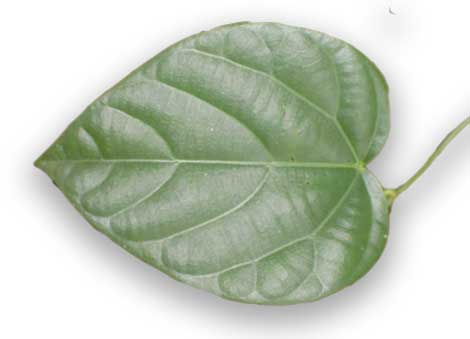
• Lagtang is a large woody vine with a corky, gray bark and white wood. Stems are sometimes 10 centimeters thick, longitudinally wadded, porous, with stout, smooth branches. Leaves are ovate or ovately-cordate, 10 to 20 centimeters long, with pointed or tapering apex and rounded or nearly heart-shaped base, smooth above, hairy on the nerve axils beneath, and 3-nerved from the base. Petioles are 5 to 15 centimeters long. Flowers are yellowish, sweet-scented, 6 to 7 millimeters across, crowded on 3- to 4.5 centimeters long, pendulous panicles. Fruit is a drupe, nearly spherical, about 1 centimeter in diameter when dry, smooth and hard.
Distribution
- Native to the Philippines. (11)
-
Scattered in thickets at low and medium altitudes from northern Luzon to southern Mindanao.
- Also native to Andaman Is., Assam, Bangladesh, Cambodia, India, Jawa, Laos, Lesser Sunda Is., Maluku, Myanmar, New Guinea, Nicobar Is., Sri Lanka, Sumatera, Thailand, Vietnam. (11)
Constituents
- Phytochemical analysis of powdered fruit yielded alkaloids, steroids, fixed oils, proteins, and carbohydrates. (7)
- Stem and roots yielded quaternary alkaloids berberine, palmatine, magnoflorine, and columbamine, oxypalmine, stepharine, and the major tertiary alkaloids, 1-8-oxotetrahydro-
palmitine.
(28)
-
Fruit contains bitter principles: picrotoxin (toxic), picrotoxinin, picrotin and cocculin.
- Seeds yield picrotoxin.
- Alkaloids are menispermine and paramenispermine.
- From the pericarp or shell, two tasteless, nonpoisonous alkaloids, menispermine and parameispermine.
- Seeds contain fat. Its acid constituent is stearophanic and anamirtic acid.
- Picrotoxin yields three substances: picrotoxin, picrotin (nonpoisonous) and anamirtin (slightly bitter and non-poisonous).
- Cocculin was isolated from picrotoxin.
- Seed extracts yielded aldehydes, alkaloids, phenolic compounds, flavonoids, saponins, carbohydrates, proteins, lipids, glycosides, phytosterols, volatile oils, gums, mucilage and other minor phytochemicals.
(see study below) (14)
- Crude alcoholic extract of stem bark yielded sugars and carbohydrates, flavonoids, alkaloids, saponins, steroids, tannins, and phenolic compounds. (15)
- Phytochemical screening of alcoholic extract of stem bark revealed sugars and carbohydrates, flavonoids, alkaloids, saponins, steroids, tannins and phenolic compounds.
 Properties Properties
- Shell of the seed is bitter and acrid; the seed itself is bitter.
- Studies have suggested antioxidant, antiulcer, vasorelaxant, mild sedating, piscicidal, insecticidal, antibacterial, wound healing, anti-arrhythmic, anticancer, antihyperglycemic properties.
Toxicity / Pharmacology / Picrotoxin
- Picrotoxin from the seeds is the source of the poisonous property.
- Seeds when administered internally stimulate all the motor and inhibitory centers in the medulla, especially the respiratory and vagus centers. They also irritate the motor centers, either in the cerebrum or in the medulla and cord, producing in all vertebrates alternating epileptiform spasms, with periodic stoppage of the diaphragmatic motions and slowing of the pulse. The spasms take the form of "swimming," running backwards or around in a circle (manege movements) or rolling of the body on its axis.
- Picrotoxin is probably the best antidote for morphia poisoning, preventing paralysis of the respiratory center, which is morphia's fatal event.
- Toxicity report on picrotoxin is described as: an irritant poison, causing vomiting, purging, etc, with extreme giddiness, faintness, dimness of vision followed the delirium, epileptiform convulsions, stupor, and loss of voluntary power.
- Picrotoxin extracted from berries was once used for treatment of night sweats, epilepsy, and as stimulant; use that is rare nowadays.
Parts used
Seeds, fruit, stem.
Uses
Folkloric
- In the Philippines, infusion of roots used for treatment of fever, dyspepsia, and menstrual problems. Extract of stem added to native wine and drunk to strengthen the blood. Leaves used as poultice for headaches, stomachaches, and delayed menstruation. (25)
-
Seeds used externally to kill hair lice.
- Seeds used as ointment ingredient used for the destruction of hair pediculi.
- Pericarp said to be emetic.
- Seeds used for the night sweats of phthisis.
- Seeds used as parasiticide; picrotoxin as antiepileptic.
- Juice of fresh fruit applied externally to foul ulcers and scabies.
- Crushed seeds are used as effective pediculicide (anti-lice).
- In India, fruits used for bronchitis, chronic skin disease, foul ulcers, dermatophytosis, vertigo, vitiated vat a and kapha. (7) Ointment formulation from fruits and seeds applied to skin diseases. Seeds applied to kill head lice. Juice from fruits applied externally to ulcers and scabies. (25)
- In Thailand, creeping stem used for blood stasis, fever, and to stimulate the central nervous system.
(9)
- In Laos, small doses of fruit used for eruptive fevers. Powdered fruit us to treat acute barbiturate poisoning. (25)
 Others Others
- Fiber: Known more as a bast fiber plant. Bark is made into rope for tying animals and hauling. Also used for making belts.
- Wood: Used for fuel and carving.
- Fish poison: (1) Well known as a fish poison. Fruit is first heated and roasted, then crushed and powdered. (2) The toxic properties are not altered by roasting. In India, dried berries are used to stupefy fish.(•) Fruit paste made into pellets used as fish bait. In the Philippines, fruits are heated or roasted, crushed, and powdered: the powder thrown into the water to stupefy the fish. (25)
- Dart poison: n South America, used as blowgun dart poison.
- 'Homeopathic' remedy: A constituent in a homeopathic remedy for vertigo, Vertigoheel: A grisea, A cocculus, C maculatum and P rectificatum. (Study failed to show a benefit for C. indicus for reducing flight simulator sickness. See below)
- Antidote: Once used as an effective antidote to barbiturate and morphine overdoses; rarely used today.
- Polyherbal formulation: A. cocculus is one of 15 ingredients in a polyherbal formulation against UVA-induced melanogenesis.
- Historical pharmacologic snippet: Although poisonous, hard multum, a preparation made from Cocculus indicus, etc, was once used by 19th century brewers to impart an additional intoxicating and inebriating quality (giddiness) to beer, practitioners of which Charles Dickens referred to as "brewers and beer-sellers of low degree. . . who do not understand the wholesome policy of selling wholesome beverage." The use of such preparations was outlawed in England during the mid-19th century, with fines of £500 for sale and £200 for use. (23)
Studies
• Piscicidal Toxicity / Aquaculture Management Potential: Studies indicate raw seeds are more poisonous than cooked one. Toxicity is reduced by frying, and may become more acceptable to fish. Heat-attenuated toxicity could be a desirable factor for fish caught for human consumption. Study showed seeds may be used as a potent aquaculture management tool to eradicate unwanted wild fish from culture ponds before stocking. (1)
• Picrotoxin Derivatives: Study of plant berries yielded picrotin, picrotoxinin, methyl picrotoxate and two new sesquiterpene y-lactones, dihydroxypicrotoxininn and picrotoxic acid. (2)
• Antioxidant: Study screening aqueous extracts from 20 medicinal plants in Thailand demonstrated inhibition of Heinz bodies induction by antioxidants. Anamirta cocculus showed the 4th highest percentage of HB inhibition and 4th highest antioxidant activity. Results suggest the plants could be a valuable source of antioxidants with a potential anti-carcinogenic activity. (3)
• Simulator Sickness / Cinnarizine: In a study evaluating preventive tools at reducing simulator sickness, in contract to placebo and cocculus, cinnarizine showed significant side effects immediately following flight stimulation; no significant differences were observed between placebo and cocculus. None of the pharmacologic tools used in the study reduced simulator sickness. (6)
• Antiulcer / Fruits: Study evaluated the anti-ulcer activity of an ethanol extract of fruits. Results showed the fruit extract to have potential anti-ulcer activity in three models tested in rats, with increased resistance to necrotizing agents and a direct protective effect on the gastric mucosa. (10)
• Larvicidal / Culex pipiens / Fruit: Study evaluated the acetone extracts of Anamirta cocculus fruit and Pogostemon paniculatus leaf for larvicidal activity against different instars of Culex pipiens. Results showed both acetone extracts and essential oils showed potential as biolarvicides to control mosquito populations. (12)
• Insecticidal / Culex pipiens / Fruit: Study showed significant reduction in fecundity and hatchabiity of C. pipiens. The insecticidal property provides a safe, easily degradable and suitable alternative to synthetic insecticides. (13)
• Antibacterial / Seeds: Study evaluated various extracts of seeds of Anamirta cocculus for antibacterial activity against five species of pathogenic bacteria (S. aureus, P. vulgaris, E. coli, S. typhi, and K. pneumonia). All extracts showed significant antibacterial activity. A methanol extract was the most active one with remarkable activity on various species tested. (14)
• Wound Healing / Fruits: Study evaluated the wound healing activity of an ethanolic extract of fruit in an excision wound model in albino Wistar rats. Results showed significant wound healing activity, statistically significant (p<0.05) in animals treated with 200 mg/kg of extract. (16)
• Acute Toxicity / Behavioral Effects: Study evaluated acute toxicity effects in albino mice with various doses up to 1600 mg/kg. No toxic symptoms were produced. The oral LD50 of the alcoholic extract was established above 1600 mg/kg. Extract showed mild sedation and jumping response and produced autonomic effects like straub tail responses with the test doses. (17)
• Cardiovascular Effect / Antiarrhythmic Activity / Stem Bark: Study evaluated the effect of stem bark extract on perfused blood vessels of frog and perfused frog heart. Results showed a vasodilator effect and decreased cardiac output. There was a depressant effect on perfused frog heart. Results suggest a possible antiarrhythmic effect. (18)
• Stimulation of Vasorelaxation / Low-Dose Combination: / Behavioral Effects: Study of Vertigoheel showed Anamirta cocculus, one of its constituents, stimulated adenylate cyclase activity, while another constituents, Conium maculatum, inhibited phosphodiesterase 5, suggesting synergistic contributions of different pathyways to the stimulation of cyclic nucleotide signaling pathways. In rat carotid artery rings Vertigoheel counteracted phenylephrine-induced tonic vasoconxtriction. Results suggest a vasorelaxant effect from a synergistic stimulation of cyclic nucleotide pathways which may be a mechanistic basis for its anti-vertiginous effects. (20)
• Insecticidal / Effect / Reproductive Toxicity / Cx pipiens / Fruits: Study evaluated the acute toxicity of Anamirta cocculus fruits and Sphagneticola trilobata leaves against different larval instars of Culex pipiens. Results showed dose-dependent effects with significantly reduced fecundity levels. the A. coccolus acetone fruit extract showed significant reduction in fecundity and hatchability of C. pipiens. Results suggest suitable alternatives to synthetic insecticides that are relatively safe and easily degradable. (21)
• Acute Toxicity Testing / Behavioral Effects: Acute toxicity testing of an ethanolic extract in albino mice using doses of 200, 400, 800, and 1600 mg/kbw showed no mortality or toxicity symptoms. Oral LD50 was above 1600 mg/kg. The extract showed mild sedating and jumping response which were prominent one hour after the extract doses of 400, 800 and 1600. The extract also produced autonomic effects like straub tail response at the above doses. (22)
• Anticancer / Leaves: Study evaluated the cytotoxic effects of A. cocculus leaf extracts on various cancer cell lines. An ethyl acetate extract exhibited potent anticancer activity, with highest cytotoxicity against ovarian cancer cell line (PA1) with IC50 of 8.30 µg/ml, and colorectal adenocarcinoma cell line (HT29) with IC50 of 17.97 µg/mL. Extract showed low toxicity on normal human keratinocyte cell line (HaCaT) at 100 µg/mL, indicating selective cytotoxicity towards cancer ells. Acetone extract also exhibited significant cytotoxicity against A498, MG63, PA1, and UM-SCC-83B. The EA extract showed potent inhibition of colony formation in HT29 and PA1 cancer cell lines, inducing apoptosis evidenced by membrane blebbing, chromatin condensation, and DNA fragmentation. GC-MS analysis of the ACLE extract revealed many bioactive components, including vitamin E, squalene, epoxy lathyrol, phytol, etc. Of the compounds identified by GC-MS docking scores, tocopherol displayed highest binding energy to caspase-3, caspase-8, and caspase-9 among ligands tested. Study suggests potential for synergistic effects of compounds in augmenting apoptosis in cancer cells. (27)
• Antihyperglycemic / Stem: Study evaluated the antihyperglycemic activity of hydroethanolic extract of A. cocculus stem in glucose-induced hyperglycemic rats. Glibenclamide was used as control. Results showed A. cocculus extract at 40 and 80 mg/kg exhibited significant antihyperglycemic effect (p<0.05) comparable to glibenclamide. Results suggest potential for use in diabetes management. (29)
 • Gold Nanoparticles / Antidiabetic / Anti-Inflammatory / Antioxidant / Anticancer / Leaves: Study reports on the biogenic synthesis of gold nanoparticles (AuNPs) using leaf extract of A. cocculus. The NPs showed significant antiradical (DPPH) and iron chelating activity with IC50s of 22.821 and 20.82 µg/mL, respectively. The NPs showed α-amylase (79.54%), α-glucosidase (*3.14%), dipeptidyl peptidase IV inhibitory (81.20%) and anti-inflammatory activity (81.12%). Results suggest potential for the AuNPs as novel therapeutic agent for management of diabetes, cancer, and inflammatory disorders. (30) • Gold Nanoparticles / Antidiabetic / Anti-Inflammatory / Antioxidant / Anticancer / Leaves: Study reports on the biogenic synthesis of gold nanoparticles (AuNPs) using leaf extract of A. cocculus. The NPs showed significant antiradical (DPPH) and iron chelating activity with IC50s of 22.821 and 20.82 µg/mL, respectively. The NPs showed α-amylase (79.54%), α-glucosidase (*3.14%), dipeptidyl peptidase IV inhibitory (81.20%) and anti-inflammatory activity (81.12%). Results suggest potential for the AuNPs as novel therapeutic agent for management of diabetes, cancer, and inflammatory disorders. (30)
• Precautions and Warnings / Side Effects: Levant berry is unsafe to take by mouth. The picrotoxin content can cause death, even in small amounts. Accidental ingestion requires immediate medical attention. Side effects include headache, dizziness, nausea, vomiting, coordination problems, spasms, depression, twitching, salivation, increased bowel emptying, rapid breathing drowsiness, irregular heartbeats, decreased heart rate, unconsciousness, and death. It may also be unsafe when put on the skin. Unsafe in pregnancy and breast feeding. (WebMD) (32)
• Antibacterial / Stems: Study evaluated the antibacterial activity of ethanol extract of stems of A. cocculus against P. acne, S. aureus, and E. coli bacteria, using disc diffusion method and concentrations of 5%, 10%, and 15%. Clindamycin and chloramphenicol were used as control. Results showed antibacterial activity against all test bacteria with weak to strong zones of inhibition in range of 3.91mm to 12.9mm. (33)
Availability
- Wild-crafted.
- Dried herbs, tablets, seeds, tinctures in the cybermarket. |