|
 Gen info Gen info
- Ananas comosus, pineapple, is one of the most important agricultural crops in the Philippines. It was brought by the Spanish in the 16th century. It is grown for its sweet, tropical fruit and its strong, glossy leaves used for making the traditional hand-woven fabric.
- Four varieties are grown in the Philippines: (1) Queen (Formosa): grown mostly in Camarines Norte; small, crisp, and considered the sweetest pineapple in the world; (2) Smooth Cayenne (Hawaiian): Large and juicy; grown mainly for commercial canning; (3) Red Spanish: Valued for its strong, ivory-white leaves.
- Red Spanish Pineapple Silk: It is considered the "Queen of Philippine Fabrics" and "Mother of all Philippine Textiles", the finest of all Philippine fabrics with its delicate silk and cream color, mainly cultivated for its high-quality fibers used for luxury fabrics, such as the barong-tagalog and filipiniana. Aklan is the center of piña weaving in the country. Aklan's piña handloom was recognized by UNESCO as an intangible cultural heritage of humanity in the country. The fibers are known for its fine texture, dye-holding capacity, creamy-white color, and high tensile strength. (45)
- Commerce: All varieties were reported to produce an average of 580-600 US$ per metric ton, and exported roughly $787.12 million in 2024
, with fresh/dried pineapple $428.74 million. Alas, there has been a significant decrease in production due to various challenges, leading to an inadequate fiber supply. Study highlights the importance of site-specific fertilization, including application of vermicompost for growth and performance of tissue-cultured Red Spanish Pineapple. (45) In 2023, annual global production was around 30 million tons. According to FAO, Indonesia was the largest producer and exporter ( 3.2 million tons), followed by the Philippines (2.9 million tons), Costa Rica (2.9 mT) and Brazil (2.4mT). (51)
- Agro-Waste: Million metric tons of pineapple are processed annually, with crowns alone accounting for 10% of byproducts. The crowns account for between 2% and 24% of fruit weight, depending on variety. It is reported the crown accounts for almost 30% of the pineapple's total waste, which includes the crown, peel, and core. (see study below) (51)
- Etymology: The genus name Ananas derives from Old Tupi, an indigenous south American language, a word rooted in the word nanas, meaning "excellent fruit". The specific epithet comosus derives from Latin, meaning "hairy" or "tufted", referring to the spiky crown of leaves on top of the fruit. The full scientific name was given by botanist Carl Linnaeus in 1753.
 Botany Botany
• Pinya is a fruit bearing tropical plant with an erect stem, 0.5
to 1.5 meters high. Leaves are numerous, linear-lanceolate, 1
to 1.5 meters long, 5 to 7 centimeters wide, the margins sharply spiny-toothed,
green and shiny on the upper surface, pale beneath.
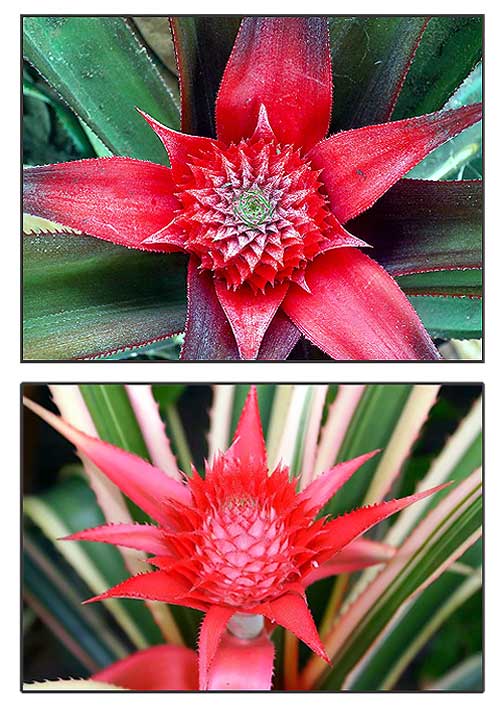
Leaves subtending the inflorescences are red, at least at the base and much reduced. Heads are terminal, solitary, ovoid, 6 to 8 millimeters long, much enlarged in fruit; with the bracteoles reddish, numerous, triangular-ovate to oblong-ovate, acute and imbricated. Sepals are
ovate, thick and fleshy, about 1 centimeter long. Petals are three, oblanceolate,
about 2 centimeters long, white below, violet-purple above. Mature fruit is up to 20 centimeters
or longer.
• Leaves sword-shaped, margin coarsely and laxly spinose serrate. Scape short. Inflorescence many flowered; floral bracts inconspicuous, margin serrulate or entire. Flowers numerous. Sepals free, slightly asymmetric, apex obtuse. Petals violet or reddish, free but connivent and tubelike. Stamens included. Syncarp globose, ovoid, or elongate, 15 cm or longer at maturity, becoming fleshy and fragrant. Seeds absent or very rare. (Flora of China)
Distribution
- Widely cultivated
in the Philippines in two forms: Native and Smooth Cayenne.
- Not naturalized.
- Native form was introduced by the Spaniards, smaller, fibrous with a better flavor. Smooth Cayenne was introduced from Hawaii.
 Constituents Constituents
- Native variety has a higher carbohydrate content than the Smooth Cayenne variety.
- Flesh of the fruit contains sugar, 10-15% saccharose; 7-11% glucose; 1% fructose; 0.6% invert sugar; 2.74% mannite, 1% citric acid; traces of vanillin and enzyme, bromelin.
- Ash contains phosphoric and sulfuric acid, lime magnesia, silica, iron, and chlorides of potassium and sodium.
-
Contains citric acid,
phosphoric and sulfuric acid, lime, magnesia, iron, silica, sodium
and chlorides of potassium.
- Fruit yields citric and malic acids in good quantities, with moderate amounts of vitamin C.
- Bromelain is the name given to a family of proteolytic enzymes derived from Ananas comosus.
-
Anthelmintic property of fresh
fruit juice attributed to its constituent, bromelin, a proteolytic ferment,
that is toxic to Ascaris lumbricoides and Macracanthorynchus hirudinaceous.
- Study isolated seven phenolic compounds from the leaves of pineapple: ananasate (1), 1-O-caffeoylglycerol (2), 1-O-coumaroylglycerol (3), caffeic acid (4), p-coumaric acid (5), beta-sitosterol (6) and daucosterol (7). (3)
- Phytochemical screening of leaves extract yielded
alkaloids, flavonoids, tannins, phytosterols, glycosides and phenols. (see study below) (15)
-
In a comparative analysis of vitamin C content, pineapple yielded 6.40 ± 0.18 mg/100 ml. (Orange yield was 10.13 ± 0.10 mg/100 mL.) (26)
- Proximate analysis
showed the crown to be a rich source of carbohydrates (52.45%) and dietary fiber (25.54%), along with appreciable amounts of protein (8.86%), ash (5.08%), and moderate fat content (4.63%), with energy value of 286.91 kcal/100g. Phytochemical screening showed presence of tannins, alkaloids, flavonoids, and terpenoids, with absence of steroids, phenols, and cardiac glycosides. Quantitative analysis showed alkaloids (6.23%). saponins 4.68%), and flavonoids (1.66%). (see study below) (49)
-
UPLC/QTOF-MS-MS study of total ethanol extract of A. comosus (TEA) for metabolite profiling identified a total of 53 metabolites including hydroxycinnamic acids (HCA), their depsides, glycerides, and glycosides derivatives together with hydroxybenzoic acid glycosides, and amino acids. (see study below) (52)
Properties
- Anthelmintic, vermicide,
diuretic, aperient, antiscorbutic, diaphoretic, refrigerant,
digestive, styptic, emmenagogue.
- Studies have shown antitumor, anticancer, antidiabetic, hypolipidemic, abortifacient, diuretic, antioxidative, wound healing, anti-candidal, anti-nematodal, abortifacient, hepatoprotective, antimalarial, anti-rheumatic, antinociceptive properties.
Parts used
Leaves, fruits, roots, stems.
 Uses Uses
Edibility / Nutritional
- The native variety
has a much higher carbohydrate content than the Cayenne variety.
Both are fair sources of calcium and iron, good sources of vitamins
A and B, and excellent sources of vitamin C.
- A fruit in many commercial end products: candies, jams, juice, yogurt, ice creams, wine and vinegar.
- Oil or essence of pineapple used for confectionery flavoring.
Folkloric
- Juice of leaves used as anthelmintic and vermicide. For intestinal animal parasites, a decoction of fresh young leaves,
4x daily.
- Leaf extract used as antimicrobial, vermicide, purgative, emmenagogue, abortifacient, and anti-inflammatory.
- Ripe fruit good for acid dyspepsia and aids digestion,.
- Juice of ripe fruit increases urine flow, gently laxative, cooling and
digestive.
- In India and in the Moluccas, immature pineapple juice is taken internally as vermifuge for children and abortifacient for women.
- In Tripura, India juice of underground stem used for dyspepsia.
- In Malacca, used as diuretic and treatment of gonorrhea.
- The acid in the ripe fruit taken for acid dyspepsia, the tryptic ferment aiding digestion.
- In the Gold Coast, the immature fruits are boiled and taken as remedy for venereal diseases.
- Juice of ripe fruit considered antiscorbutic, diuretic, diaphoretic, aperient, refrigerant and digestive.
- Juice of unripe fruit considered acid, styptic, diuretic, anthelmintic and emmenagogue.
- In Mexico, juice of fruit used as anthelmintic.
- In Assam and Manipur, India, leaves and fruit applied to burn areas, wrinkles, and inflammation. (22)
- In Bangladesh, used for worms; also used as diuretic.
- In Abia State, Southeast Nigeria, preparation of leaves, fruits, and roots used for treatment of malaria. (46)
- In South America, traditionally used as medicine for digestion-related disorders, as appetite stimulant, nausea, and for morning sickness. Fruit juice used as diuretic associated with menstrual disorders and water retention in pregnancy. Ground-up fruit or root eaten or applied topically as poultice to clean infected tissues or to promote wound healing. Root decoction used for treatment of diarrhea. Leaves used for pain-relieving effects, blood sugar lowering, and treatment of neuralgia. (48)
Others
• Textile: In the Philippines, source of textile fiber called piña—commonly used for making the formal native wear of Barong Tagalog for men and Baro't Saya for women.
• Wine: Wine produced from pineapple has taste and characteristics similar to natural palm wine.
(11)
Studies
• Antitumor
activity / Stem Bromelain: Stem
bromelain, a cysteine proteinase from the pineapple stem, showed an
anti-tumor effect on mice, superior to that of 5-FU with an antimetastatic
action independent of the primary antitumor effect. (1)
• Hypolipidemic: Study showed
the ethanolic extract of AC inhibited HMGCoA reductase activity by 20-49%
in vitro suggesting AC as a potential natural product for the treatment
of hyperlipidemia. Its action differed from fibrates but was similar
to statins, and as such, a possible adjuvant for fibrates. (2)
• Anti-Diabetic / Anti-Dyslipidemic / Anti-Oxidative / Leaves: Study of the ethanolic extract of Ananas comosus leaves showed anti-diabetic, anti-dyslipidemic and anti-oxidative activities – significantly decreasing blood glucose, increasing HDL, and lowered lipid peroxidation productions of blood, brain, liver and kidneys, and presents a potential for development of a new plant medicine for diabetes and its complications. (4)
• Diuretic / Roots: Study of the root extracts of Ananas comosus and Carica papaya in rats significantly increased urine output (P<0.01), 79 and 74% respectively, of the effect of an equivalent dose of hydrochlorothiazide. Urine osmolality and electrolyte excretion suggest the A comosus effect was intrinsic whereas C papaya could have been due to high salt content of the extract. (5)
• Bromelain / Review: 1988 Review of bromelain lists its pharmacologic promise and properties: (1) interference with growth of malignant cells (2) inhibition of platelet aggregation (3) fibrinolytic activity (4) anti-inflammatory (5) skin debridement property - biologic functions that modulate tumor growth, blood coagulation, inflammation, burn debridement and drug absorption. (6)
• Bromelain / Wound Healing: (1) Bromelain is the name given to a family of proteolytic enzymes derived from Ananas comosus. In a Czech study with long bone fractures, those given 90 mg of bromelain had less post-operative swelling compared to patients given placebo. (2) In 1993, German Commission E approved bromelain for the treatment of swelling and inflammation of the nose and sinuses caused by injuries and surgery. (8)
• Insulin Sensitivity: Study of ethanol extract of Ananas comosus suggest that AC may improve insulin sensitivity in type 2 diabetes and presents a new potential natural product for handling insulin resistance in diabetic patients. (7)
• Enzymatic Activity of Leaves on Wound Healing: Study evaluated a leaf extract for enzymatic activities related to wound healing, antimicrobial property and toxicity. Proteomic studies showed the presence of fruit bromelain as a major protein constituent. Results showed considerable antimicrobial property, together with nonspecific protease activity, gelatinolytic, collagenase, fibrinolytic peroxidase, DNAse and RNase activities. There was no toxicity in both acute and sub-acute doses. (12)
• Nutraceutical Properties of Fruit Residue / Potential Benefits for Diabetes: Study evaluated pineapple fruit residue for nutraceutical properties as an alternative or adjunct to diabetes therapy. Analysis showed active components viz. sinapic acid, daucosterol, 2-methylpropanoate, 2,5-dimethyl-4-hydroxy-3(2H)-furanone, methyl 2-methylbutanoate and triterpenoid ergosterol. Micronutrient analysis yielded magnesium, potassium, and calcium. Adipogenic potential, anti-glycation property, and DNA damage protection were promising. (13)
• Immunochemical Study / Allergic Cross-Reactivity: Study aimed to characterize the allergens of pineapple. Sera from patients with allergic symptoms after eating pineapple were tested for specific IgE antibodies. Specific IgE in pineapple allergic patients binds several allergens in a pineapple extract. Inhibition experiments with kiwi extract suggested cross-reactivity between these two fruits. (14)
• Antidiabetic / Leaves: Study evaluated the antidiabetic and antioxidant properties of A. comosus leaves in STZ induced diabetic rats. The activities of pancreatic enzymes and levels of plasma non-enzymatic antioxidants were markedly low in diabetic rats. Treatment elevated the decreased levels to near normal values. Results showed significant antidiabetic activity which could be partially due to its antioxidant nature. (see constituents above) (15)
• Reversal of Haloperidol Induced Catalepsy: Study showed haloperidol induced catalepsy in wistar albino rats was significantly reversed by the administration of hydroalcoholic extracts of Parkinsonia aculeata seeds and Ananas comosus. (16)
• Regulation of Liver Fat Metabolism: Study investigated the effect and mechanisms of pineapple leaf phenols on liver fat metabolism in high-fat diet fed mice. Results showed the PLP significantly reduced abdominal fat and liver lipid accumulation. The PLP enhanced liver fat metabolism by upregulating CPT-1 expression in the mitochondria. Results suggest a potential alternative natural product in the treatment of fatty liver disease. (17)
• Abortifacient / Leaves: Study observed an antifertility effect of an extract of white parts of leaves of Ananas comosus. Of the phytoconstituents isolated, ergosterol peroxide (compound 1) showed maximum abortifacient effect at both stages of pregnancy. Compound IIb (5-stigmastene-3ß,7α-diol) and Compound III (5ß-stigmastane-3ß,5,6ß-triol), followed by Compound IIc (5-stigmastene-3ß,7ß-diol), showed the most consistent results before and after implantation and without apparent side effects. (18)
• Silver Nanoparticles / Leaves: Plant mediated synthesis of nanoparticles is a green chemistry approach that interconnects nanotechnology and plant biotechnology. Study demonstrated the synthesis of silver nanoparticles (AgNPs) or Green-Silver using extracts of Ananas comosus reducing aqueous silver nitrate. (19)
• Corrosion Resistance / Juice Extract: Study investigated the use of Ananas comosus juice extracts as additives on the electrodeposition of zinc on mild steel in acid chloride solution. Results showed the use of pineapple juice produced good zinc electrodepositon on the steel surface. (20)
• Anti-Nematodal: Study evaluated ethanol extracts of ten indigenous medicinal plants for anthelmintic properties in vitro and in vivo against gastrointestinal nematodes. Results showed the ethanol extract of labanga, neem, karolla and pineapple at a dose of 100 mg/kg showed a significant and potent antinematodal effect. (23)
• Candidiasis Phytotherapy: In a study of medicinal plants for anticandida property, ethanolic extracts of various parts of Ananas comosus (leaves, fruits, stems) showed growth inhibition zones of 11 mm, 75.5 mm and 5.4 mm, respectively. (24)
• Anti-Diabetic Activity /
Pineapple Fruit Residue: Study evaluated EA and methanolic extracts of pineapple fruit residue for nutraceutical properties as an alternative or adjunct to antidiabetic treatment regime. Active components were identified as sinapic acid, daucosterol, 2-methypropanoate, 2,5-dimethyl-4-hydroxy-3(2H)-furanone, methyl 2-methylbutanoate and triterpenoid ergosterol. Micronutrient analysis yielded magnesium, potassium and calcium. Results suggest nutraceutical potential with its promising adipogenic property, anti-glycation property of the EA extract, and DNA damage protection capacity of the methanol extract. (25)
• Hepatoprotective / Paracetamol Toxicity / Antioxidant / Pineapple Vinegar: Study evaluated the reversing effects of pineapple vinegar on paracetamol-induced liver damage in a murine model. Pineapple vinegar contained 169.67 ± 0.05 µg GAE/mL of TPC, with 862.61 ± 4.38 µg/mL gallic acid as main component. Oral administration of pineapple vinegar reduced serum enzyme biomarkers. Liver antioxidant levels and lipid peroxidation were restored after the treatment. Pineapple vinegar reduced expression of iNOS and NF-kB and level of NO, together with downregulation of liver cytochrome P450 protein expression. (27)
• Drug Interactions: Pineapple has moderate interaction concerns. Amoxicillin interacts with bromelain; bromelain increases amoxicillin levels in the body, increasing effects and side effects. Bromelain may slow blood clotting; when taken with anticoagulants it may increase the chances of bruising and bleeding. Same caution applies to medications that affect coagulation such as aspirin, clopidogrel, NSAIDs, dalteparin, enoxaparin, heparin, warfarin, etc. (28)
• Rotenone Induced Parkinsonism / Fruits / Synergism with P. aculeata: Study evaluated hydroalcoholic extracts of Parkinsonia aculeata seeds and Ananas comosus fruits for activity against rotenone-induced Parkinson symptoms. The hydroalcoholic extracts of both plants exhibit significant difference in behavioral score, catalepsy score and locomotor activity compared to control group. The hydroalcoholic extract of both plants were effective against rotenone induced parkinsonism. At 1:1 ration, both plants exhibited synergistic action. (29)
• Bromelain / Review: Bromelain is a mixture of different thiol endopeptidases and other components like phosphatase, glucosidase, peroxidase, cellulase, escharase, and several protease inhibitors. Studies have demonstrated fibrinolytic, antiedematous, antithrombotic, and anti-inflammatory activities. Bromelain also possesses anticancerous activities and promotes apoptotic cell death. Report reviews the important properties and therapeutic applications of bromelain, along with mode of action. (30)
• Anti-Rheumatic / Fruit Peel: Study evaluated the anti-rheumatic effect of a methanol extract of Ananas comosus peel in complete Freund's induced arthritis model in rats. Oral administration of extract significantly reduced the swelling in the paw of rats. There was also significant reduction of levels of SOD, CAT and GPx in liver, kidney, and spleen. (31)
• Effect of Fruit Juice and Aerobic Exercise on Blood Lipid Parameters of Obese Women: Study evaluated the effects of raw juice of Anonas comosus and aerobic exercise on blood biochemical parameters of obese women. Results showed Anonas comosus fruit juice and aerobic exercise had had individually positive effects on the variables and parameters studies. Total cholesterol and LDL-c significantly decreased in the three test groups,The variables are more pronounced in the group that consumed pineapple juice and practiced aerobic exercise through the associated action of the two treatments. (32)
• Bacterial Composition / Contamination of Peel and Pulp: Microorganisms are naturally present on all foodstuff including pineapple, caused by wind, soil, water, animal and human contamination. Study evaluated the bacterial composition and antibacterial properties from different morphotypes collected from public markets. Bacterial colonies obtained from peel and pulp suggested the presence of bacteria such as S. aureus, S. faecalis, Bacillus species and Clostridium species, which may cause contamination of the fruit, health risks to consumers or handlers of fruit and barks, as well as changes in storage ability and decreased marketability. Greater varieties of bacteria were recorded from the peel than the pulp. Study suggests the need to develop protocols to monitor and ensure that street vended fruits and foods are fit for consumption and free from pathogens, which may potentially give rise to public health challenges. (33)
• Bromelain Content of Pineapple Stem: Bromelain is a proteolytic enzyme found in pineapple with known use as food and pharmaceutical. Study evaluated the bromelain content of stem bromelain extract. Bradford assay showed 0.476 µg/ml bromelain concentration. Results showed bromelain activity in the pineapple stem. Non-freeze dried extract yielded 0.317 U/ml compared to freeze dried extract of 0.212 U/ml. (34)
• Hematological Effects of Pineapple Peel Extracts and Commercial Bromelain: Study evaluated the effect of peels of pineapple and bromelain preparations sold in the market on different blood parameters, i.e., RBC, WBC, and platelets. Based on studied literature, a significant decrease or increase on different parameters were expected as a result of secondary metabolites present the the proteloytic enzyme, bromelain, found in pineapple. ANOVA statistical analysis showed P-values from RBC, WBC, and platelet count of 0.32, 0.39 and 0.42, respectively, all higher P-values. (35)
• Effect of Pineapple Juice and Ginger Drink in Dysmenorrhea Pain: Study evaluated the effect of pineapple juice and ginger drink in providing relief to adolescents with primary dysmenorrhea. The randomized trial was conducted in three high schools in Central Java, Indonesia. Pain scores were statistically significant, lower than the control group. Results showed pineapple juice and ginger drink were effective in reducing pain of primary dysmenorrha among female adolescents. (36)
• Anticancer / Antibacterial / Bromelain: Study evaluated a crude, aqueous bromelain extract from stems and fruits of pineapple for antibacterial and anticancer activities. It showed significant antibacterial activity against gram negative and gram positive bacteria. The antibacterial mechanism of bromelain may be due to inhibition of growth of bacteria through hydrolysis of some peptide bonds present in the bacterial cell wall. Bromelain also showed significant anticancer activity against breast cancer cells, melanoma cells, human epidermoid carcinoma cells, malignant peritoneal mesothelioma cells and mammary carcinoma cells. The major anticancer mechanism of bromelain may be through inhibition of cancer cell proliferation and inducing differentiation of leukemic cells. (37)
• Bacterial Nanocellulose Loaded with Bromelain / Antimicrobial: Bacterial nanocellulose (BNC) has good wound healing properties such as high purity, good shape retention and high water binding capacity. It has anti-inflammatory and anticancer properties. Study showed BNC can improve bromelain antimicrobial activity 9-fold. Bromelain is a promising molecule for incorporation into BNCs. BNC has potential as a promising delivery system. (38)
• Antioxidant Activity of Crude Bromelain / Pineapple Crowns: Study evaluated the antioxidant activity of crude bromelain from pineapple crowns. The crowns yielded 0.26% of dried crude bromelain with total protein content of 44.10% and IC50 of 3624 µg/mL of crude bromelain which was equivalent to 1590.18 µg/mL of total protein. The crude bromelain showed medium antioxidant activity by DPPH assay. (39)
• Comparative Antitumor Effect / Bromelain vs Papain / Human Cholangiocarcinoma Cell Line: Study investigated the anticancer effect of bromelain and papain in intra- and extrahepatic human CC cell line. Cell growth, migration, invasion, and epithelial plasticity were analyzed using cell proliferation, wound healing, invasion, and apoptosis assay, as well as western blotting. Both inhibited NFkB/AMPK signaling and induced apoptosis. Bromelain showed an overall more effective inhibition of CC compared to papain. Data demonstrated that bromelain is superior to papain as potential therapy for human cholangiocarcinoma and that inhibition effect is mainly through impairment of NFkB/AMPK signaling. (40)
• Anthelmintic / Fruit Peeling Juice: Study evaluated the efficacy of pineapple fruit peeling juice (PFPJ) against Ascaridia galli and Heterakis gallinarum in naturally infected semi-scavenging Philippine native chickens. Results showed significant EPF (egg per gram) reduction after treatment (p<0.05). Chickens treated with PFPJ showed numerically lowest A. galli infection and significantly better weight gain compared to placebo. Results suggest potential for the fruit peeling juice as alternative anthelmintic in semi-scavenging native chickens. (41)
• Possible Effects of Bromelain in Ananas comosus in HIV/AIDS Patients: Study evaluated the potential of bromelain in pineapple to increase the immune system of people living with HIV/AIDS. The research utilized a systematic literature review. Results showed that bromelain enzyme in pineapple have proteolytic properties that can destroy the protein layers of the HIV viruses. Other benefits are immunomodulator effects that can increase the immune system of PLWHA by increasing CD4 counts or maintaining stability of the CD4 count and reducing viral load levels. Study suggests bromelain in pineapple ca be used as alternative treatment for PLWHA without side effects, with potential to destroy HIV virus protein layer and boost the immune system as well. (42)
• Antihyperlipidemic / Leaves: Study evaluated the antihyperlipidemic effect of A. comosus in high fat diet induced hyperlipidemic rats. Results showed extreme significant reduction in body weights, total cholesterol, triglycerides, LDL-C, VLDL, and blood glucose level, along with increased HDL. Mechanism of action may be inhibition of cholesterol and triglyceride synthesis. (43)
• p-Coumaric Acid in Pineapple: Pineapple is a good source of phenolic compounds such as p-coumaric acid. P-coumaric acid is a hydroxycinnamic acid which possess antioxidant, antimicrobial, antimutagenic, and immunoregulatory activities. Study quantified p-coumaric acid in juice extract and methanol extract of unripe and ripe fruits by RP-HPLC. P-coumaric acid concentration was highest in the juice extract of ripe pineapple, 11.76 µg/mL compared to methanol extract, 0.03 µg/mL. The gradient mode RP-HPLC showed to be efficient for determination and quantification of p-coumaric acid in pineapple extracts. (44)
• Antimalarial / Antinociceptive / Anti-Inflammatory / Fruit Peel: Pineapple peel is a major waste in the pineapple canning industry. Study evaluated the antimalarial, antinociceptice, and anti-inflammatory properties of A. comosus peel extract (PEAC). PEAC did not significantly suppress parasitemia level (p>0.05) at 7-day post infection, but at 400 mg/kg mildly prolongs survival of infected mice up to day-21. PEAC exhibited significant (p<0.05) antinociceptive activity by increasing latency to jump on hot plate, reduced writhing in acetic acid test and reduced paw licking in 2nd phase formalin test. PEAC significantly reduced anxiogenic and depressive-like symptoms of sickness behavior in LPS-injected mice. PEAC demonstrated significant anti-inflammatory activity in carrageenan-induced air pouch experiment by reducing exudate formation, inflammatory cell count, nitrite, TNF-α and IL-6 levels. Results suggest mild antimalarial activity and significant antinociceptive and anti-inflammatory properties probably mediated via inhibition of pro-inflammatory mediators. (45)
• Nutritional and Medical Applications Potential of Pineapple Crown: Study evaluated the nutritional and phytochemical contents of pineapple crown (the spiky, leafy top of the fruit: the group of short stems and leaves usually thrown away). Proximate analysis showed the crown to be a rich source of carbohydrates (52.45%) and dietary fiber (25.54%), along with appreciable amounts of protein (8.86%), ash (5.08%), and moderate fat content (4.63%), with energy value of 286.91 kcal/100g. Results suggest suitability for nutritional applications, such as animal feed supplementation or as functional food ingredient. (see constituents above) (49)
• Bromelain / Therapeutic and Clinical Effects / Review: Bromelain is a complex combination of endopeptidases of thiol and other compounds from the pineapple fruit, stem, and/or root. It is considered a safe phytotherapeutic medication. Various in vivo and in vitro studies have shown anti-edematous, anti-inflammatory, anticancer, anti-thrombotic, fibrinolytic, and apoptotic-death- facilitating properties. Its pharmacological properties are related to its arachidonate cascade modulation, inhibition of platelet aggregation, and interference with malignant cell growth, anti-inflammatory action, fibrinolytic activity, skin debridement properties and reduction of severe effects of SARS-Cov-2. Bromelain has potential to be an effective health supplement to reduce and combat cancer, diabetes, and multiple types of heart disease. (50)
• Pineapple Crown / From Agro-Waste to Functional Ingredient / Review: The crown accounts for between 2% and 24% of fruit weight, and almost 30% of the pineapple's total waste, which includes the crown, peel, and core. The crown has a high content of insoluble fibers (lignin, cellulose, hemicellulose) and high antioxidant capacity. The lignocellulosic property makes the crown a suitable alternative for fiber extraction and production of nanocellulose, which provides better mechanical and barrier properties. for films and coatings. It also serves as a lignocellulosic substrate for fermentation processes. The crown contains important enzymes for commercial and industrial use. Presence of enzymes like phosphatases, peroxidases, amylases, and hydolases have been reported, which exhibit notable protease activity, thermal stability, and in some cases, antimicrobial activity, highlighting a valuable enzymatic source for biotechnological applications. (51)
• Anti-Inflammatory / Anti-Arthritic / Fruit: Study evaluated the potential of A. comosus fruit as anti-arthritic and anti-inflammatory agent and its underlying mechanism of action. A total ethanol extract (TEA) showed potent in vitro antioxidant, anti-inflammatory and anti-arthritic activities. TEA (500 and 1000 mg/kg) showed promising in-vivo anti-arthritic activity by alleviating paw edema. High dose TEA showed significant reduction in inflammatory biomarkers reverting IL-6 to near normal. TEA also reversed induced histopathological damage induced by the adjuvant and inhibited iNOS expression. In silico studies exhibited inhibitory potential against TNF-α for most of studied HCA derivatives. Observed effects were attributed to TEA metabolite profile that exhibited favorable pharmacokinetics and drug likeness properties, suggesting potential as lead drugs. (see constituents above) (52)
• Tacorin / Stimulation of Wound Healing / Stem: Study evaluated the effect of tacorin on wound healing in vivo in rats with induced injury. Tacorin is a water crude extract derived from stem of A. comosus. Treatment with tacorin increased expression of transforming growth factor ß, a major flower in tissue remodeling. Tacorin also reduced expression of MMP-2 to accelerate wound recovery. Study suggests tacorin accelerated wound healing via increased cell proliferation, suppression of inflammation, and acceleration of tissue remodeling. (53)
Availability
Commercial cultivation.
Bromelain caps in the cybermarket. |





,_19th_century_(CH_18386747).jpg)


