 Gen info Gen info
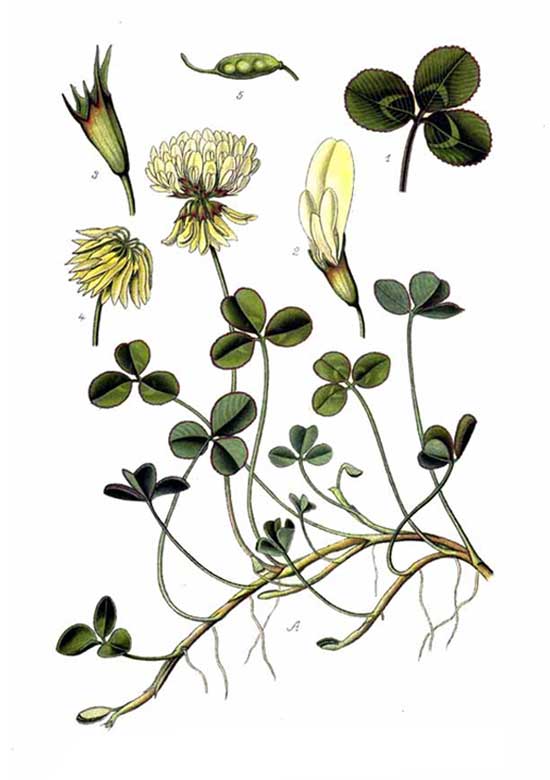
- Trifolium repens, the white clover, is a herbaceous perennial plant in the bean family Fabaceae. It is native to Europe and Central Asia, and is one of the most widely cultivated types of clover.
- Widely introduced worldwide as a forage crop, and now common in most grassy areas (lawns and gardens) of North America, Australia, and New Zealand.
- Etymology: The genus name Trifolium derives from Latin tres, "three", and folium,"leaf", referring to the trifoliate leaf pattern. The species name, repens, is Latin for "creeping".
 Botany Botany
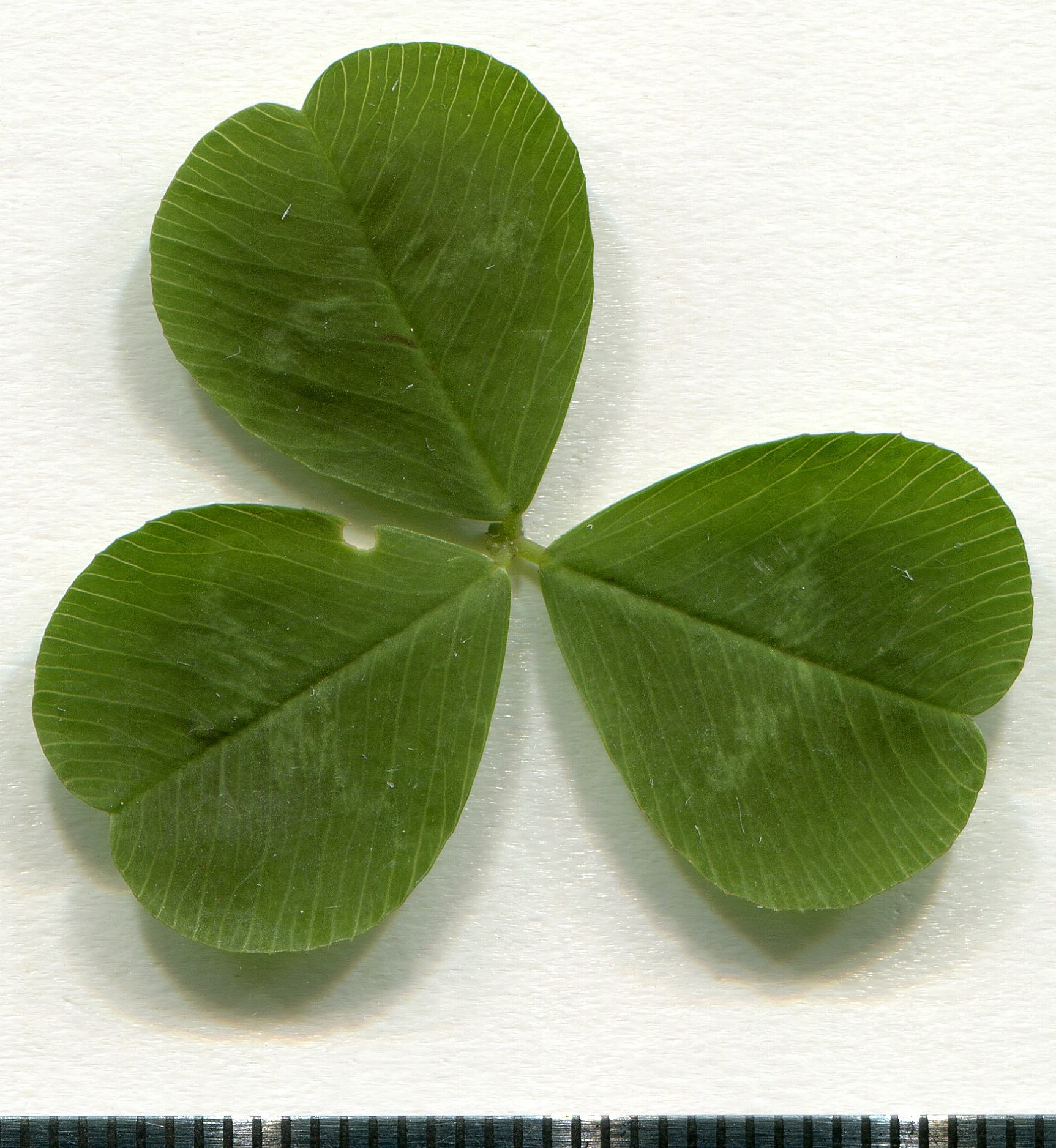
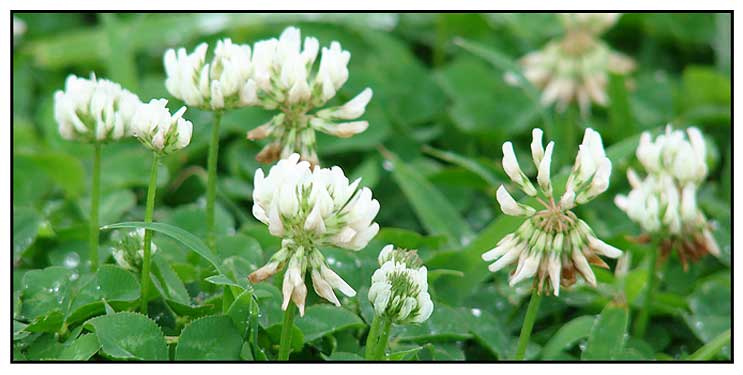
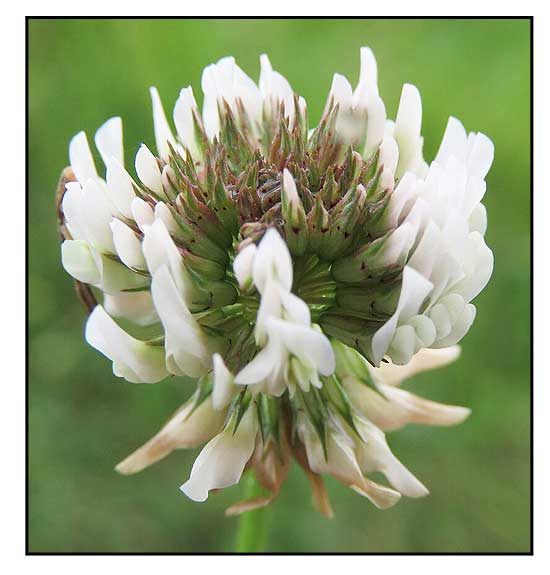
• Perennial herbs, stoloniferous, glabrous to glabrescent. Stems 10-30 cm, prostrate, rooting at nodes. Leaves long petiolate, palmately 3-foliolate; stipules ovate-lanceolate, membranous, with veins green or red, sheathing at base, apex subulate; petiolule 1-1.5 mm; leaflets obovate to ovate, 6-20(-40) × 8-16(-25) mm, lateral veins 13 pairs, prominent on both surfaces, base cuneate, apex emarginate to broadly rounded. Flowers 20-50(-80), in terminal, globose umbels, 1.5-4 cm; peduncle equal to or longer than petiole; involucre absent; bracts lanceolate-ovate, membranous; pedicels 2-5 mm, reflexed after anthesis. Calyx 3-5 mm, veins 6-10; teeth shorter than tube. Corolla white, rarely pink-tinged, 5-12 mm, fragrant; standard elliptic, ca. 2 × wings and keel. Ovary sessile; ovules 3 or 4. Legume linear-oblong. Seeds 2-4, ovoid to reniform. (Flora of China)
Distribution
- Introduced, naturalized. (1)
- Likely introduced as a forage or forestation crop.
- Native range of the species is Macaronesia, NW Africa, Egypt to Zimbabwe, Europe to Mongolia and Himalaya. (2)
- Found in wide range of habitats: dry meadows, mudflats, wood margins, open woods, river banks, plains, semi-desert regions and mountains, up to subalpine meadows, but rarely on saline soils. (3)
 Constituents Constituents
- Phytochemical studies have revealed presence of bioactive compounds such as simple phenols, phenolic acids, flavones, flavonols, isoflavones, pterocarpans, cyanogenic glucoside, saponins, and condensed tannins. (6)
- Preliminary phytochemical screening of petroleum ether, ethyl acetate, methanol, and aqueous extracts of leaves revealed presence of carbohydratex, saponins, phytosterols, triterpenoids, tannins, phenolic compounds, alkaloids, and amino acids.
(see study below) (8)
- HPLC quantitative analysis of
flowers for selective flavonoids yielded rutin 45.8, mg/g dry extract, quercetin 10.3, kaempferol 0.5, myricetin 1.4 mg/g dry extract.
Properties
- Studies have suggested anticestodal, antioxidant, potential antidiabetic, antiproliferative, antibacterial, anti-CML leukemia, anthelmintic, anticholinesterase, nephroprotective properties.
Parts used
Flowers, leaves, shoots.
 Uses Uses
Edibility
- Fresh flowers and leaves added to salads, soups, and stews.
- Dried leaves impart a vanilla flavor to cakes and puddings.
- Dried flower heads or dried leaves used in making herbal tea.
- Flowers and seeds are ground into powder and used as flour.
- Roots are edible, cooked.
- Fresh flowers used for making clover wine.
Folkloric
- No reported folkloric medicinal use in the Philippines,
- In Indian-Himalayan traditional medicine, used for treatment of skin problems, wound healing, stomach disorders, fever, psoriasis, eczema, and as sedative, antiseptic, analgesic, and expectorant. (4)
- In India, the Naga tribes use the plant as deworming remedy. (5)
- In Chinese folk medicine, use for treatment of epilepsy and prolonged bleeding.
- Infusion of leaves used for treatment of leucorrhea.
- Flowers used for treatment of arthritis, pain, and diarrhea.
Others
- Fodder: Widely used forage legume, grown alone or mixed with other grasses. A valuable fodder, readily eaten with high nutritive value; better in quality than other tropical legumes. It can be used as pasture hay and silage for many classes of livestock. (3)
- Agroforestry: Helps in nitrogen fixation and protects against soil erosion. (3) T. repens significantly prevents degradation of the agricultural environment and restores soil for agricultural use, encouraging production of food safe for humans. (11)
- Environmental impact: A potent N-fixing legume provided it finds (or inoculated with) the suitable strain of rhizobium. It yielded 100-400 kg N/ha/year in New Zealand, 74-240 kg N/ha in the UK. (3)
- Agri-Industry impact: Plays a significant role in wool, dairy, and meat industries, increasing qualities of products. As fodder additive, it was found to significantly improve milk quality.
- Phytoremediative potential: Recent studies have suggested potential for different metal (cadmium and zinc) accumulation in the roots.
Studies
• Anticestodal / Aerial Shoots: Study evaluated the anticestodal activity using experimental Hymenolepis diminuta Rudolphi infections in albino rats. Doses of aerial shoots extract at 200 and 500 mg/kg reduced mean fecal egg counts by 47.72% and 54.59% and worm recovery rate by 60.00% and 40.00%, respectively. Praziquantel, the standard cestocidal drug, reduced mean fecal egg count by 65.90% and worm recovery rate by 26.57%. Results suggest the aerial shoots have anticestodal properties. (5)
• Antioxidant / Antiproliferative / Antidiabetic / Muffins Fortified with Flowers: Study evaluated the functional properties of muffins fortified with white clover flowers (Trifolium repens), which were added to the dough in amounts of: 0% (control), 2.5%, 5.5%, 7.5%, and 10%. Results showed replacing wheat flour with white clover flour significantly improved the color, aroma, and taste of muffins. Content of proteins, fats, total ash, dietary fiber, resistant starch, total polyphenols and antioxidant activity increased significantly with amount of clover flour added. Content of free glucose, rapidly available glucose, and rapidly digestible starch, in vitro glycemic index, and viability of melanoma cancer cells significantly decrease. Study suggests potential of clover flowers for enrichment of a wide assortment of confectionery products. (7)
• Anthelmintic / Antibacterial / Leaves: Study evaluated the anthelmintic and antibacterial activities of leaf extracts of Trifolium repens. All extracts showed mild to moderate anthelmintic activity against Pheretima posthuma and antibacterial activity against selected microorganisms including B. subtilis and E. coli. Albendazole and amikacin were used as standards. Among the tested extracts, the aqueous and methanolic extracts showed potent anthelmintic activity, while the petroleum ether extract showed most promising antibacterial activity. (see constituents above) (8)
• Flower as Edible Ingredients: Study evaluated the edible flower for chemical profile and health properties. T. repens flowers showed good radical scavenging activity in DPPH and ABTS assays with IC50s of 10.3 and 21.4 µg/mL, respectively. White clover extracts showed promising α-amylase and lipase inhibitory activities with IC50s of 25.0 and 1.3 µg/mL, respectively. Results support the use of Trifolium flowers as healthy food ingredients. (see constituents above) (9)
• Phenolic Content / DPPH Radical Scavenging / Flowers and Leaves: Study of flower and leaf extracts showed antioxidant activity towards DPPH with EC50s ranging from 72.3 and 179.3 µg/mL. Flowers showed to be a rich source of phenolics ranging from 28.7 to 38.8 mg GAE/g. Significant linear correlations were found between antioxidant potential and total phenolic and flavonoid contents. (10)
• Anticancer / Cytotoxic Effects in Chronic Myelogenous Leukemia: Study evaluated the anticancer effects of T. repens in several cancer cell lines. Total extract and its iso-flavonoid rich fraction showed high cytotoxic effects in chronic myelogenous leukemia (CML) K562 cells, with IC50s of 1.67 and 0.092 mg/mL, respectively. Blockage of cell growth was associated with inhibition of BCR-ABL/STAT5 and activation of p38 signaling pathways. Results suggest potential for development of novel compounds from Trifolium phytochemical molecules as therapeutic agents against CML. (12)
• Anticholinesterase Activity / Antioxidant: Study evaluated the antioxidant and anticholinesterase properties of T. repens extract. Results xhowe high antioxidant power against free radicals. T. repens extract showed moderate anticholinesterase enzyme inhibition, compared with tacrine compound. Study suggest further in vitro and in vivo studies. (13)
• Cyanogenic Glycosides / Equine Grass Sickness: Study reports on testing the hypothesis that ingestion of cyanogenic glycosides in white clover (T. repens) may be one of the risk factors for equine grass sickness (EGS, or equine dysautonomia). Clover collected from EGS fields soon after an occurrence of EGS had significantly higher concentrations of cyanogenic glycosides linamarin and lotaustralin than control samples. While findings suggest that horses grazing EGS fields my ingest significant quantifies of cyanogenic glycosides, the study design does not facilitate investigation of any potential association between cyanogens and EGS. Further study was suggested to determine whether cyanogens are a risk factor for EGS or the findings were simply variations in plant metabolism unrelated to disease pathogenesis. (14)
• Salinity-Mediated Cyanogenesis: Study evaluated the effects of soil salinity on cyanogenesis in white clover. Salt treatment resulted in upregulation of HCNp (cyanogenic potential), whereas ß-gluco-sidase activity and soluble protein concentration showed no significant variation among treatments. Study suggests soil salinity leads to upregulation of cyanogenesis, which results in enhance resistance against two different natural herbivores. The potential implications of such salinity-mediated changes in plant defense for livestock grazing remain to be tested. (15)
• Nephroprotective / Paracetamol-Induced Toxicity / Leaves: Study evaluated the impact of phenolic compounds in T. repens leaves against paracetamol-induced nephrotoxicity in mice. Paracetamol significantly altered kidney weight, renal biochemistry profile, serum electrolytes, reduced glutathione, and thiobarbituric acid reactive substances (lipid peroxidation) in mice. Total phenolic compounds in the extract was 8.89 mg/g. Simultaneous administration of extract leads to normalization of all abnormal parameters due to paracetamol. Extract normalized reduced glutathione, and significantly decreased lipid peroxidation in the kidney. Results suggest nephroprotective function attributed to phenolic compounds in the extract. (16)
Availability
- Wild-crafted.
- Seeds in the cybermarket. |



.jpg)