|

Gen info
• Fabaceae or Leguminosae, commonly known as the legume pea, or bean family, is a large and agriculturally important family of flowering plants that includes trees, shrubs, and perennial or annual herbaceous plants, which are easily recognized by their fruit (legume) and their compound, stipulate leaves. It is widely distributed and is the third largest land plant family, behind only Orchidaceae and Asteraceae, with about 765 genera and nearly 20,000 known species.
• The genus Tamarindus is monotypic, meaning it contains only this species.
• Etymology: The monotypic genus Tamarindus derives from the Arabic phrase "at-tamar al-hindi" meaning "date of India", referring to the fruit. The specific epithet indica refers to India. (84) Alternatively, the name Tamarindus derives from Arabic romanized tamr hindi, "Indian date". Several early medieval herbalists and physicians wrote tamar inhi, medieval Latin was tamarindus, and Marco Polo wrote of tamarandi. (85)
Botany
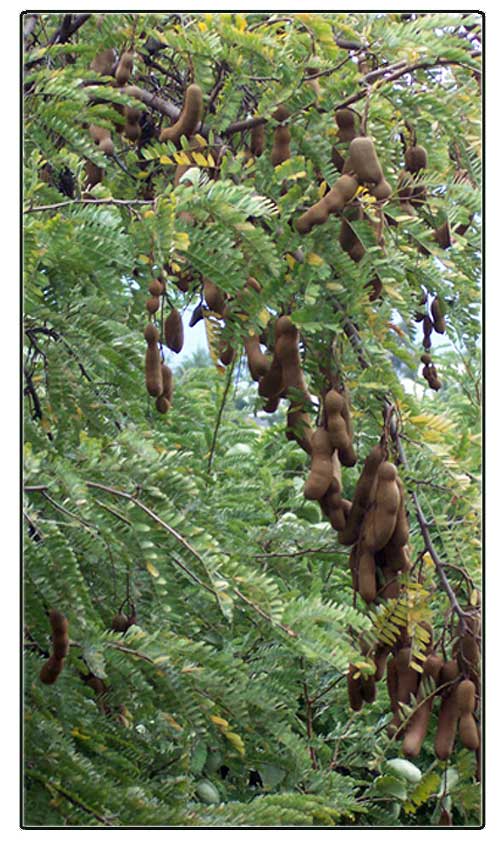
• Sampalok is a large tree
12 to 25 meters high, nearly glabrous. Leaves are evenly pinnate, 6 to 10 centimeters long, with 20 to 40 leaflets, rather
close, oblong, obtuse, 1 to 2 centimeters long. Racemes are mostly axillary though sometimes panicled, and reaching a length of 5 to 10 centimeters.
Calyx is about 1 centimeter long, the calyx tube turbinate,
the teeth lanceolate, much imbricated, the lower 2 connate. Petals are yellowish with pink
stripes, obovate-oblong, less than 1 centimeter long. Only the
3 upper petals developed, the 2 lateral ones ovate, the upper hooded,
the 2 lower ones reduced to scales. Stamens monadelphous, only 3 developed,
ovary many-ovuled. Fruits are pods oblong, thickened, 6 to 15 centimeters long, 2 to 3 centimeters
wide, slightly compressed, the exocarp thin and crustaceous, the mesocarp
pulpy acid and edible.
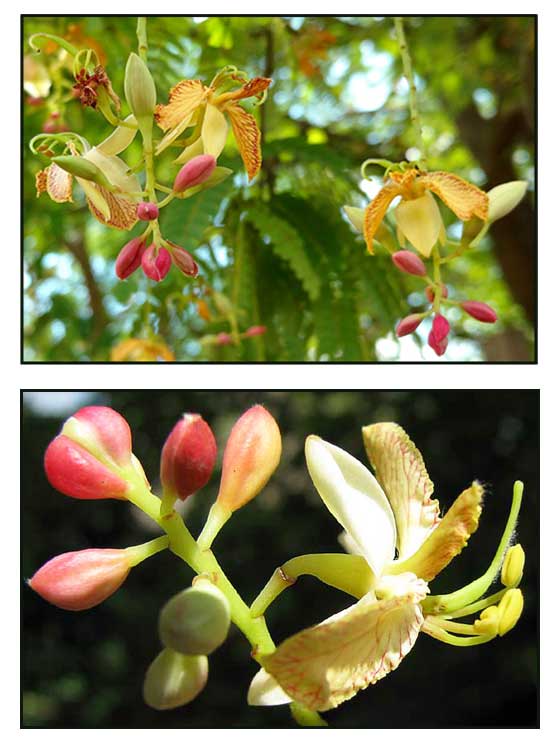
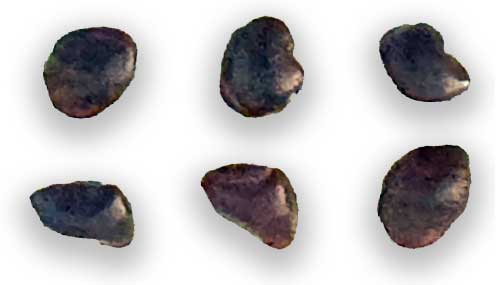
• Morphology: A slow-growing semi-deciduous tree which can attain a height of 30m in the wild. It has a short, stocky trunk with greyish brown, fissured bark, and a dome or umbrella-shaped crown of dense, compound leaves. The leaves are usually shed when there is a dry spell. Foliage: Pinnately compound leaves are about 20cm long, with 10-18 pairs of leaflets, and are slightly arching. Individual leaflets are small, about 1.5-2cm long, and oblong. The effect is that the leaves appear fine and fern-like. Flowers: Z ygomorphic flowers are quite small, and resemble orchids, about 2cm in diameter, pale yellow with purple or red veins. They are produced in small, drooping clusters. Fruit: Fruit is a legume. The pod is long, between 5 -15cm in length; brown, thick and velvety. Each fruit contains 8-10 hard and flat seeds, surrounded by a yellow-brown edible pulp. (Flora & Fauna Web)
Distribution
-
Prehistoric introduction.
- Naturalized.
-
Planted throughout the settled areas of the Philippines.
- An attractive ornamental along avenues.
- Native to Comoros, Madagascar.
- Pantropic in cultivation.
 Constituents Constituents
- Fixed oil, 15-20%; citric,
acetic, butyric and oxalic acids; tannin; pectin.
- Various studies have shown high amounts of crude protein and essential amino acids, carbohydrates, minerals, potassium, phosphorus, calcium and magnesium.
- An analysis of tamarind pulp yielded: citric acid, 9.40; tartaric acid, 1.55; malic acid, 0.45; bitartrate of potash, 3.25; sugar, 12.5, gum, 4.7; vegetable jelly (pectin), 6.25; parenchyma, 34.35; and water, 27.55.
- Seed yielded tannin, a fixed oil, and insoluble matter. Analysis showed albuminoids, fat, carbohydrates, 63.22; fiber; and ash containing phosphorus andnitrogen.
- Fruit yields a trace of oxalic acid.
- Bark of old trees yield 7 per cent tannin.
-
Plant yielded thirty two fatty acids, two other compounds 9ß, 19-cyclo-4 ß4, 4, 14, ҳ-trimethyl-5ά-cholestan- 3ß-ol, 24R-ethyl cholest-5-en, 3β-ol and 12 essential elements viz., arsenic, calcium, cadmium, copper, iron, sodium, manganese, magnesium, potassium, phosphorus, lead, and zinc. The largest amount of SFAs is 14.5% n-heptadecanoate, 13.00% hexadecanoic acid and n-nonadecanoate, 6.1% n-octadecanoic, 5.00% methyl-n-pentacosanoic 4.45%, n-tetradecanoate 4.2 %, n- heptacosanoate 4.1%. The largest amount of (UFAs) is nenodecenoic acid 9.2 %,10-octadecenoicacid 7.8%, etc. (30)
- Elemental analysis yielded
(mg/kg) Mn 25.9, Ca 20.2, P 30.4, Na 10.9, As 54.25 µg/kg, Fe 14.07, Zn 8.52, K 7.16, Pb 0.27, Cd 3.36, Cu 0.76, Mg 60.1. (30)
- Nutrient analysis of fruit per 100 g yielded: (Principle) energy 239.00 Kcal, carbohydrates 62.50 g, protein 2.80 g, total fat 0.60 g, cholesterol 0 mg, dietary fiber 5.10 g; (Vitamins) folates 14.00 µg, niacin 1.938 mg, pantothenic
acid 0.143 mg, pyridoxine 0.066 mg, thiamin 0.428 mg, vitamin A 30 IU, vitamin C 3.5 mg, vitamin E 0.10 mg, vitamin K 2.80 µg; (Electrolytes) sodium 28 mg, potassium 628 mg; (Minerals) calcium 74.0 mg, copper 0.86 mg, iron 2.80 mg, magnesium 92.0 mg, phosphorus 113.00 mg, selenium 1.30 µg, zinc 0.10 mg; (Phytonutrients) carotene ß 19 µg, crypto-xanthin-ß 0 µg, lutein-zeaxanthin 0 µg. (USDA National Nutrient Data Base) ( 33)
- Leaf oil yields 13 components, with dominant components of linonene (24.4%) and benzyl benzoate (40.6%). Root bark yielded n-hexocane eicosanoic acid, ß-sitosterol, octacosanyl ferulate, 21-oxobehenic acid, and (+) -pinitol. Seeds major fatty acids are palmitic acid, oleic acid, linolenic acid, and eicosanoic acid. ( 46)
- Ethanolic extract of bark yielded saponins, quinine, alkaloids, lignin, and glycosides. (see study below) ( 56)
- Ethanol extract of seeds yielded alkaloids, flavonoids, carbohydrates, glycosides, and tannin phytoconstituents. (see study below) ( 60)
- Proximate composition of 100 g of pulp and seeds: carbohydrates 60.99 g and 55.08g; protein 4.29 g and 20.21 g, total fibers 4.98 g and 8.22 g, lipid 1.36 g and 7.23 g, raw ash 3.48 g and 3.42 g, water 23.70 g and 9.12 g.
- Mineral composition of 100g of pulp and seeds: potassium 318.56 mg and 488.01 mg, calcium 131.63, 108.08 mg, phosphorus 70.4 mg and 76.7 mg, magnesium 38.58 mg and 89.29 mg, iron 3.95 mg and 27.87 mg, copper 5.77 mg and 3.37 mg, manganese 6.78 mg and 3.1 mg, sodium 38.21 mg and 14.09 mg, zinc 1.42 mg and 3.31 mg.
- GC-MS study of n-hexane extract of bark, leaves, seeds, and fruit (TIB, TIL, TIS, TIF) yielded a total of 113 metabolites, accounting for 93.07, 83.17, 84.05, and 85.05% of total identified components, respectively. Lupeol was most dominant in TIB and TIL (23.61 and 22.78%), while n-Docosanoic acid (10.49%) and methyl tricosanoate (7.09%) were present in high % in TIS. TIF n-hexane extract yielded
α-terpinyl acetate (7.36%) and α-muurolene (7.6=52%) as major components. (see study below) ( 70) 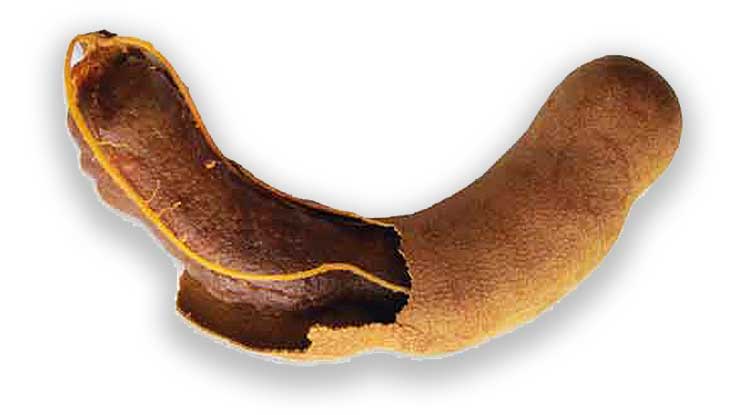
Properties
- Propagation by seed, soaked in water for 8 to 9 days before transplanting.
- Flowering from April
to October.
-
Astringent, tonic,
digestive, antiasthmatic, febrifuge, carminative, antiscorbutic,
antibilious.
- Bark is considered astringent and tonic.
- Pulp considered refrigerant and laxative.
- Seed and testa are astringent.
- Studies have suggested antibacterial, hepatoprotective, antivenom, anti-inflammatory, antiulcer, wound healing, hypolipidemic, cosmeceutical, antidiabetic, anti-melioidosis, antioxidant, spasmolytic, analgesic, fluoride toxicity ameliorating, nephroprotective, anthelmintic, antiarthritic, antioxidant, anti-aging, neuroprotective, biosorbent, weight-reducing, hematinic, antiproliferative, anticancer, aphrodisiac, diuretic, immunopotentiating, analgesic, anticataract, sedative, antimalarial properties.
Parts used
· Leaves, fruits, flowers, seeds, and bark.
 Uses Uses
Edibility / Culinary / Nutrition
- A souring condiment.
- Source of vitamins B and C.
- Sweetened and candied. The seeds, surrounded by a brownish pulp, tamarindo, are made into balls from which jams, sweets and drinks are made. The pulp, malasebo, is often eaten outright, with or without salt. The pulp is also an ingredient in Indian curries and chutnies.
- In India, seeds are eaten after the outer skin has been removed by roasting or soaking; then boiled or fried.
- The seed is sometimes used as famine food by aboriginal tribes.
- Young leaves and very young seedlings and flowers are cooked and eaten as greens and used popularly in the Philippines for seasoning "sinigang," and in India for curries. In Zimbabwe, leaves used in soups, flowers in salads.
 Folkloric Folkloric
• In the Philippines, the bark, leaves, flowers, fruits, and seeds are used medicinally in the way it is used in other countries.
• Decoction of leaves used as an aromatic bath for fevers, puerperism, and convalescence.
• Fever: Macerate pulp or ripe fruit in water,
sweeten to taste, and drink.
• Laxative: Pulp is considered a mild laxative because of the presence of potassium bitartrate. Eat pulp of ripe fruit liberally
and follow with plenty of water.
• Asthma: Bark; chop and boil a foot-long piece
of bark in 3 glasses of water for 10 minutes. Adults, 1 cup after every
meal and at bedtime; children, 1/2 cup 4 times daily; babies, 2 tbsp
4 times daily.
• Decoction of ash: For colic, indigestion; as gargle for sore throats,
aphthous sores.
• Ash is considered astringent and tonic; used internally as a digestive. Ash preparation: Fry the bark with common salt in an earthen pot until
it turns to powdered white ash; a heaping teaspoon of the ash to half-cup of boiling
water; cool and drink for colic and indigestion.
• Poultice or lotion from bark applied to ulcers, boils, and rashes.
• Poultice of leaves to inflammatory swellings of ankles and joints.
• Decoction of leaves as postpartum tea; also used as a wash for indolent
ulcers.
• Flowers used for conjunctival inflammation. Internally, as decoction or infusion,
for bleeding piles (4 glasses of tea daily).
• Pulp surrounding the seeds is considered cooling and a gentle laxative.
• Gargle of tamarind water used for healing aphthous ulcers and sore throat.
• Tamarind pulp considered preventive and curative for scurvy.
• In Mauritius, the Creoles mix salt with the pulp and use it as a liniment for rheumatism.
• Tamarind infusion considered carminative and digestive, antiscorbutic and antibilious.
• Young leaves used as fomentation for rheumatism and applied to sores and wounds.
• In Malaya decoction of leaves used for fevers.
• The leaves crushed with water and expressed, used for bilious fever and in scalding of urine.
• Poultice of leaves crushed in water used for ankle and joint inflammations to reduce swelling and pain.
• Decoction of leaves used as a wash for indolent ulcers.
• Poultice of flowers used for conjunctival inflammation. Juice expressed from flowers used internally for bleeding piles.
• In rural India where natural spring water yields high amounts of fluoride, a small amount of tamarind fruit is added to a pot of water overnight to be used for drinking. (See fluoride toxicity amelioration) (18)
• Juice of leaves, warmed by dipping a red hot iron, used in dysentery.
• Powdered seeds are given in dysentery; boiled and decocted, used as a poultice for boils.
• In Cambodia, filtered hot juice of leaves used for conjunctivitis.
• In the West Indies, decoction of leaves used jaundice and for worms in children.
• Hindu physicians apply pounded leaves to erysipelas.
• In Mauritius a bark decoction is used for asthma. Tamarind pulp used as topical remedy for rheumatism.
• In Madagascar, bark decoction used for asthma and amenorrhea.
• In East Sudan, the bark is considered tonic and febrifuge.
• In Africa, used for treatment of chest pain, colds, colic, conjunctivitis, constipation, diabetes, diarrhea, dry eyes, dysentery, gigivitis, hemorrhoids, indigestion, jaundice, keratitis, and leprosy. In Thai medicine, used as blood tonic, expectorant, laxative, and digestive ais. In Southeast Asia, used for symptoms of chaulmoogra toxicity, which can occur with excessive use of leprosy medication. (82)
• In Kenya, used for treatment of malaria. (83)
Others
- Dyeing / Mordant: Leaves and flowers useful as mordants in dyeing. Yellow dye from the leaves colors wool red and turns indigo-dyed silk to green. Leaves used in bleaching buri palm to prepare it for hat making. In Java, an ink is obtained by burning the bark. The Hindus Kamaras use the starch in doll painting.
- Fodder: Leaves eaten by cattle and goats. Also, a fodder for silkworms.
- Nectar: Flowers are considered a good source of nectar for honeybees in South India.
- Seeds: Powder from tamarind kernels used in the Indian textile industry in several processes - sizing, finishing cotton, jute and spun viscose.
- Wood: Highly prized for furniture, paneling, wheels, axles, mill gears, planking, mallets, handles, walking sticks, etc. In Mexico, wood is used for boiling purposes and provided an excellent source of charcoal for the manufacture of gunpowder.
- Oil: Seeds yield an amber oil, useful as illuminant and a varnish.
- Drinks: (1) Tamarindo also refers to a non-alcoholic beverage made by infusing water with the tangy pulp extracted from the pods of the tamarind tree, straining and sweetening it, usually with sugar, to counter the inherent sourness. Originating from a fruit native to tropical Afica, the drink gained prominence through ancient trade routes that took the plant to India, SE Asia, and the Americas. (2) in Mexico and Central America, it is served as an agua fresca, a chilled refreshment prized for its tart, citrus-like flavor from the fruit's high tartaric content - a popular street vendor offering and home remedy for digestion. (84)

Studies
• Antibacterial:
Aqueous pulp extract study showed antibacterial activity against all
strains tested. Phytochemical screening yielded saponins, alkaloids and
glycosides. Study confirms the traditional use of the plant for the treatment
of infections. (1)
• Antibacterial: Study evaluated the antibacterial activity of extracts from T. indica ripe fruit and Piper nigrum seed against S aureus, E coli, P aeruginosa and Salmonella typhi. The ethanol extract of T indica showed higher activity against all test bacteria than that from P nigrum.
• Hepatoprotective / Paracetamol Induced Toxicity:
Study showed a significant hepatoprotective effect with the aqueous
extracts of tamarind leaves, fruits and unroasted seeds on paracetamol
intoxicated rats. (2) Study evaluated the protective effects of ethanolic extract of T. indica leaves and seeds in comparison to vitamin E on paracetamol induced hepatotoxicity in Long Evans rats. Results showed hepatoprotective activity comparable to vitamin E, a known hepatoprotective agent. (31)
• Anti-venom activity:
Extracts of tamarind inhibited the major hydrolytic enzymes of early
envenomation (local tissue damage, inflammation, hypotension). It also
neutralized indirect hemolysis. It presents an alternative to serum
therapy. (3)
• Aspirin Bioavailability:
Study showed Tamarindus indica fruit extract significantly increased
the bioavailability of aspirin. (4)
• Cosmetic Potential:
Seed husk extract with polyphenolic components (Polyant-T) was tested
for antioxidant efficiency and provides a potential use for color cosmetics
and sunscreens. (5)
• Hypolipidemic / Blood Pressure Effect / Fruits:
Fruits were evaluated for effects on lipid profile, blood pressure and weight. Dried and pulverized pulp of fruits showed a beneficial effect on the lipid profile with a significant
lowering of the total and LDL-cholesterol without affecting the HDL level.
There was also a significant reduction of diastolic blood pressure. (6)
• Chemical Constituents:
Study revealed the presence of 21 saturated (67.5%) and 11 unsaturated fatty acids (30.15%). The results showed great variation in fatty acids, elemental composition and total protein attributed to environmental and ecological factors.
• Anti-Diabetic / Seeds / Pancreatic Islets: Study of aqueous extract of Tamarindus indica seeds against STZ-induced damages in pancreatic islands showed AETIS partially restores pancreatic beta cells and repairs STZ-induced damages in rats. (10)
• Anti-Diabetic / Seeds: Study of aqueous extract of seed showed potent antidiabetogenic activity that reduces blood sugar in streptozotocin-induced diabetic male rat. (14) Study evaluated the hypoglycemic and anti-hyperglycemic activity of T. indica seed powder in non-diabetic and diabetic rat models. Results showed significant antihyperglycemic activity in T2 diabetic rat model, attributed, at least in part, to inhibition of intestinal glucose absorption. (36) (42) A hydromethanolic extract of T. indica seed showed antihyperlipidemic and antihyperglycemic effects with potential benefits in diabetes related complications. (54) Study in alloxan-induced diabetic rats showed a hydroethanolic seed coat extract of T. indica possessed potent hypoglycemic action by virtue of its phytoconstituents. The HETI exerted protective effect on pancreatic ß-cells as noted on histopathology of animals. (69)
• Anti-Diabetic / Fruits and Seeds: Study showed extracts of both fruit and seeds significantly lowered blood glucose levels in mice compared to control.(16)
• Anti-Melioidosis: Melioidosis, caused by Burkholderia pseudomallei, is a life-threatening infection common among paddy cultivators in Southeast Asian countries. Study showed the methanolic extracts of T indica has anti-B. pseudomallei inhibitory potentials under in-vitro conditions. (11)
• Spasmolytic: Study of the methanolic extract of fruits of Tamarindus indica on rabbit's jejunum preparations showed relaxing effects probably through calcium channel blockade. (12)
• Genotoxicity Study: Study of Tamarindus indica fruit pulp extract was devoid of clastogenic and genotoxic activities in cells of rodents, when administered orally at three acute doses. (13)
• Antioxidant: Study of T indica seed coat extract was found to possess strong antioxidant activity attributed to free radical scavenging activity. (15)
• Analgesic / Fruit: Study showed the aqueous fruit extract of T indica in rodent models using acetic acid-induced writhing, hot plate and formalin tests showed potential antinociceptive activity at both peripheral and central levels, mediated via an opioidergic mechanism. (17)
• Fluoride Toxicity Amelioration: Fluoride is a cumulative poison, toxicity leading to bony and dental lesions developing over a period of time. Study showed the extracts of both T. indica and M. oleifera have some potential to mitigate fluoride toxicity. Changes in plasma biochemistry suggested less hepatic and renal damages in animals receiving plant extracts along with fluorinated water compared to those receiving fluorinated water alone. (18)
• Anthelmintic / Root / Leaf and Bark: Study using an Indian earthworm as test worm confirmed T. indica's anthelmintic activity. The root extract not only demonstrated paralysis and also caused death in a shorter period of time compared to the reference drug Piperazine citrate. (19) Study evaluated the anthelmintic activity of ethanolic and aqueous extracts of leaves and bark using Pheretima posthuma and Tubifex tubifex as test worms. Piperazine citrate was used as standard. Extracts showed significant anthelmintic activity evidenced by decreased paralyzing time and death time. Results support use of T. indica as antihelmintic. (80)
• Acute Toxicity / Hepatotoxicokinetic Studies / Stem Bark: A crude extract of stem-bark was evaluated for toxicity and hepatotoxicokinetics on Wistar rats. Brine shrimp lethality assessment resulted in 70% (200 µg/mL) and 10% (20µg/mL) nauplii death with crude extract. Hepatotoxicokinetics dosing wistar rats with crude fractions at 25% and 50% of predetermined LD50 on chicken embryos showed elevation in the AST and ALT. Results suggest that dose standardization in folk herbal medicine is imperative as T. indica used as food and medicine has been shown to be toxic at high doses. (22)
• Antibacterial / Stem Bark and Leaves / Fruit Pulp: Phytochemical studies yielded tannins, saponins, sesquiterpenes, alkaloids, and phlobatamins. Extracts of stem bark and leaves were active against both gram positive and gram negative bacteria. (23) Study evaluated ethanolic and aqueous extracts of fruit pulp, stem, bark, and leaves for in vitro antibacterial activity against 13 Gram negative and 5 Gram positive bacterial strains. Fruit pulp extract exhibited wide spectrum of activity against bacterial strains, 95.5% for the cold water extract, and 90.9% and 86.4% for the hot water and ethanolic extracts, respectively. (48)
• ENO1 / Effect on Alpha Enolase Release / Lipid Effects: Study of a methanol extract of T. indica fruit pulp altered the release of ENO1, ApoA-I, TTR and GDI-2 from HepG2 cells. Results support the effect of T. indica on cellular lipid metabolism, particularly that of cholesterol. (24)
• Antibacterial / Pulp Extract: Study evaluated an aqueous pulp extract of T. indica against four bacteria (E coli, S aureus, P aeruginosa and S typhi). The extract showed activity against tested bacteria: S. aureus >E coli>P aeruginosa. (25)
• Hepatoprotective / CCl4-Hepatotoxicity: Study in Wistar rats showed an ethanolic extract of fruit pulp of Tamarindus indica ameliorated the damage caused by CCl4, with lowering of enzymes and bilirubin, further verified by histopathological improvement. (26)
• Antioxidative / Diabetic Benefits / Bark: Study evaluated the antioxidative effect of an ethanolic extract of bark of T. indica to normoglycemic and alloxan-induced diabetic rats. Results showed a significant decrease in peroxidation products, an increase in glutathione and glycogen content. The extract exhibited antioxidant property and an antidiabetic effect more effective than glibenclamide. (27)
• Tamarindus indica seed polysaccharide (TSP) Eye Drops / Dry Eye Syndrome: Clinical trials evaluated a form of eye drops utilizing Tamarindus indica seed polysaccharide for the treatment of severe dry eyes, including Sjogren's syndrome, for patients sensitive to preservatives. Results showed long lasting effect, clinical improvement in dry eye symptoms, compatibility with contact lenses, and mucomimetic properties. (28)
• Hypocholesterolemic / Antioxidant / Fruit Pulp: Study postulates that tamarind fruit pulp exerts hypocholesterolemic effect by increasing cholesterol efflux, enhancing LDL-C uptake and clearance, suppressing triglyceride accumulation and inhibiting cholesterol biosynthesis. The fruit pulp extract has potential antioxidative effects and is potentially protective against diet induced hypercholesterolemia. (32)
• Ameliorative Effect in Renal Cancer: Study analyzed the histological alterations and oxidative stress markers in an experimental animal model in N-diethylnitrosamine-initiated and ferric nitrilotriacetate-promoted renal cell carcinoma and the effect of seed extract against acute nephrotoxicity and carcinogenesis. In the acute study, the TSE ameliorate necrosis and renal failure. TSE also decreased both oxidative stress markers and decreased renal cell carcinoma progression. (34)
• Defluoridation / Biosorbent for Removal of Fluoride Ions: Study showed tamarind fruit cover in its natural and acid treated forms has a potential for use as an alternative biosorbing agent in the removal of fluoride ions from aqueous media. (35)
• Biosorption of Chromium / Fruit Shell: Study investigated the use of crude tamarind fruit shell in the adsorption of chromium (VI) ions from aqueous solutions. Results showed outstanding adsorption capacities and suggests a potential and excellent alternative sorbent for the removal of chromium ions. (39)
• Removal of Dye from Textile Effluent / Hull: Study evaluated the use of Tamarind hull as biosorbent to remove cationic dye from textile effluent. Results of adsorption kinetics showed Tamarind hull has potential as biosorbent to remove cationic dyes from contaminated watercourses. (43)
• Antidiabetic / Hepatoprotective / Hypolipidemic / Fruit Pulp: Study investigated the antidiabetic, hypolipidemic, and hepatoprotective of ethanolic extract of fruit pulp in alloxan induced diabetic rats. Results showed significant alterations in alloxan induced changes in serum glucose, lipid profile and serum enzyme levels. (37)
• In Vitro Anticataract Activity: Study evaluated the efficacy of T. indica on preventing cataract formation in vitro on galactose induced cataract model in model of goat lenses. Results showed cataractous lenses showed higher MDA and water-soluble protein content. Lenses treated with T. indica showed higher protein content and prevented formation and progression of cataract by galactose. (38)
• Hypolipidemic / Fruit Flesh and Rind: Study evaluated the hypolipidemic effects of 70% ethanolic extract of T. indica fruit flesh and rind in male Wistar rats with Tirton X-100 induced hyperlipidemia. Results showed the extracts of fruit rind and flesh can significantly (p<0.01) reduce total plasma cholesterol and triglycerides. (40)
• Anti-Snake Venom / Seeds: Study evaluated aqueous and alcoholic extracts of dried seed powder of T. indica for antioxidant and inhibitory activity on toxic enzymes like PLA2 and proteinases of Naja naja venom. Results suggest the methanolic extract of seeds possess compounds that inhibit the activity of Phospholipase A2 and Proteinases of cobra venom. It presents a rich source of potential toxin inhibitors and a potential alternative treatment to serum therapy. (41)
• Antioxidant / Fatty Acid Profile / Tocopherols / Seeds: Study evaluated the composition of seeds re its antioxidant potential, fatty acid profile and tocopherol content. Results showed seed have high content of carbohydrates (71.91%) with relevant content and antioxidant activity of phenolic compounds. Seed oil showed high oxidative stability and significant total tocopherol content (57.77 mg/kg). It also showed a higher percentage of unsaturated fatty acids, its main component being linolenic (59.61%), an essential fatty acid. (44)
• Ameliorative Effect on Cattle Fluorosis / Fruit Pulp: Study studies dried powder of tamarind pulp in endemic fluorosis in cattle. Results showed the fruit pulp has ameliorative potential on management of fluorosis in cattle. (45)
• Effect on Gene Expression in HepG2 Cells / Antioxidant
/ Leaves: Study sowed antioxidant-riich leaf extract of T. indica showed protective effects in HepG2 cells by inhibiting lipid peroxidation, suppressing ROS production, and enhancing antioxidant enzyme activities. The leaf extract also directly targeted the expression of genes and encoded proteins involved in the coagulation system and antimicrobial response providing molecular evidence associated with the medicinal properties of the leaf extract. (46)
• Antimicrobial / Leaves / Bark: Study evaluated decoctions from fresh and sun dried leaves in 30 and 70% ethanol-water and the pure essential oil from leaves against B. subtilis, E. faecalis, S. aureus, E. coli, S. typhymurium, P. aeruginosa, and Candida albicans. Phenols were active compounds against B. subtilis cultures. Essential oil exhibited good antimicrobial spectrum. Common folk preparations, however, fail to provide good activity in these extracts. (47) Study evaluated the antimicrobial activity of ethanolic bark extract of Tamarindus indica for antimicrobial activity. Large zones of inhibition was observed with S. aureus and B. cereus at 16 mm and 15.25 mm, respectively. (see constituents above) (56)
• Anti-Aging Potential /
Seeds: Study investigated the anti-aging potential of antioxidants present in T. indica seeds extract in a water-in-oil cosmetic emulsion formulation. Results showed statistically significant (p<0.05) effects on skin elasticity and skin moisture contents, together with a significant decline in SELS (surface evaluation of living skin), skin scaliness (SEsc), skin wrinkles (SEw), skin smoothness (SEsm) and skin roughness (SEr) parameters after application of the formulation. Anti-aging effects were attributed to various antioxidants in the seeds extract. (49)
• Amelioration of Adjuvant Induced Arthritis / Seeds: Study investigated the anti-arthritic efficacy of Tamarind seed extract. TSE exhibited cartilage and bone protecting activity by inhibition of elevated activities of MMPs, HAase, exoclycosidases, cathepsins and TRAP, also mitigating the augmented levels of inflammatory mediators. Results suggest TSE as a potent agent abrogating arthritis-mediated cartilage/bone degradation, inflammation, and associated stress in vivo. (50)
• Chronic Toxicity Study / Pulp: Study evaluated the safety of long-term use of tamarind pulp water extract in Wistar rats at various doses from 75 to 1000 mg/kbw per day for six months. After six months, there were not significant change in body weight, hematologic, and clinical biochemistry profiles of the tested group. Results showed tamarind pulp extract was generally safe and well tolerated at the tested dose. (52)
• Tamarind Seed Flour as Food Ingredient: Study demonstrated the effect of fermentation, roasting and germination in the enhancement of functional and nutritional properties of tamarind seed flour for utilization as food ingredient. (53)
• Potential for Cancer Treatment / Leaves: Study evaluated the anticancer potential of various solvent extracts leaves of Tamarindus indica Linn using HL-60 cell line. The petroleum ether extract of leaves showed more potency than other extracts and suggests a potential in the prevention and management of cancer cell growth. (55)
• Potential Source of Vinegar / Fruit Pulp: Study evaluated the physiochemical properties and antioxidant content of tamarind fruit pulp and its potential use in vinegar production. Study determined the fermentation process, physical properties of ethanol from the samples with regards refractive index and concentration. Results suggest the fruit pulp could be use in vinegar production. (57)
• Weight Reducing / Hypolipidemic
/ Fruit Pulp: Study evaluated the effect of ethanolic extract of fruit pulp of T. indica on obesity in rats using cafeteria diet-induced obesity and antipsychotic drug (sulpiride)-induced obesity. The ethanolic extract of fruit pulp showed significant weight reducing an d hypolipidemic activity as evidenced by significant decrease in body weight, serum cholesterol and triglycerides and significant increase in HDL cholesterol. (58)
• Neuroprotective on Prenatal Ethanol Exposure /
Pulp Extract: Ethanol consumption during pregnancy has been shown to jeopardize the health of the mother and embryo. Study evaluated effect of T. indica pulp extract on histological and biochemical changes on cerebral cortex in Wistar rats exposed to prenatal ethanol. Study suggest the TI pulp extract has potential protective effect on the cerebral cortex of Wistar rats during prenatal ethanol exposure. (59)
• Antidiarrheal / Acute Toxicity Study / Seeds: Study evaluated the antidiarrheal activity of ethanolic extract of seeds in a castor oil-induced diarrhea model in albino Wistar rats. The extract showed no toxic effect or mortality up to 2000 mg/kg PO dose for 48 hours and up to 14 days. Seed extract showed significant antidiarrheal activity of 78.23% at dose of 400 mg/kg. Effect may be attributed to the presence of flavonoids and tannins in the seed extract. (see constituents above) (60)
• Protease Inhibitory Peptides / Seeds: Study evaluated the total soluble protein/peptide content and protease inhibitory peptides from the seeds of T. indica. Fermentation and protease treated cold storage process produced bioactive peptides that showed significant proteolytic inhibition which has potential use in the treatment of several human pathologies. (61)
• Haematinic Activity / Leaves: Study evaluated the haematinic activity of oral indiffusible mixture of T. indica leaf extract in phenylhydrazine induced anemia in Wistar albino rats. Results showed statistically significant improvement in the level of RBC and Hb (p<0.05) at dose of 200 mg/kg. Study postulates the haematinic activity may be due to the presence of flavonoids, phenols, saponins, and tannins. (62)
• Synergistic Antiproliferative Activity /
T. indica and P. glaucum: Study evaluated the growth inhibitory potential of various extracts of Pennisetum glaucum (pearl millet) and Tamarindus indica singly or in combination on cervical (HeLa), prostate (DU 145) and breast (HCC-1395) cancerous cell lines. Tamarindus indicus whole fruit methanol-dichlormethane extract had the highest activity against the cell lines. The combination of pearl millet and tamarind showed synergistic action against the cancer cells. Synergism was observed when the extracts were combined with 5-fluorouracil. Results suggested 5-FU dosage could be reduced while achieving the same effect (DRI>1). Further studies are suggested to determine bioactive compounds and mechanism of growth inhibitory action. (63)
• Diuretic / Ripe Fruit Pulp: Study evaluated an aqueous extract of fruit pulp for diuretic activity compared with standard furosemide in Wistar rats. At dose of 1200 mg/kg, the aqueous extract of fruit pulp exhibited significant diuretic activity (p<0.05) without significant natriuretic effect. Magnesium excretion was significantly increased compared to control group. (64)
• Aphrodisiac / Toxicity Study / Pulp: Study evaluated the aphrodisiac potential and reproductive safety profile of aqueous extract of macerated pulp of T. indica in male Wistar rats. The extract was found safe up to 2000 mg/kg po. Results showed significant (p<0.05) improvement in parameters of sexual desire (mount frequency and intromission frequency) and parameters of sexual arousal. Histopathology and sperm count suggested increase in sperm production without any sign of toxicity to testis. Sperm motility significantly (p<0.05) increased in the treatment group. (65)
• Silver Nanoparticles / Antibacterial / Anticancer / Seed Coat Extract: Study reports on the synthesis of silver nanoparticles using an aqueous extract of seed coat as reducing and capping agent. The synthesized silver nanoparticles showed excelled antibacterial and anticancer properties. (66)
• Gold Nanoparticles
/ Leaves: Study reports on the biosynthesis of gold nanoparticles using an extract of T. indica leaves. Phenols, ketones, and carboxyls were present in the leaves. Study showed T. indica leaves extract as efficient raw material for the synthesis of spherical gold nanoparticles. (67)
• Cleaner of Root Canal Wall Smear Layer: Study evaluated the ability of 5% T. indica extract as a root canal irrigant to remove root canal wall smear layer. Results showed the hygiene value of 5% T. indica extract was higher than sterile aquabidest and can be used to remove root canal wall smear layer. (68)
• Hypoglycemic / Antidiabetic / Seed Coat: Study evaluated a hydroethanolic extract of seed coat (HETI) for phytoconstituents, acute and subacute toxicity studies, and antidiabetic potential in alloxan-induced rats. Phytochemical analysis revealed polyphenols like flavonoids. Single and multi-dose of HETI significantly (p<0.05 and p<0.001) reduced blood glucose levels in normoglycemic, glucose-loaded and alloxan induced hyperglycemic rats. Histopath study showed HETI exerts protective effect on pancreatic ß-cells. HETI increase glucose uptake in isolated rat hemidiaphram and prevented decrease in body weight along with recovery of altered hematological indices. Results showed potential as herbal medicine for diabetes. (69)
• Wound Healing / Anti-Inflammatory / Bark, Leaves, Seeds, Fruits: Study of n-hexane extract of bark, leaves, seeds, and fruit (TIB, TIL, TIS, TIF) showed considerable anti-inflammatory activity in vitro on lipopolysaccharide (LPS)-induced RAW 264.7 macrophages. Extract showed wound healing activity using in-vitro wound scratch assay using Human Skin Fibroblast cells via promotion of fibroblast migration. At 10 µg/mL, TIL showed highest nitric oxide (NO) inhibition. Results suggest the n-hexane extract of various organs have good potential for management of wound healing and inflammatory conditions. (see constituents above) (70)
• Antiulcer / Seed Coat: Study evaluated methanolic extract of seed coat of T. indica for antiulcer potential on ibuprofen, alcohol, and pyloric ligation induced gastric lesions, using doses of 100 and 200 mg/kg of ME. Ranitidine at 50 mg/kg was used as standard. Results showed the ME of seed coats significantly reduced the total volume of gastric juice, free and total acidity of gastric secretion (p<0.001) in pylorus ligation model, comparable to ranitidine. Results suggest a new source of antiulcer agent in animals. (71)
• Antiarthritic / Seed: Arthritis is a joint disorder affecting subchondral bone and cartilage. Degradation of cartilage is mediated by various enzymes viz., MMPs, HAase, aggrecanases and exoblycosidases. These enzymes act upon collagen, hyaluronan, and aggrecan of cartilage and activate the bone deteriorating enzymes. Study demonstrated the antiarthritic efficacy of tamarind seed extract (TSE). TSE exhibited cartilage and bone protection by inhibiting elevated activities of MMPs, HAase, exoglycosidases, cathepsins, and TRAP, and also mitigated augmented levels of inflammatory mediators such as IL-1ß, TNF-α, IL-6, IL-23 and COX-2. It also alleviated increased levels of ROS and hydrogen peroxides. Study suggests TSE is a potent agent abrogating arthritis-mediated cartilage/bone degradation, inflammation, and associated stress in vivo. (72)
• Antitumor / Immunopotentiating Polysaccharide / Seed Kernel: Study evaluated the antitumor activity of polysaccharide PST001 isolated from the seed kernel of T. indica using different cancer cell line. Significant tumor reduction was observed in both DLA and EAC tumors on treatment with PST001, with more prominent results when administered with CTX/5-fluorouracil. Hematologic indices and bone marrow cellularity suggest strong immunomodulatory activity of the compound. Study suggests PST001 has immunomodulatory and tumor inhibitory activities and potential for development into an anticancer agent and immunomodulator, either alone or as adjuvant. (73)
• Antimicrobial / Potential as Food Bio-Preservative: In search of natural methods for food preservation and natural preservatives, study tested 50% ethanol tamarind extract against 10 bacterial strains (7 Gm(+) and 3 Gm(-) strains) and seven fungi known to cause food spoilage by agar well diffusion assays. The extract showed a broad spectrum of antibacterial activity. The extract was highly effective against Staphylococcus aureus, S. epidermis, B. subtilis, and Listeria monocytogenes. It also inhibited Gram(-) bacteria but produced an ZOI >15mm only with Pseudomonas aeruginosa, Pseudomonas species, and Salmonella sp. Extract was ineffective against majority of the test fungal species. Phytochemical analysis revealed tannins, terpenoids, and citric acid. Results suggest potential as replacement for synthetic food grade preservatives with use of natural extracts of tamarind. (74)
• Seed Polysaccharides (TSP) Composite with Copper Nanoparticles (CuNPs): Study reports on the eco-friendly synthesis of nanocomposite using agricultural waste (seeds of T. indica) to synthesize tamarind seed polysaccharides (TSP) and withs composite with copper nanoparticles (CuNPs). The synthesized composite demonstrated excellent antibacterial activity against S. aureus and E. coli, greater than standard ciprofloxacin. Study reveals the agricultural waste can be used to make environment green, synthesize composite from agriwaste that displays excellent antimicrobial properties. Study suggests potential for bridging the gap between green technology and antimicrobial efficacy, a potential pathway for environmental conservation and healthcare advancements. (75)
• Gold Nanoparticles / Antibacterial / Analgesic / Sedative: Study reports on the green synthesis of gold nanoparticles (AuNPs) from aqueous extract of T. indica and its in vitro antibacterial and in vivo sedative and analgesic activities of crude extracts and AuNPs. The AuNPs showed good antibacterial activity against Klebsiella pneumonia, Bacillus subtilis and Staphylococcus epidermis with inhibition range of 10-12 mm. The crude extract and AuNPs also exhibited sedative and analgesic activities. (76)
• Antihyperglycemic for Postprandial hyperglycemia / Fruit Pulp: Study evaluated the effect of an aqueous fruit pulp extract on carbohydrate hydrolyzing enzymes and its glucose uptake potential. Results showed strong α-amylase inhibitory activity, comparable to standard acarbose with IC50 of 34.19 µg/ml and 34.83 µM. Extract showed moderate α-glucosidase inhibitory activity with IC50 of fruit pulp and acarbose 56.91 µg/mL of 56.91 µg/mL and 45.69 µM, respectively. Results showed no cytotoxic effect and very good α-amylase and α-glucosidase inhibitory activities. Its postprandial hypoglycemic effect shows potential as antidiabetic agent for control of postprandial hyperglycemia. (77)
• Alleviation of Pain and Improvement of Musculoskeletal Function / Clinical Trial: Ramdomized, double-blind, placebo-controlled study evaluated the clinical efficacy of two botanical compositions, NXT15906F6 and NXT19185 –the former containing aqueous ethanol extract of T. indica seeds and Curcuma longa rhizome, and the latter a combination of NXT15906F6 and Garcinia mangostana fruit rind. Results showed NXT15906F6 and NXT19185 supplementations reduce knee pain and improve musculoskeletal function of KOA (knee osteoarthritis patients). Supplemented participants showed significant (p<0.05) improvement in functional scores, inflammatory status, and collagen breakdown product in urine samples, and reduced inflammation-induced cartilage degeneration. The supplementations were found to be tolerable and safe to participants. (78)
 • Cholinesterase Inhibitory / Thombolytic / Bark and Seeds: Study evaluated bark and seeds crude methanolic extracts for acetylcholinesterase (AChE) and butyrylcholinesterase (BuChE) inhibitory activities and thrombolytic activity by clot lysis method for treatment of Alzheimer's disease and clotting disorder. Results showed the CME of bark and seed both have moderate cholinesterase inhibitory activities as well as thrombolytic activities. Further study is needed to identify the specific molecule/s as potential source for cholinesterase inhibitors for Alzheimer's disease treatment. (79) • Cholinesterase Inhibitory / Thombolytic / Bark and Seeds: Study evaluated bark and seeds crude methanolic extracts for acetylcholinesterase (AChE) and butyrylcholinesterase (BuChE) inhibitory activities and thrombolytic activity by clot lysis method for treatment of Alzheimer's disease and clotting disorder. Results showed the CME of bark and seed both have moderate cholinesterase inhibitory activities as well as thrombolytic activities. Further study is needed to identify the specific molecule/s as potential source for cholinesterase inhibitors for Alzheimer's disease treatment. (79)
• Antioxidant / Hepatoprotective / Tablet Formulation / Leaves: Study evaluated the hepatoprotective activity of a tablet formulation of Tamarindus indica leaves using 35 Sprague Dawley rats. Silymarin was used as standard. Results showed treatment with Tamarindus indica tablets and silymarin activated the antioxidant system in a similar level, with the exception of MDA. Both protected the biosynthetic function of animals, which was decreased by the toxic action of CCl4. The antioxidant and hepatoprotective activities were attributed to polyphenol and flavonoid contents in TIL extracts, along with elements like coper, zinc, manganese, iron, selenium, among others. The tamarind tablets inhibit lipid peroxidation in rats intoxicated with CCl4. There was not statistically significant difference between Silymarin 150 mg/kg and tamarind tablets at both dose levels. Results justify the ethnobotanical use of the leaves of T. indicus. (81)
• Antimalarial / Stem Bark: Study reports on the in vivo antimalarial activity and brine shrimp lethality of five medicinal plants traditionally used to treat malaria in Msambweni district, Kenya. Five crude extracts from different plant parts were evaluated for invivo antimalarial activity using Plasmodium berghei infected Swiss mice for their acute toxicity using Brine shrimp lethality test. Tamarindus indica stem bark extracts suppressed parasitaemia by 25.1%, and LC50 of 516.4 µg/ml suggesting weak toxicity. (83)
Availability
- Wild-crafted.
- Cultivated for fruiting and culinary use.
- Sweetened and candied.
- Plants, seeds, paste, concentrate, preserves in the cybermarket.
|