|
Gen info
- Arundina graminifolia is a species of orchid. It is the sole accepted species of the genus Arundina.
- Etymology:
The name Arundina graminifolia derives from the Greek word arundo, referring to the reed-like stems, and from the Latin words gramineus and folius referring to the grass-like leaves.
Botany
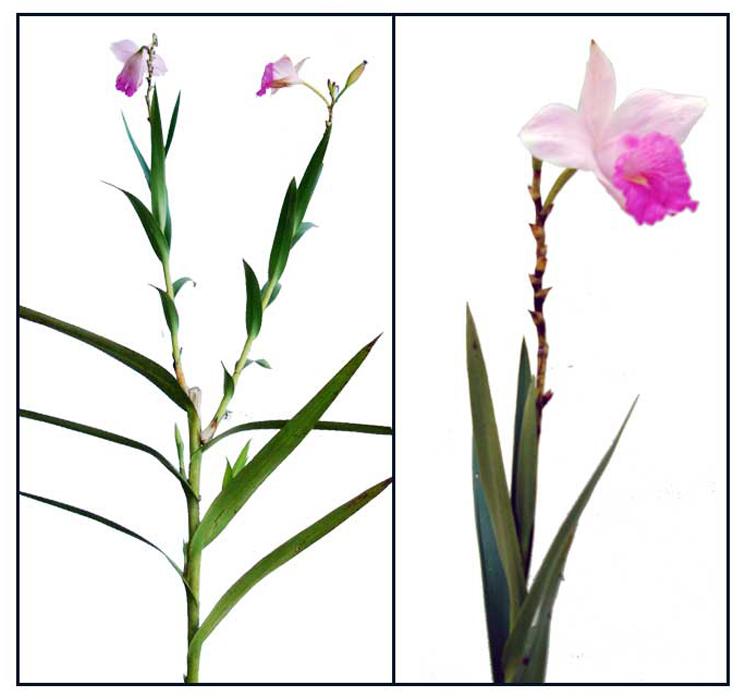
Arundina graminifolia is a tall terrestrial plant up to 3 meters high.
Stems are erect, 1.5 to 2.5 centimeters tall and up to 1.5 centimeters in diameter. Leaves are borne in two ranks, linear-lanceolate and grass-like, 12 to 30 centimeters long, 1.5 to 2.5 centimeters wide.
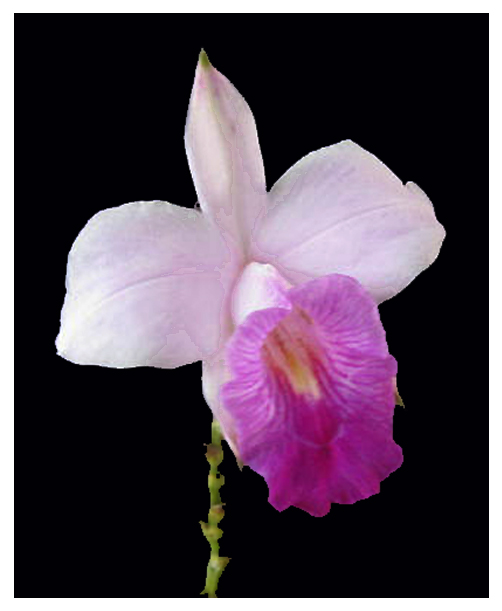
Simple terminal Inflorescence may be branched, 15 to 30 centimeters long. Flowers are purple red, pink to white, up to 10 centimeters across. Sepals and petals are similar, white,
overspread with pink, the lip is large, darker than the sepals and petals, veined magenta with a yellow to orange-yellow patch at the
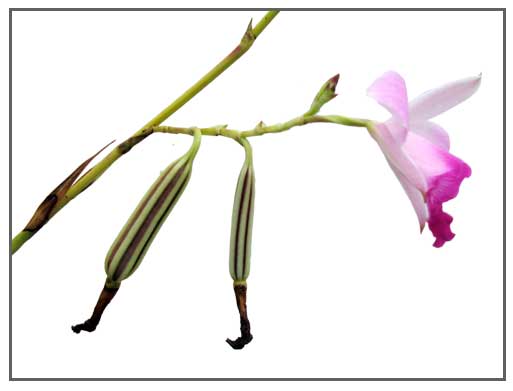
base. Fruit is an elongated capsule filled with tiny seeds.
 Distribution Distribution
- Native to the Philippines.
-
Cultivated in gardens.
- Grows well in the Baguio area.
- Also native to Assam, Bangladesh, Borneo, Cambodia, China, East Himalaya, Hainan, India, Jawa, Laos, Lesser Sunda Is., Malaya, Maluku, Myanmar, Nansei-shoto, Nepal, Sri Lanka, Sulawesi, Sumatera, Taiwan, Thailand, Tibet, Vietnam. (10)
- In Hawaii, considered invasive on the big island.
Constituents
• Study isolated five compounds: (2E)-, 2-propenoic
acid, 3-(4-hydroxy-3-methoxyphenyl)-decosyl ester (I), p-hydroxybenzyl
alcohol (II), triacontanol (III) and p-hydroxybenzylethyl ether (IV),
3-hydroxy-5-methoxybibenzyl (V).
• Phytochemical analysis yields benzyldihydrophenanthrene, arundinaol, stilbenoid
arundinan and phenanthrene constituents.
• Contains tannin, saponin and heptacosane.
• From the rhizome, a benzyledihydrophenanthrene.
• Study isolated a novel stilbenoid, arundinan (2-( p-hydroxybenzyl)-3-hydroxy-5-methoxybibenzyl). (6)
• Study of rhizome isolated a novel benzyldihydrophenanthrene, Aundinaol, from the rhizome of Arundina graminifolia. (4)
• Study of tubers isolated 34 compounds: two were new, both stilbenoids (arundinan and arundinaol), and 22 compounds were isolated for the first time. (see study below) (11)
• Study of whole plant yielded a new flavonoid, Compound 1, 3(S),4(S)-3',4'-dihydroxyl-7,8,-methylenedioxylpterocarpan, together with ten known flavonoids: medicarpin (2), 5-hydroxy-2'',2''-dimethylchromene-(3'',4'':6:7)-flavone (3), butein (4), sulfuretin (5), quercetin (6), quercetin-β-3-O- glycosides (7), kaempferol (8), kaempferol-β-3-O-glyco- sides (9), (+)-catechin (10), steppogenin-4'-O-β-D- glucoside (11). (see study below) (12)
• Study of whole plant isolated five new phenolic compounds, gramniphenols C-G (1-5) and eight known compounds (6-13). (see study below) (14)
• Study of rhizome isolated a novel benzyldihydrophenanthrene named arundinaol, elucidated as 7-hydroxy-1-(p-hydroxybenzyl)-2,4-dimethoxy-9,10-dihydrophenanthrene. (16)
• Study isolated six phenanthrenes: blestriarene A (1), shacidin (2), densiflorol B (3), ephemerantho-quinone (4),
coelonin (5), and lusianthridin (6). (see study below) (17)
• Study of aerial parts yielded two new phenanthrene derivatives, a phenanthrenequinone named arundiquinone (1) and a 9,10-dihydrophenanthrene named arundigramin (2), together with a known lignin dimer (3) and seven known stilbenoids (4-10). (see study below) (18)
• Study of underground part of the blossoming orchid isolated six new glucosyloxybenzyl 2R-benzylmalate derivatives, arundionosides L-Q (-6), together with 5 known compounds, arundinosides
D-F, J and K (7-11). (see study below) (27)
Properties
• Considered antibacterial, antitumor, antidotal, immune regulating.
• Studies have suggested anticancer, antioxidant, antidepressant, antiviral, anti-lipid peroxidation, antibacterial, anti-hemolytic, antifungal, anti-inflammatory, alpha glucosidase inhibitory properties.
Parts
utilized
Rhizomes, roots, stem, leaves, juice.
 Uses Uses
Edibility
• Flowers reportedly edible.
Folkloric
• No reported folkloric
medicinal use in the Philippines.
• In India,
scrapped bulbous stem applied on heels to treat cracks.
• Leaves, root and juice used for ear pain and rheumatism.
• In traditional Chinese medicine, used as antidote, diuretic, and demulcent.
• Among the Chinese Dai people, used as antidote; used for treatment of food poisoning, snake bites, rheumatism, stomachache, and traumatic injuries. Among the Bulang and Wa ethnic people, used for treatment of bronchitis, tuberculosis, and pneumonia. (23)
• In Bangladesh, roots used for snakebite and intestinal biliary colic. Leaves, roots, and juice used for ear pain and rheumatism. Rhizome and leaf paste applied locally for rheumatic pains. (3)
• Flowers used to treat high blood pressure.
• Roots decoction used for diabetes, tumors, hepatitis.
• In Indonesia, boiled roots used as tonic for men, to strengthen them for work. (13)
• Roots and stems use for jaundice, beriberi edema, abdominal pain, snake bites, carbuncles and sores.
• Rhizomes used to treat body aches and bacterial infections.
• In the Himalayas, nomads apply roots, leaves, or stem paste to cure wounds and cuts; fresh juice from young leaves and stems used to treat ear problems. (26)
• In Myanmar, roots used to relieve body ache. Root decoction used for treatment of diabetes, tumors and hepatitis. (28)
Studies
• Cytotoxicity against Five Cancer Cell Lines: Study isolated eight new C-4 alkylated deoxybenzoins, three new diphenylethylenes, and five known diphenylethylenes. Evaluated for cytotoxicity, compounds 4, 5, and 9-11 showed significant cytotoxicity against five cancer cell lines. (5)
• Diphenylethylenes / Anticancer: Study of Arundina graminifolia isolated two new dephenylethylenes, gramniphenols H and I (Compounds 1 and 2), together with six known diphenylethylenes. Compounds 1 and 2 were evaluated for cytotoxicity against five human tumor cell lines. Compound 1 showed cytotoxicity against PC3 cells, while compound 2 showed cytotoxicity against NB4 and PC3 cells. (7)
• Bibenzyl Derivatives / Anti-Tumor Activity: Study isolated bibenzyl derivatives from the tuber of Arundina graminifolia. Compound 3 with bibenzyl ring opening exhibited stronger anti-tumor activity than compounds 1 and 2 with bibenzyl ring closing. (8)
• Antioxidant: Study investigated the scavenging effects of Arundina graminifolia on active oxygen species OH and O2 generated by Fenton reaction and riboflavin photosensitization. Results suggest AG showed significant scavenging and antioxidant activity. (9)
• Antitumor Stilbenoids and Antidepressant YL102: Study of tubers yielded isolated 34 compounds: two were new, both stilbenoids (arundinan and arundinaol), and 22 compounds were isolated for the first time. Pharmacologic evaluation showed the bibenzyls possessed remarkable anti-tumor activity in vitro. A new antidepressant formulation YL102 was investigated and developed on the basis of clinical uses and bioactivities. (11)
• Flavonoids / Anti-Tumor / Cytotoxicity: Study of whole plant yielded a new flavonoid, together with ten known flavonoids. Compound 1—3(S),4(S)-3',4'-dihydroxyl-7,8,-methylenedioxylpterocarpan—was evaluated against human tumor cells lines. Compound 1showed high cytotoxicity against HSY5Y cell with IC50 values of 2.2 μM and moderate cytotoxicities with IC50 valves 5-10 μM for other four tested cell lines. (see constituents above) (12)
• Anti-Viral Phenolic Compounds: Study isolated five new phenolic compounds, gramniphenols C-G (1-5) and eight known compounds (6-13). Compounds 1, 4, and 5 showed anti0tobacco mosaic activity with IC50 of 20.8, 40.8, and 57.5 µM, respectively. Compounds 2, 3, and 6 showed anti-HIV-1 activity with therapeutic index values above 100:1. (14)
• Inhibition of Lipid Peroxidation Induced by Carbon Tetrachloride: Study of an acetic ether extract showed an inhibitory effect on lecithin lipid peroxidation induced by y-Fenton radical, LPO induced by carbon tetrachloride. Results suggest the detoxification mechanism could be related to its strong inhibition effect on lipid peroxidation induced by chemical poison. (15)
• Phenanthrenes / Antibacterial / Anti-Hemolytic: Study of A. graminifolia isolated six phenanthrenes. The compounds exhibited antibacterial and anti-hemolytic activities. Compounds 1 and 2 showed medium activity against S. aureus, B. subtilis, and E. coli. Study of bactericidal mechanisms observed rupture of cell wall and membrane and leakage of nuclear mass. Compounds 1-3 attenuated erythrocyte damage. Compounds 1 and 2 showed significant anti-hemolytic activity. (see constituents above) (17)
•
Cytoprotective / Aerial Parts: Aerial parts of A. graminifolia yielded two new phenanthrene derivatives, together with a known lignin dimer and seven known stilbenoids. Isolated compounds were studied for cytoprotective activity via reduction of beta amyloid induced toxicity on undifferentiated PC12 cells. Compound 8 showed moderate cytoprotective activity at 0.5 µmol/L (71% of cell viability). (see constituents above) (18)
• Stilbenoids / Anti-Hepatic Fibrosis Activity: Study isolated ten stilbenoids which were examined for anti-hepatic fibrosis activity against HSC-T6 cells in vitro. Compounds 4 (3,3'-dihydroxy-5--methoxy-
bibenzl)
and compound 5 (7-hydroxy-2,8-dimethoxy-phenanthrene-1,4-dione) exhibited moderate growth inhibitory effects with IC50 61.9 µg/mL and 53.7 µg/mL, respectively. (19)
• Cytotoxic Deoxybenzoins and Diphenylethylenes: Study yielded eight new C-4-alkylated deoxybenzoins (1-8), three new diphenylethylenes (9-11) and five known diphenylethylenes. Compounds 1-11 were evaluated for cytotoxicity against five human tumor cell lines. Compounds 4,5, and 9-11 showed significant cytotoxicity evaluated against five cancer cell lines, with IC50 ranging from 1.8 to 8.7 µM. (20)
• Antiifungal: Study evaluated 72 extracts from 12 medicinal plants, including Arundina graminifolia, for fungistatic and fungicidal activity against six fungal species viz. Candida albicans, C. parapsilosis, I Issatchenkia orientalis, Cryptococcus neoformans, Aspergillus brasiliensis and Trichophyton mentagrophytes. All the plant extracts showed antifungal activity with 69.21% and 41.20% of the bioassays demonstrating fungistatic and fungicidal activities, respectively. (21)
• Transcription Profiling of Flavonoids and Bibenzyls: The bamboo orchid produces large waste after cut flower selection. Study reports on the identification of important medicinal components in various parts of A. graminifolia. Transcription analysis was performed for five stages of flower developments and four tissue types (mature flower, silique, root, and leaf) to ascertain genetic regulators of flavonoids and bibenzyls. Prominent concentrations of bibenzyl, phenylpropanoid, and flavone were found in major plant parts, such as leaf, root, stem, flower, and fruit, suggesting multiple accumulation of phytochemicals in bamboo orchid. Study suggests the whole plant of A. graminifolia and its short life cycles make it a potential source of bioactive compounds for medicinal purposes than other orchid species. (24)
• Antioxidant / Anti-Inflammatory / Leaves: Study evaluated A. graminifolia leaf extract (ALE) for antioxidant and anti-inflammatory activities. The ALE yielded total phenolic and flavonoid contents and antioxidant activity by scavenging of free radicals. The IC50s of ALE by DPPH and ABTS assays were 155.17 and 13.82 µg/mL, respectively. ALE significantly inhibited LPS-induced pro-inflammatory mediators, including production of NO and IL-6. Results suggest potential use as functional food or pharmaceutical product with antioxidant and anti-inflammatory activities. (25)
• Arundinosides / Alpha-Glucosidase Inhibitory / Antioxidant
/ Underground Parts: Study of underground part of the blossoming orchid isolated six new glucosyloxybenzyl 2R-benzylmalate derivatives, arundionosides L-Q (-6), together with 5 known compounds, arundinosides
D-F, J and K (7-11). Compounds 4-6 and 9 showed moderate to weak α-glucosidase inhibitory effects and moderate antioxidant effect. (27)
α-amyrin,
y - gamma
γ
δ
α-amyrin,
y - gamma
γ
δ
α
©
Availability
- Ornamental cultivation.
- Roots in the cybermarket.
|