Gen info
• Melochia is a genus of flowering plants in the mallow family, Malvaceae, containing 54 species from the tropical and subtropical regions of the world, from India eastwards through Malesia and the Pacific Islands to the Americas and the Caribbean. (23)
• Leonard Co's database lists two species in the
Philippines: Melochia corchorifolia as cryptogenic and Melochia umbellata as native. (4)
• Some taxonomy books have place Melochia in the family Sterculiaceae, which is now generally considered obsolete as a taxonomic class. (23)
• Etymology: The genus name Melochia derives from the Arabic name Mulukhiyah, in Arabic referring to the mallow plants of the genus Corchorus, which are cultivated as vegetables. (23)
Botany
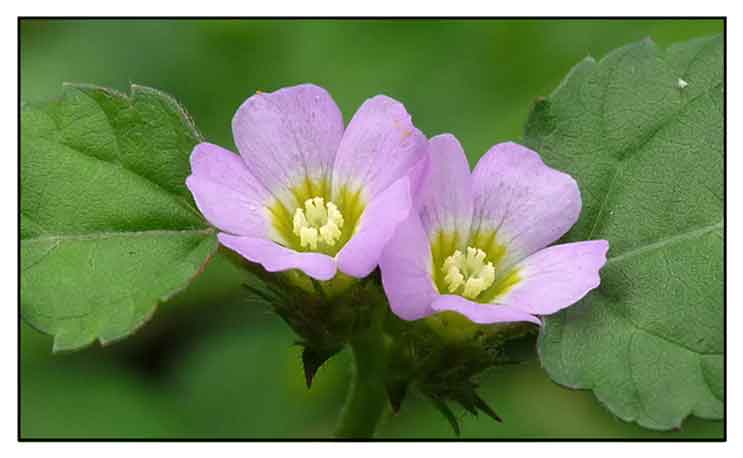
• Bankalanan is an erect or spreading, branched, half-woody shrub, usually less than 1 meter high. Leaves are oblong-ovate, and 2 to 6 centimeters long, with pointed tip and broad, rounded, or heart-shaped base. Flowers are somewhat crowded in terminal or axillary heads. Petals are obovate, white, pink or pale purple, and about 7 millimeters long. Fruit is a small capsule, depressed-globose, 4 to 5 millimeters in diameter, green, whitish or pink to purplish black. Cells are 1-2 seeded. Seeds and small and wingless. Endosperm is abundant. (Wikipedia)
• Melochia corchorifolia is an annual or perennial type herb. Leaves are ovate; the petioles generally 5 cm long with linear stipules of 6 mm long. The veins extend to be from 7 cm long to 5 cm long. It usually develops to be up to 1.3–2.0 m tall; stem with line of stellate hairs. It’s simple, ovate leaves are normally arranged spirally with the margins very intensely serrated. The blade of the leaves range from narrow to broad to the tip, measures up to 7.5 cm × 5.5 cm. (17)
 Distribution Distribution
- Listed as native to the Philippines by POWO (11); Cryptogenic - Possibly "not native" Per P.B. Pelser. (4)
-
Throughout the Philippines at low and medium elevation in settled areas, occurring as a ruderal along waysides, waste places, open grasslands, rice paddies, etc. (4)
-
A weed common in waste places, open grasslands, fallow fields, settled areas, etc., at low and medium altitudes throughout the Philippines
- Pantropic.
- Also native to Angola, Assam, Bangladesh, Benin, Botswana, Burkina, Burundi, Cambodia, Cameroon, Caroline Is., Central African Republic, Chad, China South-Central, China Southeast, Congo, DR Congo, Ethiopia, Gabon, Gambia, Ghana, Guinea, Guinea-Bissau, Gulf of Guinea Is., Hainan, India, Ivory Coast, Japan, Kenya, Laos, Lesser Sunda Is., Liberia, Madagascar, Malawi, Malaya, Mali, Marianas, Mauritania, Mozambique, Myanmar, Nansei-shoto, Nepal, New Guinea, Niger, Nigeria, Qinghai, Queensland, Senegal, Sierra Leone, Solomon Is., Somalia, South China Sea, Sri Lanka, Sudan-South Sudan, Taiwan, Tanzania, Thailand, Togo, Uganda, Vietnam, West Himalaya, Zambia, Zimbabwe. (11)
Constituents
- Study isolated a cyclopeptide alkaloid, franganine, and a pseudooxindole alkaloid, melochicorine. (2)
-
Phytochemical screening of leaves of M. corchorifolia yielded triterpenes (friedelin, friedelinol, and ß-amyrin), flavonol glycosides (hibifolin, triflin, and melocorin), aliphatic compounds, flavonoids (vitexin and robunin), ß-D-sitosterol and its stearate,-D-glucoside, and alkaloids.
- Study yielded adouetine and a new cyclopeptide alkaloid, melofoline.
- Study isolated a cyclopeptide alkaloid, franganine, and a new pseudooxindole alkaloid, melochicorine.
- A glycoside, melocorin, was isolated from the leaves of M. corchorifolia along with hibifolin and trifolin.
- Phytochemical screening of methanol extract of aerial parts yielded alkaloids, terpenoids, steroids, phenolic compounds, flavanoids, and glycosides. (12)
- Proximate composition of leaves (DW basis) were crude lipid (13.33±2.89%), ash (10.00±0.10%), crude fiber (23.33±2.89%).and available carbohydrate (30.03±2.83%). Mineral composition in mg/100 g DW were: K(7.250±37.50), Ca (750.37 ±10.58), Mg (108.33±5.77) and P (101.89±0.08), Na (95.00—1.15), Cu (33.50±2.55), Fe (19.91±3.01), Mn (9.68±0.59) and Zn (6.73—0.62). (15)
- Phytochemical screening revealed carbohydrates, glycosides, alkaloids, flavonoids, saponins, tannins, steroids, and phytosterols. GC-MS analysis identified 75 compounds, including 8 major constituents, and HPLC quantified 5 polyphenols: catechin hydrate, (-)-epicatechin, vanillic acid, rutin hydrate, and rosmarinic acid. (see study below) (26)
- Study of ethanol extract of dried leaves yielded flavonoids, alkaloids, steroids, terpenoids, glycosides, tannins, phenols, saponins, and anthraquinones. (see study below) (27)
Properties
- Studies have shown antifungal, antibacterial, antioxidant, insecticidal, hepatoprotective, insecticidal, anti-inflammatory, anticancer, melanogenesis inhibitory, antibiofilm, wound healing, analgesic, hypoglycemic, anthelmintic, antidiabetic, antibiological, anticancer properties.
Parts used
Leaves, roots, stems, sap.
 Uses Uses
Edibility
- Consumed as a potherb in West Africa and Southern Africa.
- Leaves are cooked into a popular, slimy side-dish in Malawi. (17)
- Leaves eaten in northern India and Annam.
Folkloric
- Leaves used for poulticing sores.
- Roots and leaves used for snakebites.
- Sap used for wounds poisoned by Antiaris.
- Leaves used for poulticing swellings of the abdomen and the heart.
- Leaves and roots used for poulticing in small pox.
- Decoction of roots and leaves used for dysentery.
- Simple leaf decoction used to stop vomiting; compound decoction, with Millettia and Celosia, used for urinary troubles.
- Plant is used to relieve gastralgia and headaches.
- In Tamil Nadu, India, decoction of leaves taken orally twice daily on an empty stomach for dysentery. (10)
- In India, leaves and roots used for treatment of urinary tract disorders, abdominal swelling, dysentery, and snakebites. (12)
- In coastal East Africa, leaves used for stomach disorders. In Benin seeds used to treat stomach aches.
- In Malaysia, leaves are used for poulticing sores and swelling of the abdomen. Sap applied as antidote to wounds caused by arrows poisoned with Antiaris toxicaria. (13)
- Leaves and roots used for poulticing in small pox. (13)
- In Sri Lanka Ayurveda, leaves used in the treatment of intestinal bowel syndrome, diabetes mellitus. (15)
Others
- Fiber: Source of a strong fiber; used for making dillybags. (17)
- Crafts:
Stems used for tying bundles,and construction of roofs. (17).
- Insecticidal:
Aqueous solution of leaves has insecticidal properties. Pulses stored in gunny bags treated with the solution showed reduction in numbers of eggs laid and damage done by storage pest Callosobruchus. (25)
Studies
• Flavonoids / Antifungal: Aerial parts of M. corchorifolia yielded 5,7-dihydroxyflavone, apigenin, kaempferol and quercetin. The flavonoids exhibited significant antifungal activity.
• Antifeedant / Insecticidal / Ovicidal: Study evaluated the antifeedant, insecticidal, oviposition deterrent and ovicidal activity of different fractions obtained from the crude extracts M. corchorifolia against the armyworm, Spodoptera litura. MC showed feeding deterrent activity and significant ovicidal and larvicidal activity. (3)
• Hepatoprotective / Antioxidant / Aerial Parts: Study evaluated extracts of aerial parts of Melochia corchorifolia for hepatoprotective and antioxidant capacity against CCl4-induced liver toxicity in rats. Results showed concentration dependent decrease in serum enzymes and percentage inhibition of free radicals. (6)
• Antibacterial: Study evaluated aerial parts of Melochia corchorifolia and Spilanthes acmella for antibacterial activity against eight bacterial strains. Results showed concentration dependent antibacterial activity. (7)
• Radical Scavenging Activity: Study of corchorifolia extract showed strong free radical scavenging activity in all tested methods. Antioxidant activity may be due to phenolic compounds flavonoids and tannins. (9)
• Antioxidant / Anticancer / Aerial Parts: Study of methanol extract of M. corchorifolia aerial parts showed significant antioxidant and antiproliferative properties. The IC50 of DPPH radical, ABTS radical cation, OH-radcical scavenging assays were 35.26, 10.50, and 49.36 µg/mL concentration, respectively. On in vitro MTT assay for anticancer activity using MCF7 breast cancer cell line, results showed cytotoxic activity of 66.84% at 100 µg/mL concentration. (12)
• Antifungal Flavonoids / Aerial Parts: Study of aerial parts isolated 5,7-dihydroxyflavone, apigenin, kaempferol, and quercetin. The flavonoids exhibited significant antifungal activity. (14)
• Anti-Inflammatory: Study evaluated M. corchorifolia extracts for anti-inflammatory activity in a carrageenan-induced rat paw edema model. The methanol extract showed most significant activity compared to other extracts tested, showing more percentage inhibition (53.47 ± 2.19) at 500 mg/kg dose. (16)
• Anticancer Endophytic Fungus / Taxol / Leaves: Phylloosticta melochiae, an endophytic fungus isolated from leaves of Melochia corchorifolia, was screened for the production of an anticancer drug, taxol. The fungal taxol extract showed strong cytotoxic activity in in vitro culture of tested human cancer cells by apoptotic assay. Results suggest the fungal endophyte, P. melochiae is an excellent candidate for an alternative source of taxol supply. (18)
• Inhibition of Malanogenesis in Mouse Melanoma Cells: Study evaluated the effect of MC extract on melanogenesis and its underlying mechanisms in B16F10 mouse melanoma cells. Treatment of B16F10 cells with MC extract inhibited melanin synthesis and intracellular tyrosinase activity in a dose-dependent manner with no cytotoxicity. Protein and mRNA expressions of tyrosinase and MITF were significantly decreased. Phosphorylated level of extracellular signal-regulated kinase (ERK) was increased. MC extract inhibits melanogenesis in mouse melanoma cells through suppression of MITF-tyrosinase signaling pathway by ERK activation. (19)
• Antidiarrheal / Whole Plant: Study evaluated the antidiarrheal properties of ethanolic extract of M. corchorifolia whole plant and G. thomsonii bark using castor oil and MgSO4 induced diarrhea, GI motility test and castor oil induced enter9opooling assay in mice. The ethanolic crude extracts exhibited statistically significant and dose-dependent anti-diarrheal effect. In induced enteropooling assay, there was reduced intestinal fluid accumulation. Results were comparable with standard drug, loperamide. (20)
• Diuretic / Antiurolithiatic / Leaves: Study evaluated the diuretic and antiurolithiatic activities of chloroform and ethanolic leaf extracts of M. corchorifolia in experimental rat models. Parameters measured for diuretic activity were total urine volume and urine electrolyte concentrations. For in vitro antiurolithiatic activity, calcium oxalate crystallization was induced by sodium oxalate solutions in synthetic urine. Both extracts showed good in-vitro antiurolithiatic activity. In vivo evaluation, urolithiasis was induced by ethylene glycol in drinking water. Treatment with leaf extract restored all biochemical urinary parameters. Results justified use of the leaf extract as diuretic and antiurolithiatic agent. (21)
• Anticancer / Antibacterial / Leaves: Study isolated a new tetrahydrobenzo chromone glycoside derivative from the ethanolic extract of dried powdered leaves of M. corchorifolia. The compound was tested against human pathogenic microorganisms and exhibited maximum zone of inhibition against P. aeruginosa, E. coli and S. aureus. The compound showed half-maximal inhibitory concentration IC50 of 120.71 ± 3.46 against MCF-7 cancer cell line. (22)
• Wound Healing / Antibiofilm / Aerial Parts: Study evaluated the organ-specific metabolomic profiling of leaves, stems, and vegetable extract of M. corchorifolia, and their potential antibiofilm and wound healing activity. UPLC-ESI-Q-TOF-MS analysis revealed 59 compounds in the leaf, stem, and vegetable extracts of Mc. Crystal violet staining assay showed excellent antibiofilm activity against Proteus mirabilis and Salmonella typhi. Extract caused the architecture of bacterial biofilm by inhibiting the adherence to polystyrene and auto-aggregation and subsequently inhibiting the growth and colonization of biofilm-forming bacteria P. mirabilis and S. typhi. Extracts accelerated wound healing process in BALB/c mice. The potent antibiofilm and wound healing properties were attributed to phytochemicals present in the extracts, and has potential as remedy for treating chronic wounds and associated infectious diseases. (24)
• Antioxidant / Analgesic / Anti-Inflammatory / Hypoglycemic: Study evaluated the phytochemical content, antioxidant, analgesic, anti-inflammatory, and hypoglycemic potential of M. corchorifolia. Extract exhibited moderate antioxidant capacity by DPPH assay (IC50: 287.25 µg/ml, which was attributed to significant levels of flavonoids and phenolics. Significant reduction of pain was noted in the acetic acid (p<0.01) and formalin (p<0.01) methods. Extract showed significant anti-inflammatory activity in xylene- and croton oil-induced ear edema tests (p<0.001 and p<0.01), moderate suppression of granuloma formation, and significant reduction of blood glucose in the oral glucose tolerance test (p<0.001). Results showed promising antioxidant, analgesic, anti-inflammatory, and hypoglycemic properties supporting its traditional medicinal use. (see constituents above) (26)
• Anthelmintic / Antidiabetic / Leaves: Study of ethanol extract of dried leaves yielded flavonoids, alkaloids, steroids, terpenoids, glycosides, tannins, phenols, saponins, and anthraquinones. Extract showed significant anthelmintic activity at 300 mg/ml against Indian earthworm Eisenia fetida. Extract showed maximum inhibition of α-amylase with highest value of 85% at 100 mg/ml. (27)
• Antimicrobial / Anticancer / Leaves: Study evaluated an ethyl acetate extract of M. corchorifolia leaves for phytochemicals, anticancer, and antibiological activity. Phytochemical analysis revealed carbohydrates, glycosides, triterpenes, flavonoids, and alkaloids. Antimicrobial study by agar well diffusion method showed antimicrobial activity against Gram (+) Staphylococcus aureus (17 mm) and Bacillus subtilis (16 mm) and against Gram (-) Salmonella typhi (15 mm) and E. coli (14 mm), and antifungal activity against Aspergillus niger (18 mm). Cytotoxicity activity against MCF-7 cell line showed efficacy with IC50 of 148.836 µg/ml. Molecular docking with cancer estrogen protein receptor with ligand martidin-15 one showed high binding affinity. Results showed potential of EA extract for antibiological and anticancer activity. (28)
Availability
Wild-crafted. |






.jpg)