|  Gen info Gen info
- Artemisia is a large, diverse genus of plants comprising about 400 species. It is the largest genus of the Asteraceae family. Common names include mugwort, wormwood, and sagebrush.
-
Etymology: Genus name Artemisia derives from the Greek idol Artemis, the goddess of the hunt, of forests, and of childbirth, or the namesake of the Greek queens Artemisia I and II, or Artemisia II of Caria, a botanist and medical researcher (also Queen and naval commander) who died in 350 BC. (41)
-
Artemisia vulgaris is one of the best known species of the genus. As far back as the middle ages, it was distinguished in Greece, Egypt, and Rome. Artemisia vulgaris was called the "mother of herbs" or "mater herbarum". European pharmacopoeia listed it as a potential homeopathic raw material.
- Historical snippet: It was commonly used by Romans, who planted it along roadsides so that marching soldiers could carry it in their shoes to relieve aching feet. (48)
- The Ukranian name for mugwort is chornobyl, which transliterates as "black stalk". The Ukranian city of Chernobyl gets its name for the plant. (18)
Botany
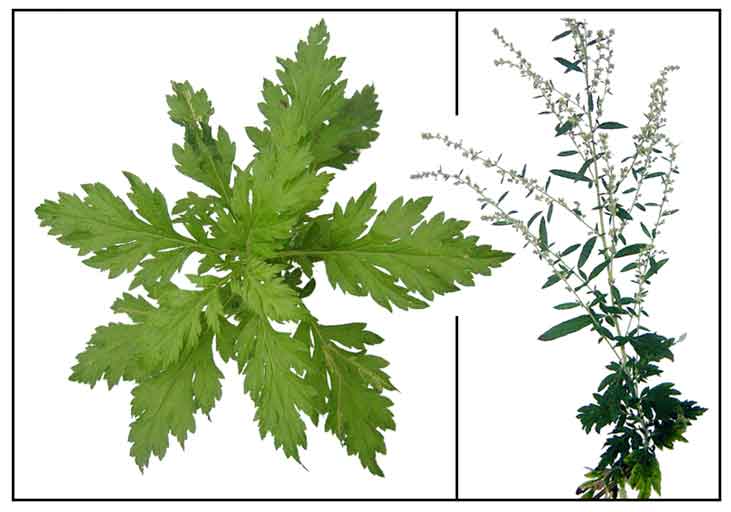
• Damong-maria is an erect perennial herb, hairy, aromatic, rank smelling, often half-woody, growing
to a height of 1 meter or less. Stems are leafy and branched. Leaves are pinnately lobed, 5 to 14 centimeters long, hairy,
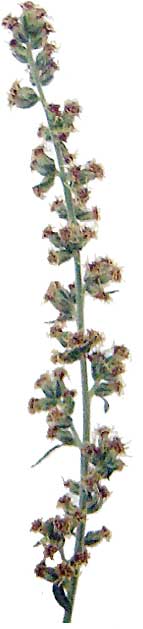
gray beneath, with nearly smooth above. Flowering heads are numerous, ovoid, 3 to 4 millimeters long, occurring in large numbers in spikelike, ascending, and branched inflorescences. Fruit, an achene, is minute.
• Growth form: Perennial up to 1.5 m tall which becomes woody at maturity. Foliage: Deeply lobed, simple leaves (5-10 cm long, 2.5-7.6 cm wide) resemble a pinnately compound leaf with oblong, irregularly lobed 'leaflets'. The upper leaf surface is green and hairless to sparsely hairy, while the lower surface is white to grey and softly hairy. Upper leaves tend to be more deeply lobed than lower ones. Leaves have a distinct aroma. Stems: Stems are usually reddish brown. Flowers: Compound flowers known as heads are composed of tiny, reddish brown florets. The heads are arranged in a narrow panicle that looks like a spike inflorescence. Fruit: Dry, indehiscent, 1-seeded fruits are known as achenes. (Flora & Fauna Web)
Distribution
- Introduced (?).
-
From the Batan Islands and northern Luzon to Mindanao, In and about towns at low and medium altitudes.
-
Widely cultivated in the Philippines.
-
Often planted, frequently established around the houses and gardens and
open places.
- Occurs in all warm countries.
- In many areas, considered a noxious weed, extremely invasive and aggressive and difficult to eradicate once established. (42
 Constituents Constituents
- Plant yields a volatile oil consisting of cineol, thujone, paraffin
and aldehyde.
- Roots contain inulin, tannin, resin and a volatile oil, 0.1 per cent.
- Study of crude extract yielded alkaloids, coumarins, flavonoids, saponins, sterols, tannins and terpenes.
- Essential oil from aerial parts yielded 14 compounds (93.34 % of the oil). The main constituents were Isobornyl isobutyrate (38.06%), β-pinene (30.13 %), dl-Limonene (6.23%), δ-3- Carene (4.80%), α-pinene (4%), δ-Terpinene (2.76%) and trans-Rose oxide (2.00%). (14)
- Elemental analysis yielded average concentrations (ppm): Pb 25.800±1.95, Cu 13.600±0.46, Zn 31.700 0.70, Cr 05.375±0.41, Cd 0.500±0.79 , Mn 41.650±0.05, Fe 0393.130±0.67, Ni 00.000±0.14, Co 2.050±0.27, Na 1118.800±0.52, K 15325.00±0.67, Ca 7177.500±0.67, and Mg 0910.000±0.12. (26)
- The major components of essential oil from stems were camphor, camphene, α-thujone, 1,8-cineole, γ-muurolene and β-caryophyllene.
(see study below) (30)
- Aerial parts of A. vulgaris yielded an essential oil varying between 0.1 and 1.4%, composed mainly of ß-pinene, a-pinene, camphor, and 1,8-cineole. (33)
- GC and GC-MS study of roots for essential oil yielded main compounds of
neryl 2-methylbutanoate (13.2%), β-eudesmol (10.4%), and bornyl 3-methylbutanoate (8.45%), none of which were found in the oil obtained from aerial parts. (48)
- A characteristic feature of the species is the presence of sesquiterpenoid lactones, including psilostachyin, psilostachyin C, and vulgarin, and also artemisinin. In addition, the presence of flavonoids—derivatives of kaempferol and quercetin, and coumarin compounds, such as esculin, umbelliferone, and scopoletin, is a distinguishing attribute of the plant. (48)
- HD (hydrodistillation) studyof AV essential oil yielded 1,8-cineole, α-pinene, ß-caryophyllene, borneol, camphor, and δ-elemene as most abundant components, HS approach (headspace volatiles) yielded primary constituents of camphor, 2-methylbutanal, 1,8-cineole, and camphene. (see study below) (50)
Properties
- Fragrant but bitter to taste.
- Emmenagogue, vulnerary.
- Plant considered a valuable stomachic, anthelmintic, emmenagogue, deobstruent, antispasmodic, tonic.
- Leaves and flowering tops considered tonic, stimulant, antispasmodic and emmenagogue.
- In China, considered hemostatic, antiseptic, carminative.
- Studies have suggested hepatoprotective, anti-inflammatory, anthelmintic, antihypertensive,
antioxidant, anticonvulsant, antispasmodic, bronchodilatory, anticancer, antifertility, antimalarial, antimicrobial, muscle relaxant, larvicidal, hypolipidemic, anxiolytic, fumigant, antinociceptive, antipyretic, immunomodulatory properties. Caution
• Pregnancy:
Should not be used by pregnant women.
• Allergies: Patients allergic to members of the daisy family may also show sensitivity to the plant.
Parts utilized
Leaves and flowers.
 Uses Uses
Edibility
- Young and tender leaves used as pot herb.
- Shoots and leaves used as condiment for a variety of meat dishes.
- Used in Korean and Japanese cuisine.
- In China, leaves used to wrap glutinous rice dumplings.
- Its essential contributes as a culinary spice in the food industry.
Folkloric
- Decoction of fresh leaves and flowering
tops, 50 g in a pint of water, 4-5 glasses daily as expectorant.
- Juice of leaves used as vulnerary, to heal wounds and cuts.
- As emmenagogue: A strong decoction of leaves, 6-7 glasses a day to
induce menstruation; also, for post-partum abdominal cramps.
- Juice of leaves applied to head of young children during convulsions.
- For intestinal deworming, decoction of boiled leaves, followed by
the juice of aloe or other purgative plants.
- Decoction of leaves used for abdominal colic pains.
- Leaf poultice for headache and skin diseases.
- Decoction of dried leaves used for asthma and dyspepsia.
- Juice used externally for scabies, eczema, herpes.
- With ginger: Pounded leaves, mixed with ginger are wrapped in banana
leaves and heated over a fire, and applied to wounds and swollen and
inflamed dermal afflictions.
- Stimulates appetite, young leaves used for anorexia.
- Infusion of aromatic leaves used to induce menstruation. Also, used as abortifacient, but considered too mild a uterine stimulant to be reliable for that purpose.
- Used as infusion and electuary for obstructed menses and hysteria.
- Externally, used as alterative as fomentations for skin diseases and foul ulcers.
- Expressed juice of plant applied to the head of children to prevent convulsions.
- In Uruguay, plant used as vermifuge.
- In China, used as hemostatic, antiseptic, and carminative; used as decoction for hemoptysis, dysentery, menorrhagia, postpartum hemorrhages, as a wash for wounds and ulcers, and to relieve gripping pains of indigestion, diarrhea, or dysentery.
- Juice of plant used for tapeworm.
- A tincture, made up in native spirits, used as nerve sedative e in abdominal pain and in labor.
- In Persia, Afghanistan and throughout India, strong decoction used as vermifuge; a weak decoction used in children for measles.
- In Malaya leaves used as carminative and hemostatic.
- Leaves, dried and cut in small fragments, used to cauterize wounds.
- In Anman leaves used for hemorrhage, epistaxis, hematemesis and hematuria.
- Used as vermicide; used in eczema, herpes and purulent scabies.
- Tonics made from mugwort root used for treatment of anxiety, irritability and restlessness. In Germany, mugwort used as stimulant for digestion and for the treatment of intestinal gas and stomach bloating. (41)
- In Slavic folk medicine, decoction used for treatment of fever; also, drunk as a juice or infused in vodka. Used in baths for rheumatic fevers. In Ukranian folk medicine, used as tonic to strengthen the stomach, drive out intestinal worms, stop diarrhea and strengthen peristalsis. Mugwort with green stems believed to stop heavy menstruations, while those with red stems are used to start overdue periods. In Mogilev province, root powder was used three times daily to treat falling sickness and hysteria. In folk midwifery and gynecology in Poltava province, womb problems are cured by bathing in mugwort. (46)
- In China, traditionally used for treatment of cholera and leprosy. Plant is also recommended for thermopuncture, consisting in burning "moxa" - dried and powdered leaves of A. vulgaris - directly on or close to the skin, or inhaling the smoke, which allows migration of "chi" energy. Its essential oil is used in a popular herbal medication "Ai Hao" for treatment of ulcers and diarrhea. (48)
- In traditional Hindu medicine (Unani), various preparations use A. vulgaris: Arq-e-Afsanteen is used for liver inflammation and obstruction; Dava-ul-Luk for treatment of enlarged liver or spleen and nephrolithiasis; Ques-e-Gul for chronic fever as liver tonic. (48)
- In European folk medicine, used for stimulation of gastric juice secretion, for gastrointestinal catarrh, insufficient production of bile and digestive juices, flatulence, and poor appetite. Infusions used externally for alleviating rheumatic and leg pains, and as sitz baths for hemorrhoids. (48)
- In Iranian traditional medicine, used for treatment of cervicitis.
- Mugwort lotion applied topically may relieve itching caused by hypertrophic scars (visible or raised scars that can cause restricted movement of muscles, joints, and tendons). (49)
Others
- Dye: Flowering tops of mugwort used by modern
dyers in the production of green dye.
- Old Uses / Tobacco / Beer: Before tobacco, leaves used by old people for smoking. Before hops, use as staple ingredient and flavoring agent in beer. (34) Brew (mugwort beer or wine) used as remedy against hangovers and nightmares. (41) The plant has been considered a substitute for cannabis. Smoking it produces mild intoxicating effects and strong relaxing properties. (48)
- Repellent: Fresh or dried plant repels insects.(•) Used to repel midges, fleas, moths, and intestinal worms. (41)
- Superstitions and rituals:
Used by Nepalese and Indian shamans to ward off evil spirits. In witchcraft, used to induce lucid dreaming and astral projection. The Ainu tribe of Japan drink the mugwort decoction before divinations to expel evil influences. Still used in present day rituals by Native Americans for evoking psychic powers. (34)
Moxa
- Fresh leaves are picked in the spring and
sun-dried, then ground to a fine powder (moxa wool). The wool is kneaded
into cones that are burned on the skin. Sometimes, the Moxa wool is prepared
in combination with the powder of other herbals.
• The burning of moxa herb sticks (compressed dried leaves) is
a treatment modality of the acupuncturist. It is placed above the skin,
along meridians or specific acupuncture points, mean to restore good
health, energy balancing, release of Qi - a process called Moxibustion.
• The moxibustion of mugwort has been used in correcting breech
presentation of fetuses into cephalic orientation. Also used to cause
abortion.
Studies
• Phytochemicals / Sesquiterpene: Study of dichlormethane extract of dried-leaves of Av yielded a new sesquiterpene 1, caryophyllene oxide, phytyl fatty esters, squalene, stigmasterol and sitosterol. (1)
• Estrogenic Flavonoids from Artemisia
vulgaris L. : A study isolated twenty known flavonoids,
the most abundant were eriodictyol and luteolin. Two flavonoids, eriodictyol
and apigenin, induced the transcription of the estrogen receptor gene
in transgenic yeast. (2)
• Hepatoprotective: Hepatoprotective activity of aqueous-methanol
extract of Artemisia vulgaris: Pre-treatment of mice reduced
the toxin-induced rise in ALT and AST in induced-hepatitis. The study
scientifically validates the traditional use of A. vulgaris for various
liver disorders. (4)
• In vivo Microvascular Action / Anti-inflammatory: In vivo
microvascular actions of Artemisia vulgaris L. in a model of ischemia-reperfusion
injury in the rat intestinal mesentery: Study showed
the extracts significantly reduced leukocyte adherence and transendothelial
leakage while improving flow in the ischemia-reperfused organ. The extract
contained yomogin, previously shown to inhibit iNOS activity, and may explain the anti-inflammatory property of
the plant. (5)
• Moxa Burning–Health Hazard? - UK tested the potential toxicity of smoke produced by the burning of Moxa in traditional Chinese medicine. Sidestream smoke from cigar-shaped "sticks" or "rolls" of Moxa was tested showed levels of only two volatiles equivalent or greater than the safe exposure levels, as well as carbon monoxide levels. Study gives no immediate concerns from continued use of moxa as a therapeutic modality. However, it suggests further testing for ventilation, cleansing of room environs and use of moxa on broken skin. (7)
• Anti-Trichinellosis: Trichinellosis can cause diarrhea, fever, periorbital edema and myositis in humans. This study on the methanol extracts of aerial parts of Av showed reduction of larval rate with significantly reduced antibody response during the enteral and parenteral phases. Results suggest Av can be an alternative drug against trichinellosis. (8)
• Anti-Hypertensive: Study suggests that the aqueous and chloroform extracts of leaves of Av have anti-hypertensive actions with not significant effects on cardiovascular hemodynamics. (9)
• Antioxidant: Study of extract of Av yielded flavonoidal and flavonol contents and exhibited nitric oxide scavenging activity, significant increases in glutathione level, superoxide dismutase activity and serum ascorbic acid levels. Results indicate Av is a potential source of natural antioxidants. (10)
• Anticonvulsant / Leaves and Stems: In a study of the aqueous extracts of leaves and stems of seven medicinal plants on Picrotoxin-induced seizures in mice, Artemisia vulgaris was one of four extracts to delay the onset of seizures and decrease the mortality rate. (11)
• Radical Scavenging Activity / Essential Oil: Study revealed the essential oil of Artemisia vulgaris possessed remarkable radical scavenging activity and might be effective against diseases caused by over production of free radicals. (12)
• Antispasmodic / Bronchodilator: A crude extract of A. vulgaris was studied in isolated tissue preparations of rabbit jejunum and guinea pig trachea, as well as in vivo castor oil-induced diarrhea and bronchodilatory techniques. Results showed a combination of anticholinergic and Ca+ antagonist mechanisms, providing pharmacologic basis for its folkloric use in hyperactive gut and airway disorders, such as abdominal coli, diarrhea and asthma. (13)
• Sesquiterpene Lactones / Muscle Relaxant / Antiasthma / Histamine H1 Antagonism: Study isolated yomogin, a sesquiterpene lactone, which exhibited a novel histamine H1 receptor antagonism in the ileum. The presence of competitive histamine receptor antagonist and smooth muscle relaxant effects on the ileum and trachea explains its traditional use in asthma and the hyperactive gut. (14)
• Antimicrobial Activity: Study of extracts was done for antimicrobial activity using E. coli and Staphylococcus aureus. Results showed the leaf plant extracts to possess antimicrobial activity against various test organisms used (E. coli, Staph aureus). The aqueous and alcohol extracts were more effective than traditional antibiotics used. (16)
• Antimalarial Activity: Study of antimalarial activity of a leaf extract in a Plasmodium yoelii rodent malaria model. Results showed inhibition of parasitaemia. Antinociceptive activity was also seen in the hot plate test indication a central, supra-spinally mediated mechanism for relieving pain. Results showed oral activity, non-toxicity, and a weed with a potential for a cheap source of plant-based antimalarial. (17)
• Antimicrobial / Leaves: Study evaluated the antimicrobial activity of various extracts of leaves of Artemisia vulgaris against selected bacterial and fungal strains. Results showed aqueous, chloroform and ethyl acetate extracts showed significant antimicrobial activity when compared to standard. (20)
• Benefit of Stimulation of Acupoint KI 1 for Treatment of Essential Hypertension: Study evaluated the effectiveness of stimulation of acupoint KI 1 by A. vulgaris to lower blood pressure compared to antihypertensive drugs. Meta-analysis showed superior effects of moxibustion plus antihypertensive drugs on systolic blood pressure with no superior effects on diastolic BP. The systematic review of literature showed a beneficial effect on moxibustion interventions to lower BP. (21)
• Anticancer: Study evaluated aqueous extracts of Artemisia vulgaris, Cichorium intybus, Smilax glabra, Solanum nigrum and Swertia chirayta against various human cancer cell lines. Results showed A. vulgaris exerted an inhibitory effect on cell growth and colony formation of prostate, breast, and colorectal cells.(22)
• Antifertility: Study evaluated an alcoholic extract of aerial parts of A. vulgaris on estrous cycle and implantation in female albino rats. Results suggest an antifertility effect with induction of irregular estrous cycle and increase in number of metestrus phase, 80% anti-implantation activity. There was no observed toxicity at high dose of 3000 mg/k p.o. (24)
• Hypolipidemic: Study evaluated an aqueous root extract of A. vulgaris for hypolipidemic activity in cholesterol diet induced hyperlipidemic rats. Results showed significant serum lipid lowering effects with decrease in TC, TG, LDL, VLDL, with increased level of HDL and atherogenic index (AI). The hypolipidemic activity was comparable to rosuvastatin. (25)
• Larvicidal Against Culex quinquefasciatus / Leaves: Study evaluated the larvicidal activity of methanol extracts of roots, stem and leaves of A. vulgaris against 3rd and 4th instars larvae of Culex quinquefasciatus. Leaves extract showed significantly higher mortality compared to root and stem extracts. Results suggest a potential for the methanol extract of leaves for mosquito control. (28)
• In Vitro Effect on Labeling of RBC and Plasma Proteins with Technetium-99m: Study showed A. vulgaris extracts could have substances that may interfere with the transport of stannous through the erythrocyte membrane altering the labeling of blood cells with 99mTc. (29)
• Larvicidal Against Aedes aegypti / Stem Essential Oil: Stems analyzed for essential oil yielded major components viz., camphor, camphene, α-thujone, 1,8-cineole, γ-muurolene and β-caryophyllene. Mosquito larvicidal assay against 3rd instar larvae of Aedes aegypti showed 100% larval mortality with 500 ppm oil solution exposed for 8 hours. Results suggest a potential source of natural insecticides. (30)
• Cytotoxicity / Apoptosis in HL-60 Leukemic Cell Line: Study evaluated the toxicity of Artemisia vulgaris extracted oil from buds (AVO-b) and leaves (AVO-l) against human HL-60 promyelocytic leukemia and other cancer cell lines. Results showed EO-induced apoptosis in HL-60 cell mediated by caspase dependent pathways. AVO-b and AVO-l are more efficient in inducing apoptosis in different cancer cell lines rather than noncancerous cells. (31)
• Growth Inhibition / Leaves: Study showed leaves of A. vulgaris can inhibit growth of rats. The effect was attributed to blockade in energy generation process and interference in pentose pathway for production of NADPH and pentose sugar for synthesis of nucleic acid. The study sends a message for restricted use of leaves in treatment of various ailments. (32)
• Anticonvulsant / Anxiolytic / Leaves: Study evaluated the anticonvulsant and anxiolytic effect of methanol extract of leaves of A. vulgaris in Swiss albino mice. Results showed excellent anticonvulsant activity as evidenced by increase in the time of latency for the beginning of first seizures in all test models. The extract also showed anxiolytic activity using EPM (elevated plus-maze) and MBT (marble-burying) testing. (35)
• Fumigant / Essential Oil / Aerial Parts: Study of aerial parts yielded an essential oil with main component of alpha-pinene (23.56). Study showed insecticidal activity against three major stored product beetles viz., Tribolium castaneum, Callosobrucus maculatus, and Rhizopertha dominica. Mortality was dose- and exposure-time dependent. (36)
• Antitumor Effects /
HCT-15 Human Colon Cancer Cells: Study evaluated a methanol extract of Artemisia vulgaris for anticancer activity against HCT-15 human colon cancer cell line. Results showed IC50 of 50 µg/ml and dose-dependent cytotoxic effect. There was inhibition of colony formation and dose-dependent induction of autophagy. The induction of autophagy was ROS-mediated MMP and significant inhibition of cell migration potential of colon cancer cells at the observed IC50. (37)
• Immuomodulatory Effects: Study evaluated the immunomodulator effects of an ethanol extract of A. vulgaris in male rats. Results showed immunomodulatory effects as evidenced by increased carbon elimination, increased number of total leukocytes ad differential, especially neutrophils and neutrophils rod segments. (38)
• Use of Non-Pharmaceutical Forms of Artemisia: This study reports on the WHO (World Health Organization) position on the use of non-pharmaceutical forms of Artemisia. Today the most widely used antimalarial treatments, artemisinin-based combination therapies (ACTs) are produced using pure artemisinin compound extracted from the plant Artemisia annua. Currently, all malaria strains can be treated with at least one of the ACTs recommended by the WHO. In areas where ACTs are not readily accessible, the WHO does not support and cautions against the use of Artemisia plant material-such as teas, tablets and capsules-as affordable, effective alternative medicines against malaria. (39)
• Antimalarial / Antipyretic / Antinociceptive / Plasmodium berghei / Leaves: Artemisinin isolated from the Chinese plant, Artemisia annua, is the single potent antimalarial against chloroquin resistant strains of Plasmodium falciparum. This study evaluated the antimalarial properties of A. vulgaris ethanolic leaf extract against P. berghei murine model with similar pathogenesis to Falciparum malaria. The leaf extract at 1000 ad 500 mg/kg doses significantly (p<0.001) inhibited parasitaemia by 87.3% and 79.3%, respectively, in a 4-day suppressive assay but lack anti-parasitic activity in the curative assay. Both doses significantly reduced the profound thrombocytopenia (p≤0.01) and altered the end-stage disease (p≤0.05) associated with P. berghei pathogenesis, while the 1000 mg/kg dose demonstrated significant (p≤0.05) antipyretic activity in the yeast-induc4d mice pyrexia model. Results showed the crude leaf extract possesses both potent and safe anti-malarial activity along with anti-pyretic, peripheral antinociception, and reversal of thrombocytopenia. (40)
• Antibacterial / Stem, Root and Shoot: Study evaluated various extracts (petroleum ether, acetone, and 90% ethanol on water) of stem, root and shoot for antimicrobial activity against S. aureus, MRSA, and Bacillus subtilis using disc diffusion method. The acetone extract showed high antimicrobial activity against the test bacteria. Results contrast with previous study that showed an ethanol extract with higher activity. (43)
• Adaptogenic / Anti-Stress / Leaves, Study evaluated the adaptogenic potential of Artemisia vulgaris leaf extract on male albino mice using acute restraint stress. The 150 mg/200 gm rat group exhibited the highest adaptogenic activity on measures of glucose and cholesterol levels. Results suggest the leaf extract has potential protective effect against stress. Adaptogenic activity was attributed to flavonoids, tannins and saponins in the leaf extract. (44)
• Hepatoprotective / Acetaminophen Toxicity / Essential Oils and Eucalyptol: Essential oils were extracted by HS-SPME-GC-MS,Eucalyptol (1,8-cineole) is one of the major essential oils in A. vulgaris. Study evaluated for hepatoprotective activity of essential oils and eucalyptols on on acetamiophen induced liver toxicity. The EO significantly attenuated APAP-induced liver damages. The APAP non-toxic metabolism was accelerated by eucalyptol in protecting the liver against APAP-induced injury, indicating potentials for eucalyptol or EOs from A. vulgaris as natural source of hepatoprotective agent. (45)
• Anti-Fungal / Leaves, Study evaluated the anti-pathogenic effect of crude extract of A. vulgaris leaf extract on Aspergillus niger and Candida albicans (47)
• Antioxidant / Anti-Inflammatory / Antibacterial / Essential Oil: HD, HS, and GC/MS studies evaluated the essential oil from AV grown in Vietnam. The HD showed antibacterial activities against E. coli, S. typhimurium, S. aureus, P. aeruginosa, and S. mutans, and inhibited the production of NO,
TNF-α in LPS-induced RAW264.7. The HD also exhibited moderate antioxidant activity by DPPH, ABTS, and reducing power assays. (see constituents above) (50)
• Anti-Inflammatory / Effect of Altitude / Leaves: Study evaluated the invivo chronic anti-inflammatory efficacy of ethyl acetate and ethanolic extracts in formalin-induced paw edema in Swiss albino mice using Av leaves grown at three different altitudes in Nepal . Indomethacin was used as standard. Extract doses of 200 and 400 mg/kg were used. Both EA and EE exhibited significant inhibition of paw edema (p<0.05). Maximum activity was shown by 400 mg/kg dose with 54.05% paw edema inhibition. The ethanolic extract was more effective than the ethyl acetate extract. Results also suggested the the inflammatory effect of leaves increased with an increase in altitudes. (51)
Availability
- Wild-crafted.
- Seeds, herbal extracts, essential oils in the cybermarket.
|