Gen info Gen info
- Psydrax is a genus of flowering plants in the family Rubiaceae, consisting of trees, shrubs, and a few lianas in the paleotropics. The genus was named by Joseph Gaertner in 1788 in his book, De Fructibus et Seminibus Plantarum.
-
Psydrax dicoccus is a species of flowering plant in the family Rubiaceae.
- Etymology: The genus name Psydrax derives from a Greek word meaning "blister" or "bump", which may refer to the warty fruit or the pimply seeds of some species. (16)
Botany
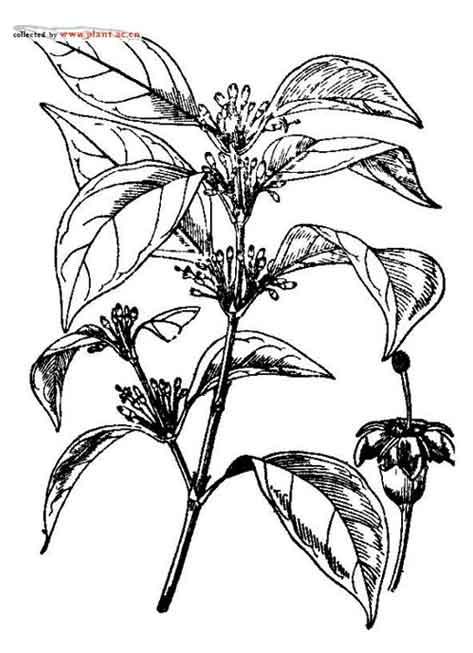
• Malakafe is an unarmed, smooth shrub 3 to 4 meters or more in height. Leaves are extremely variable, ovate, elliptic, ovate or somewhat rounded, 5 to 15 centimeters long, 1.5 to 10 centimeters wide, leathery, shining above, and usually pointed at both ends. Flowers are white, with very slender stalks, 5 to 10 millimeters long, and borne in compressed, short-stalked cymes. Calyx is cut off at the end or obscurely toothed. Corolla is bell-shaped, with a 4- to 6-millimeter tube, and five somewhat pointed lobes. Fruit is rounded, ellipsoid or obovoid, 6 to 10 millimeters long, slightly flattened and obscurely 2-lobed. (15)
 Distribution Distribution
- Native to the Philippines. (7)
-
In secondary and primary forests at low altitudes in Benguet, Pangasinan, Zambales, Bataan, Rizal and Batangas Provinces in Luzon; and in Mindoro, Ticao, Palawan, Negro, Guimaras, and Mindanao.
- Also native to Andaman Is., Assam, Bangladesh, Borneo, Cambodia, China South-Central, China Southeast, East Himalaya, Hainan, India, Jawa, Laos, Malaya, Maluku, Myanmar, Nicobar Is., Sri Lanka, Sulawesi, Sumatera, Thailand, Tibet, Vietnam. (7)
- Listed as "vulnerable" in the IUCN Red List of Threatened Species(2013).
Constituents
- Study yielded ursolic acid, rutin and 7-O-(5-O-benzoyl-ß-D-glucopyranosyl)-rutin.
- Study yielded major chemical components viz. Spathulenol (20.76 %), Caryophyllene oxide (19.25 %), Cedren-13-ol (10.62 %), Ledene oxide (5.24 %), m-mentho-4, 8-diene (6.41 %) and 2-furancarboxaldehyde (4.51 %). (See study below) (3)
- Various extracts of leaves yielded alkaloids, flavonoids, phenolic compounds, saponins, tannins, cardiac glycosides, steroids, and terpenoids. (see study below) (12)
- Studies on P. diococcus have revealed presence of carbohydrates, glycosides, saponins, terpenoids, alkaloids, phenols, flavonoids, tannins, steroids, coumarin, and volatile oils. Terpenoids are the major chemical constituents, such as spathulenol, caryophyllene oxide, cedren-13-ol, and ledene oxide (Rajeswari et al., 2011). Flavonoids like rutin, quercetin and coumarin are present. (Meghashree et al, 2020). (17)
- The hydroalcoholic extract revealed high concentration of total phenolics (59.68 mg GAE/g), total flavonoids (57.85 mgQE/g) and proanthocyanidin (24.98 mg AAE/g). Ethyl acetate (31.76 mg QE/g), methanolic (34.99 mg AAE/g) and aqueous (75.00 mg GAE/g) extracts showed high amount of total flavonoids, vitaminE and total tannins, respectively. GC-MS Analysis identified 56 metabolites with squalene and cinnamic acid as prominent compounds. (see study below) (19)
- FTIR analysis of bark extracts identified various organic compounds, including alcohols, phenols, carboxylic acids, and aromatics. (see study below) (20)
- Methanolic extract of whole plant showed presence of carbohydrates, phenolics, flavonoids, glycosides, and tannins. (
see study below) (22)
- Qualitative phytochemical screening of study of P. dicoccos flowers revealed presence of various bioactive compounds, including tannins, saponins, phenols, reducing sugars, and alkaloids. (23)
Properties
- Febrifuge, antidiarrheal.
- Studies have suggested antifungal, antibacterial, anti-inflammatory, antidiabetic, anti-arthritic, nephroprotective, hepatoprotective, anticancer, antioxidant, enzyme-inhibitory, anti-Parkinson's properties.
Parts used
Bark, roots, leaves.
 Uses Uses
Edibility
- In India, fruit pulp reported as edible. (10)
Folkloric
- In India, bark is used for fever.
- Decoction of roots used for diarrhea.
- The Malayali tribals in Kolli hills of Tamil Nadu, India, a leaf extract mixed with banana is taken orally to facilitate delivery. (11)
- Stem and bark powder boiled with sesame oil is externally used for rheumatic pains. Bark externally applied to fractures. Leaves used for inflammation, facilitating delivery, and breast cancer. Also used for treating shingles (Herpes zoster). (17)
- Crushed leaves or bark extracts topically applied to wounds, cuts, and skin ulcers.
Others
- Fish poison: In India, coarsely ground plant parts used in small ponds and streams. (14)
- Wood: Wood is white or light brown, hard, close and even-grained; used for cutlery, agricultural purposes, etc.
- Ecological / Water indicator: P. dicoccos is mostly found near water bodies. It is one of the few tree species that indicate water body areas. (17)
- Pollination: Flowers attract 38 species of various functional pollinating groups, such as butterfly, wasp, bee, moth, fly, ant, bug, spider, and reptile. (Subha and Richard, 2016) (17)
 Studies Studies
• Flavonol Glycoside: Study yielded a new flavonol glycoside, 7-O-(5-O-benzoyl-ß-D-glucopyranosyl)-rutin. (1)
• Antifungal: Diglycosides, rutin and its benzoic derivative, 7-O-(5-O-benzoyl-ß-D-glucopyranosyl)-rutin from C dicoccum and kaempferol 3-ß-D-rutinoside from C rheedii strongly inhibited all test fungi. (2)
• Anti-Inflammatory: Study evaluated an ethanolic extract of whole plant of Canthium diococcum for anti-inflammatory activity in Wistar albino rats in various models of anti-inflammatory activity viz., Carrageenan induced paw edema, Formalin induced paw edema, fresh egg white induced paw edema and cotton pellet induced granuloma model. Results showed the extract with anti-inflammatory activity and suggests a potential alternative to NSAIDS like diclofenac. (4)
• Anti-Diabetic / Nephroprotective: Study evaluated an ethanolic extract of Canthium diococcum for anti-diabetic in an alloxan induced diabetic rat model. Results showed a significant drop in fasting blood sugar in a dose-dependent manner, with an effect on the beta-cell population in the pancreas. The extract showed almost equipotent antidiabetic activity compared to standard drug Glibenclamide. (5)
• Anti-Arthritic: Study evaluated an ethanolic extract for anti-arthritic activity in albino rats. Results showed significant anti-arthritic activity against Egg-albumin induced arthritis model. (6)
• Bioactive Components: Study of an ethanolic extract of leaf yielded major chemical constituents viz. Spathulenol (20.76 %), Caryophyllene oxide (19.25 %), Cedren-13-ol (10.62 %), Ledene oxide (5.24 %), m-mentho-4, 8-diene (6.41 %) and 2-furancarboxaldehyde (4.51 %). Some on the constituents provide scientific bases and evidence for antimicrobial, anti-tumor, immunomodulatory, and antioxidant properties of the plant. (3)
• Hepatoprotective: Study evaluated an ethanolic extract of Canthium dicoccum whole plant for hepatoprotective activity in isoniazid (INH) and rifampicin (RIF) induced hepatotoxicity. Treatment with ECD significantly attenuated the INH and RIF induced enzyme elevations and improved serum T-PRO levels. (8)
• Nephroprotective: Study evaluated the protective effect of aqueous extract of C. dicoccum against Streptomycin-induced nephrotoxicity in rats. Results suggest a dose-dependent nephroprotective potential as evidenced by improvement in biochemical and urinary parameters. (9)
• Antibacterial / Antifungal: Study evaluated various solvent extracts for antimicrobial activity against Staphylococcus aureus, Streptococcus pyogenes, Enterococcus faecalis, E. coli, Proteus vulgaris, Pseudomonas aeruginosa, Vibrio cholerae, Candida albicans, C. parapsilosis, and C. tropicalis. A methanol extract showed the highest antimicrobial activity against all bacteria and fungal strains tested. (see constituents above) (12)
• Antifungal / Leaves: Study investigated the antifungal activity of methanol extract of leaves of Psydrax dicoccos against C. albicans C. krusei, C. guilliermondii, C. parapsilosis, C. tropicalis, C. glabrata, four dermatophytes viz., T. rubrum, T. mentagrophytes, M. gypseum and E. flococcum. The highest zone of inhibition was against C. albicans. Antifungal activity was attributed to cinnamic acid, 2H-1-Benzopyran-2-one, 5,7-, (Z)6,(Z)9-pentadecadien-1-ol, n-Hesadecanoic acid from the methanol extract. (13)
• Antioxidant Capacity / Free Radical Scavenging / Phenolic and Flavonoid Contents: Study evaluated the in vitro antioxidant activity of various extracts of Psydrax dicoccos using various radical scavenging assays. A methanol extract showed the highest phenol and flavonoid contents with total phenol content of 5.05 ± 0.76 mg/ml GAE/g and flavonoids of 6.72 ± 0.13 mg/ml QE/g. (14)
• Anticancer / Antioxidant / Antibacterial / Leaves: Breast cancer in women carry a mortality rate of 6.6%. Study evaluated the possible use of P. dicoccos against breast cancer cells. A methanolic leaf extract demonstrated cytotoxic effects against MCF7 breast cancer cells with IC50 of 34 µg/ml. Extract also exhibited good antioxidant activities against DPPH (62%) and ABTS (80%), and concentration- dependent (100-800 µg/ml) anti-inflammatory potential of 18-60% compared to standard ascorbic acid and aspirin, respectively. Low concentration at 10 µg/ml inhibited the growth of Escherichia coli (1.9 mm) and Pseudomonas aeruginosa (2.3 mm). MS and LC-MS analyses identified 31 and 16 components, respectively, from which selected compounds were used to evaluate the interaction between key receptors (*AKT0-1, COX-2, and HER-2) of breast cancer based on binding energy (ΔG) and inhibition constant (Ki). Results suggest the bioactive compounds have potential against breast cancer cells. (18)
• Enzyme Inhibitory / Antioxidant / Antibacterial / Leaves: Study investigated the phytochemical composition, antioxidant, antibacterial, and enzyme inhibitory effects of P. dicoccos hydroalcoholic extract (HAE). HAE showed moderate α-amylase (IC50 of 48.94 µg/ml) and α-glucosidase (IC50 of 46.98 µg/ml) inhibitory activities. HAE also showed to be a potent radical scavenger, reducing agent, metal chelating power, and total antioxidant capacity. The aqueous extract showed most effective antibacterial activity with MIC rang from 87.5 to 175 µg/mL. (see constituents above) (19)
• Antioxidant / Bark: Study evaluated the antioxidant potential of P. dicoccos bark. Ethanol extracts yielded total polyphenol and flavonoid contents of 70.77 and 88.29 mg catechol eq/g and 212.85 and 745.53 mg QE/g, respectively. Antioxidant assays by DPPH and ABTS revealed significant scavenging activities, with IC50s of 73.68 µg/ml and 35.65 µg/ml for aqueous extract, and 56.06 µg/ml and 16.6 µg/ml for ethanol extract. (20)
• Anti-Parkinson's Disease: Parkinson's disease is a major neurodegenerative disorder due to loss of dopamine in the Substantia nigra pars compacta. The disease can be treatment by inhibiting α-synuclein protein, monoamine oxidase-B (MAO-B), a neurotransmitter (dopamine) pack in the synaptic vesicle, and inflammation. In the study, docking studies were done on six phytoconstituents from P. dicoccos against targets for Parkinson's disease (PD). Molecular docking studies were performed for 15 ligands with targets such as α-synuclein, HSP-70, SV2C, MMP-3, and NOS, along with ADMET predictions, and bioactivities. All compounds comply with Lipinski's drug-likeliness, showed intestinal absorption and BBB permeability. Compounds caryophyllene oxide, Cedr-8-en-130-ol, and spathulenol act as nuclear receptor ligand and have enzyme inhibitory activity. Results showed the anti-Parkinson activity of the compounds was due to their action on multiple targets. Examination of all parameters suggest Psydrax dicoccos has potential to cure Parkinson's disease. (21)
• Antihyperglycemic / Anti-Oxidative / Whole Plant: Study evaluated the antihyperglycemic and invitro antioxidant effect of methanolic extract of whole plant on streptozotocin-induced diabetic Wistar rats using doses of 100, 200, and 400 mg/kg. Metformin was used as standard drug. Dose of 200 mg/kbw showed significant reduction in blood glucose levels (p<0.001). Promising antioxidant effect was evident from antioxidant enzymes SOD, CAT, and LPO. (22)
Availability
Wild-crafted. |