|
Gen info
-
Apocynaceae is a family of flowering plants that includes trees, shrubs, herbs, stem succulents, and vines, usually known as the dogbane family, because some taxa were used as dog poison. Notable members include oleander, dogbanes, milkweeds, wax plants, and periwinkles.
- Allamanda is a genus of flowering plants in the family Apocynacae. Most species produce yellow flowers.
- Etymology: The genus name Allamanda honors the Swiss botanist and physician Fréderic-Louis Allamand (1736-1809). The specific epithet cathartica means cathartic, cleansing, purging, referring to its medicinal use in inducing vomiting.
- It is the official flower of Kuching North City Hall.
- The city of Canóvanas, Puerto Rico has adopted the species, known as canario amarillo, as its official flower.
 Botany Botany
- Kampanilya is a vigorous, smooth, slightly
hairy shrub growing 2 to 4 meters high. Leaves are opposite, in whorls of 3 or 4, although the upper ones may be scattered, lanceolate or oblong-lanceolate,
8 to 12 centimeters long, 2.5 to 4 centimeters wide, pointed on both ends.
Flowers are yellow and short-stalked. Calyx-teeth are
green, somewhat spreading, lanceolate and 1 to 1.5 centimeters long. Corolla is about 7 centimeters long; the slender part of the tube being about 3 centimeters long; the tube inflated up to 2 centimeters in diameter; the lobes ovate or oblong-ovate, spreading, rounded and about 2 centimeters long.
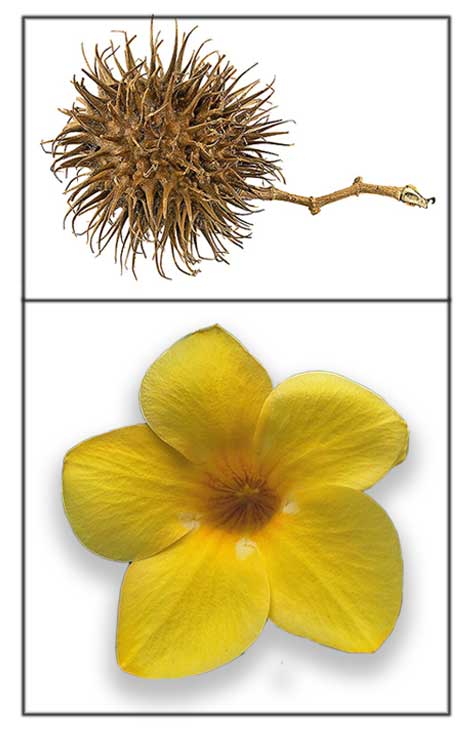
- Growth form: A woody and evergreen vine. It can grow up to 6 m long. Foliage: Leaves are borne in whorls along the stems and are leathery and oblong-lanceolate in shape, grow up to 16cm long and 6cm wide.Stems: Woody and twinning stem. It contains milky sap. Flowers: Yellow, funnel-shaped flowers are borne in axillary cymes. The flowers sepals are ovate to narrowly ovate, the flower corolla is yellow and 5-lobed and spreading. Fruit: Fruits are in the form of prickly capsules which split open to release winged seeds. (Flora & Fauna Web)
Distribution
- Cultivated and naturalized in the Philippines. (44)
-
A popular garden plant.
-
Occasionally semi-established in wild in thickets near dwellings or settlements.
- Native to Bolivia, Brazil North, Brazil Northeast, Brazil South, Brazil Southeast, Brazil West-Central, French Guiana, Guyana, Suriname, Venezuela. (17)
 Constituents Constituents
- Phytochemical studies revealed the main constituents to be alkaloids,
flavonoids, saponins and carbohydrates.
- Contains allamandin, a toxic iridoid lactone.
- Milky sap is considered antibacterial, possibly anticancer.
- Study of phospholipid fatty acid composition yielded 7-Methyl-5,9-octadecadienoic acid.
- Phytochemical analysis of an ethanolic leaf extract yielded 28 different compounds, the major constituents of which were 9,12,15-octadecatrienoic acid (Z,Z,Z)-, n-hexadecanoic acid, 3-O-methyl-d-glucose and 9,12,15-octadecatrienoic acid ethyl ester (Z,Z,Z)- (10.58%). The ethanolic stem extract of A. cathartica showed the presence of 26 different bioactive compounds, the major ones 3-O-methyl-d-glucose, 2-furancarboxaldehyde 5-(hydroxymethyl)-, n-hexadecanoic acid and 9,12,15-octadecatrienoic acid (Z,Z,Z)-. (12)
- Study of whole plant yielded eleven secondary metabolites, viz., allamandin (1), allamdin glucoside (2), betulinic acid (3), ursolic acid (4), 2,6,8-trihydroxy-3-(4-hydroxyphenyl)-4H-chromen-4-one (5), pinitol (6), heptacosanoic acid (7), heptacosane (8), β-sitosterol (9), β-sitosterol-3-O-glucoside (10), and sucrose (11). (25)
- Study of extractives yielded five potent active compounds, i.e., glabridin, a new lignan (1-[3-(4-allyl-2,6-dimethoxyphenoxy)-4-methoxyphenyl] propane-1,2,diol), kaempferol, naringenin, and allamandicin. (see study below) ( 30)
- Study of floral extracts yielded phenolic compounds, flavonoids, saponins, glycosides, terpenoids, steroids, coumarins, quinones, phytosterols, protein, carbohydrates. ( 31)
- Study of whole plant yielded eleven important secondary metabolites: ursolic acid, ß-sitosterol, ß-sitosterol glucoside, betulinic acid, plumericine, allamdin glucoside, heptacosanoic acid, heptacosane, D-(+)-pinitol, 2,6,8-trihydroxy-3-(4-hydroxyphenyl)-4H-chromen-4-one, and sucrose octaacetate.
(see study below) ( 32)
- Study of acetone extract of flowers isolated iridoids: plumieride (1), plumieride p-Z-coumarate (2), plumericin (3), and allamandicin (4). (see study below) ( 37)
- Methanolic extract of leaves yielded carbohydrates, reducing sugars, hexose sugar, saponin glycosides, flavonoids, alkaloids, amino acids, phenolic compounds, steroids, and proteins. ( 41)
- Phytochemical screening of stems, leaves, and
flowers of Allamanda cathartica yielded tannins, flavonoids, terpenes, anthraquinones, cardiac glycosides, and absence of alkaloids in all three parts. Qualitative screening of stems, leaves and flowers yielded moisture content (%) of 1.50, 3.0. and 1.0; ash (%) 2.0, 4.0, 0.5; protein (%) 1.50, 6.80, 2.50; fats (%) 2.0, 3.0, 5.0; crude fiber (%) 24.0, 23.20, 22.0; carbohydrates (%) 72.0 60.0, 69.0, respectively. ( 42)
- Study of acetone extract of dried powder of leaves yielded three iridoid derivatives: plumieride (1), plumieride coumarate (2), and allamdin (3). ( 43)
- Phytochemical screening of methanolic extract of powdered plant material revealed presence of carbohydrates, alkaloids, saponin glycosides, proteins, tannins, flavonoids, andf amino acids. (see study below) ( 49)
- Phytoconstituents of various plant parts revealed: Leaves: ß-sitosterol, ß-amyrin, ursolic acid, sesquiterpenes, plumericin, and plumieride. Stem and bark: ß-sitosterol, ß-amyrin, ursolic acid, alkaloids, glucosides, and triterpenoids. Flowers: Flavonoid compounds, quercetin, kaempferol, and hesperidin.
( 49) Properties
- In the Philippines, whole plant is considered poisonous.
- All plant parts yield a while milky sap that may cause rashes, itching, and blistering on contact.
- As the name implies, the leaves, roots and flowers may be used in preparing
a powerful cathartic.
- Considered purgative, cathartic with hydrogogue
effect, healing, diuretic.
- Studies have suggested purgative, antidermatophytic, anatioxidant, wound healing, antiproliferative, antifertility, antibacterial, antifungal, anticholinesterase, membrane stabilizing, antipyretic, anti-inflammatory, cytotoxic, antiviral, hepatoprotective, thrombolytic, tyrosinase inhibitory, ssteroidogeneis inhibitory, antiandrogenic, antidepressant properties.
Parts
utilized
Leaves, bark, latex.
 Uses Uses
Edibility
- Plant is not edible. All plant parts - leaves, stems, flowers, and sap - contain a milky latex that may cause rashes, itching, and blistering on contact.
Folkloric
- The plant draws its name from Allamand, who made the plant known a century and a half ago, who used a cathartic infusion of the leaves for colic.
- Infusion of leaves in moderate doses is an excellent cathartic; in considerable doses, it is purgative and a violent emetic.
- The bark and latex in small doses are considered cathartic; in large doses, poisonous.
- Decoction of the bark is a hydragogue; infusion of leaves is cathartic.
- Decoction of leaves in small doses used as antidote for poisoning.
- Extract of leaves used for colic and as laxative; in large doses causes
diarrhea and vomiting.
- In Trinidad, used for treating malaria and jaundice.
- In Guiana, the latex is used as a purgative and employed for colic.
- In Surinam, the plant is used as a cathartic.
- In Ayurvedic and Unani medicine, used for healing of wounds and ulcers; bark used as hydragogue in ascites, leaves used as cathartic, roots used for snake bites, whole plant used for jaundice and malaria. (32)
Others
- Fuel: Study evaluated the use of seeds as alternative source of biofuel. (see study below) (12)
Studies
• Purgative
Effect / Leaves: Study suggests Allamanda cathartica
leaf extracts can elicit a purgative effect by increasing intestinal
motility, in part, via muscarinic receptor activation. Main constituents were flavonoids, alkaloids, saponins, and carbohydrates. (1)
• Wound Healing:
The study of aqueous extract showed significant wound
healing activity in wound models studies with decrease epithelizations
time, high skin breaking strength, and increase in granulation tissue
weight and hydroxyproline content. The Allamanda leaf extract possesses
better wound healing activity than the Laurus nobilis. (2)
• Reversible
Antifertility Effect: The study on the oral
administration of aqueous leaf extract of AC showed reversible suppression
of fertility in male mice – organ weight, testosterone levels,
sperm parameters among others – without detectable toxic effects. (3)
• Plumieride / Antidermatophytic:
Plumieride, an active principle isolated from
the leaves of AC showed strong fungitoxicity against some dermatophytes
causing dermatomycosis to both humans and animals. (4)
• Purgative
Effect : Study showed the aqueous extract of
leaves of Ac could produce a purgative effect by increasing intestinal
motility, partly through muscarinic receptor activation.(5)
• Anti-Proliferative / Cytotoxic: Study evaluated the anti-proliferative effect of A. blanchetti and A. schottii on K562 leukemic cells. Results showed both plants exhibited cytostatic and cytotoxic activity, the most active were located in the roots. (6)
• Antimicrobial: Study of leaf extract of A. cathartic showed antimicrobial activity – the chloroform extract showed significant activity against Shigella dysenteriae, moderate activity against B subtilis, P aeruginosa and a niger. (7)
• Bioactive Iridoids / Cytotoxic: Study of ethanol extract of A cathartica and H fallax isolated a weakly cytotoxic isoplumericin and plumericin. (8)
• Synergistic Anti-Inflammatory Activity: Study investigated the anti-inflammatory activity of a methanolic extract of Allamanda cathartica and Piper nigrum in a carageenan-induced paw edema model. Results showed a synergistic interaction between A. cathartica and P. nigrum. (10)
• Thrombolytic Activity / Leaves: Study evaluated a crude methanolic extract of leaves and its fractions for possible thrombolysis and cytotoxic activities. Soluble fractions of chloroform and hexane extracts showed clot lysis activity, 34.51 ± 0.669% and 32.179 ± 0.581%, respectively. Streptokinase and water were used as positive and negative controls. In brine shrimp lethality bioassay, fractions showed significant cytotoxic activity against brine shrimp nauplii with LC50 of 1.45, 5.00 and 5.24 µg/ml for chloroform, hexane, and carbon tetrachloride soluble fractions, respectively. (13)
• Seeds as Biofuel: Study evaluated the possibility of using yellow bell seeds crude extract as fuel. Results showed a potential for the crude extract to be a substitute for kerosene and alcohol. (14)
• Antiviral Activity: Study evaluated crude hexane extracts from stem and leaf for antiviral activity on the replication of Autographa californica multiple nucleopolyhedrovirus (AcMNPV) in Spodoptera frugiperda cell line (Sf9). Results showed the extract affected DNA replication of AcMNPV in Sf9 cell line when the extract was added at 1 h post- infection. (15)
• Anti-MDR Staphylococcus aureus: Study evaluated the prevalence of multidrug resistance S. aureus in human clinical sample and its sensitivity to A. cathartica leaf extract. Results showed the leaf extract would be useful in developing drugs that can reduce the prevalence of MDR Staphylococcus aureus causing clinical infection in human. (16)
• Antipyretic / Anti-Inflammatory / Leaves: Study evaluated ethanolic extract of Allamanda cathartica for anti-inflammatory and antipyretic activities on carrageenan induced paw edema and brewer's yeast-induced pyrexia in rats. Results showed significant suppression of paw edema development and significant decrease in body temperature. (18)
• Antioxidant / Membrane Stabilizing / Antimicrobial: Study evaluated a methanol extract of leaves and soluble partitionates of A. cathartica showed significant membrane stabilizing activity, mild to moderate antioxidant and weak antimicrobial potentials. (19)
• Hepatoprotective / Cytotoxicity: Study evaluated the hepatotoxic and cytotoxic activity of methanolic and aqueous extracts from flowers and roots of Allamanda cathartica on BRL 3-A cell lines. Cell viability was inhibited to various extents by the extracts. A flower extract showed 83.9% protection with galactose as hepatotoxicant, compared to Silymarin at 95.13% protection. (20)
• Anthelmintic / Leaves: Study showed the efficacy of crude extract of leaves as anthelmintic against pig roundworms Ascaris suum. Albendazole was used as reference drug. (21)
• Green Synthesis of Silver Nanoparticles / Antimicrobial: Silver nanoparticles has important application in medicine as antimicrobial agent. Study reports on the rapid biosynthesis of silver nanoparticles from aqueous leaf extract of Allamanda cathartica. A. cathartica aqueous leaf extract of SNPs showed highest toxicity to Pseudomonas followed by Klebsiella, Bacillus and E. coli. (22)
• Sensitivity of Multidrug Resistant Staphylococcus aureus to Leaf Extract: Study evaluated the sensitivity of multidrug resistant S. aureus in human clinical sample to A. cathartica leaf extract. 75% of the isolates were resistant to streptomycin, with varying resistance to azithromycin, chloramphenicol, gentamycin and erythromycin. The crude leaf extract was found to possess antibacterial properties of 83.33% against S. aureus isolates. (23)
• Plumericin / Antifungal: Study evaluated five Allamanda species for antifungal activity against plant pathogenic fungus Colletotrichum gloeosporioides. M. cathartica exhibited potent inhibitory effect and suppressed mycelial growth of C. gloeosporioides up to about 70%. Activity was attributed to the tetracyclic sesquiterpene plumericin. (24)
• Allotides / Cystine Knot α-Amylase Inhibitor: Cystine know α-amylase inhibitors (CKAIs) belong to a knottin family of plant derived α-amylase inhibitors. CKAIs have received attention for potential in the treatment of obesity and diabetes. In this study, five new α-amylase inhibitors, members of the CKAI family were isolated from A. cathartica, name allotides C1-C5. (27)
• Silver Nanoparticles / Antioxidant / Antibacterial / Flowers: Study reported on the green synthesis of silver nanoparticles using Allamanda cathartica flower extracts as reducing, stabilizing, and capping agent. The AgNPs showed significant antibacterial and antioxidant activity, with a potential for biomedical applications. (29)
• Tyrosinase Inhibitory Activity / Glabridin: Study of A. cathartica extractives identified five potent compounds, glabridin, new lignan, kaempferol, naringenin, and allamandicin. Glabirdin showed highest tyrosinase inhibitory activity (IC50 2.93 µM), which was 15 times stronger than kojic acid used as positive control. (30)
• Bioactive Secondary Metabolites: Study of whole plant isolated eleven important secondary metabolites: ursolic acid, ß-sitosterol, ß-sitosterol glucoside, betulinic acid, plumericine, allamdin glucoside, heptacosanoic acid, heptacosane, D-(+)-pinitol, 2,6,8-trihydroxy-3-(4-hydroxyphenyl)-4H-chromen-4-one, and sucrose octaacetate. Compound 4, ursolic acid, was major component (1.118%), followed by allamdin glucoside (0.0353%) and betulinic acid (0.019%), all considered to have antimicrobial and anticancer properties. (32)
• Antidermatophytic: Study evaluated the antifungal activities of chloroform and methanol extracts of A. cathartica and Piper betle against Trichophyton mentagrophytes, T. rubrum, T. tonsurans and Microsporum gypseum in vitro. Both plants showed antidermatophytic properties, with the chloroform extracts showing better efficacy than the methanol extracts. No synergism was noted as A. cathartica showed better activity than the mixture. (34)
• Antidiabetic / Aerial Parts: Study evaluated the anti-diabetic efficacy of Allamanda cathartica aqueous extract administered for 28 days to alloxan induced diabetic rats. Results showed a significant dose dependent reduction in blood glucose levels, serum enzymes SGPT and SGOT and increase in body weight. The antidiabetic activity could be due to increase release of insulin from the beta cells of the pancrease of due to a potentiating effect on insulin. (35)
• Antioxidant
/ Leaves: Study evaluated the free radical scavenging potential of A. cathartica in CCl4 treated rats. Increased concentrations of A. cathartica showed significant antioxidant levels similar to tocopherol (vitamin E). Phytochemical screen yielded reducing sugar, saponins, flavonoids and alkaloids. A. cathartica exhibited significant antioxidant defense mechanisms for blood and liver tissue. (36)
• Anticholinesterase / Antifungal / Iridoids from Flower: Study of acetone extract of flowers isolated iridoids: plumieride (1), plumieride p-Z-coumarate (2), plumericin (3), and allamandicin (4). Plumericin and allamandicin exhibited anticholinesterase activity with IC25 of 1543.9 mg/ml and 434 mg/ml, respectively. Plumieride showed zone of inhibition of 18 mm against C. albicans and 15 mm against Aspergillus sp. (37)
• Antifungal / Flowers and Leaves: Study evaluated A. cathartica extracts of flowers and leaves for antifungal activity using disc diffusion assay against Candida albicans, Aspergillus flavus and Trichophyton mentagrophytes. Candida albicans was the most susceptible while T. mentagrohytes was found to be resistant. Best activity was found in the alkaloid extract of leaf against C. albicans. Results suggest a potential for nature based antifungal preparations. (38)
• Anti-Dermatophytic / Whole Plant: Study evaluated dichlormethane and ethanol extracts of whole plant of A. cathartica for antidermatophytic activity against two pathogenic dermatophytes viz., Trichophyton rubrum and Microsporum gypseum. The DCM extract exhibited highly potent activity at 200 pg/disc. The ME showed no activity. (39)
• Flower Vase-Life Longevity / Gibberellic Acid: Study evaluated the effects of gibberellic acid (GA3) and aluminum salt (aluminum sulfate) on longevity (vase life and senescence) of the flower. Compared to control flower, the vase life of both aluminum and gibberellin-treated flowers much longer (8.5 and 5.5 days) than control (4 days). The best treatment for increasing vase life and delaying senescence was aluminum sulfate 150 ppm and then gibberellin 150 ppm. (40)
• Anticancer / Antioxidant / Antibacterial / Phytoemulsions: Study reports on the extraction and formulation of A. cathartica leaf extract-based emulsions--phytoemulsions--for improved therapeutic efficacy. Four different phytoemulsions (F1-F4) were formulation. All exhibited potential antioxidant activity by DPPH and ABTS assays, with F3 (ethyl acetate) showing highest activity. On antibacterial assay, F2 (aqueous) and F3 showed antibacterial effects with zones of inhibition of 6.3 mm against Streptococcus pyogenes, 7.68 mm against Klebsiella pneumonia. By invitro MTT assay, all phytoemulsions exhibited potential chemotherapeutic effects against both A431 (human epidermoid cancer) and MCF-7 (breast cancer) cells in a dose-dependent manner, with F3 showing highest effect. F3 also showed highest intracellular ROS and NO release. In vivo skin irritation tests showed safety for topical use with no signs of inflammation, redness, and ablation with primary irritation index of zero. Results showed potential antioxidant, anticancer, and antibacterial effects with high biodegradability and stability. (47)
• No Significant Cardiotoxic Effect / Leaves: In traditional medicine, the plant is considered a cardiotoxic plant. Study evaluated leaves for the presence of any cardioactive glycosides by high-performance liquid chromatography (HPLC) and thin-layer chromatography (TLC(). Study did not find cardioactive glycoside in the leaves. The plant probably does not promote significant cardiotoxic effects. (48)
• Antimitotic: Study evaluated the in vitro antimitotic activity and phytochemical composition of powdered plant material of A. cathartica. Antimitotic potential using seed germination assay with Vigna radiata seeds showed dose-dependent growth inhibition, with 100 µg/mL concentration, demonstrating complete inhibition comparable to standard methothrexate. At 25 and 50 µg/mL, extract showed 50% and 65.5% inhibition, respectively. (see constituents above) (49)
• Inhibition of Steroidogenesis / Anti-Androgenic / Leaves: Study evaluated the effect and possible mode(s) of action of methanolic leaf extract of A. cathartica (MLEAC) on androgen biosynthesis and germ cell proliferation in adult mouse testis. MLEAC treatment caused non-uniform degenerative changes in the histoarchitecture of testis. Treated had negative impact on serum testosterone level with downregulation of expressions of major steroidogenic proteins. Flow cytometry and immunohisto- chemical analysis showed impaired germ cell proliferation in MLEAC-treated mice testes. GC-MS-derived phytochemicals showed potential to bind with major steroidogenic protins in testis. MLEAC treatment causes suppression of germ cell proliferation via downregulation of testosterone production. (50)
• Antidepressant / Flowers / Plumieride: Study evaluated thw anticonvulsant and antidepressant activities and acute toxicological effects of ethanolic extract of flowers and plumieride in female Wistar rats. HPLC analysis isolated plumieride. Both treatments induced significant antidepressive-like effects in FST (Forced Swimming Test) and TST (Tail Suspension Test). Both showed no anticonvulsant effects on PTZT (penthylenetetrazole seizure test). There were no signs of toxicity, mutagenicity, cytotoxicity or hemolytic activity observed. (51)
• Selinium Nanoparticles / Inhibition of Phytopathogens / Flowers: Study reports on the eco-friendly synthesis of SeNPs using aqueous A. cathartica flower extract as reducing/capping agent and selenium dioxide as precursor. The SeNPs showed strong antimicrobial activity against Pseudomonas marginalis and P. aeruginosa at 2.5, 5, and 10 mg/ml concentration. Application improved seed germination and growth parameters of Brassica campestris (TS 36 variety) under salt stress. Results suggest potential for the SeNPs as antimicrobial against plant diseases caused by above phytopathogens, with no or minimum toxicity, and with positive impacts on plant growth. (52)
• Antioxidant Capacity Variation of Different Plant Parts: Study evaluated and compared the antioxidant activity of fresh aqueous extracts of leaves (AEFL), roots (AEFR), stems (AEFS), and flowers (AEFF) at 3 g/ml concentrations by DPPH assay and ascorbic acid as positive control. Antioxidant activity by EC50 values were 10.92 μg/mL, 22.10μg/mL, 23.76 μg/mL and 27.38 μg/mL for leaves, flowers, roots and stems, respectively. Ascorbic acid showed EC 50 of 13.40 µg/ml. The fresh leaves of A. cathartica showed most significant (p<0.05) antioxidant potential among tested plant parts. (53)
Availability
- Wild-crafted.
- Ornamental
cultivation.
|